🔥 Daily Isopod Auctions on WhatsApp! Grab species at auction prices, discover rare finds & join our growing community. Join Here
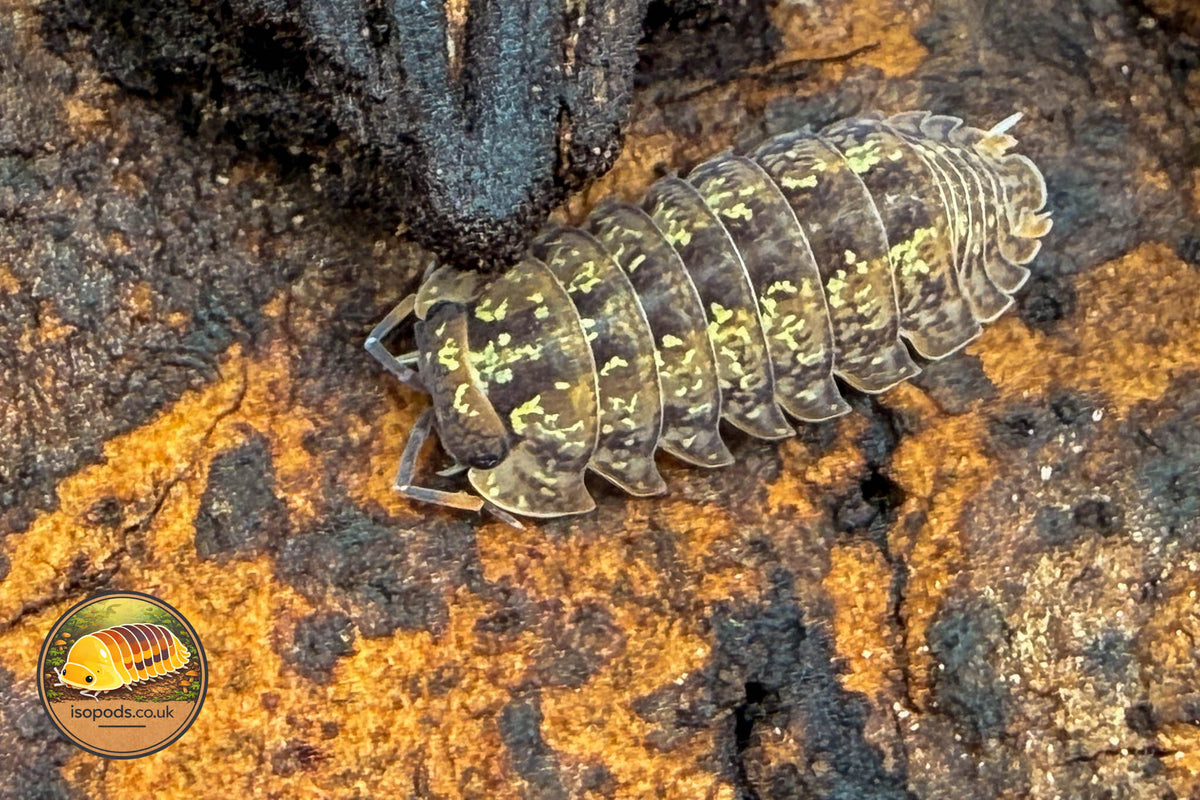
Dryadillo maculatus "Zebra" Isopod
Out of stock
Regular price
£40.00 GBP
Sale price
£40.00 GBP
Regular price
Unit price
per
Tax included.
Shipping calculated at checkout.
Couldn't load pickup availability
- Fully secure checkout
- Trusted by thousands
- Rated and reviewed
Want next day delivery? Be quick!
You just missed it!
Sorry, it's out of stock.
But we can let you know when it's back in.
Question about this product?
We're happy to help.
Sold out
Dryadillo maculatus "Zebra" Isopods for Sale UK
Dryadillo maculatus "Zebra" is a patterned form of Dryadillo maculatus with a stronger striped, zebra-style look across the body plates. It keeps the compact, armoured Dryadillo shape of the standard form but adds a more graphic pattern that makes the animals stand out when they are visible around bark, litter, and sheltered feeding areas.
Like the standard Dryadillo maculatus, this is best treated as a cover-focused tropical species rather than an always-visible display isopod. Expect most activity around bark undersides, leaf litter, humid shelter, and protected feeding spots, especially while a new colony is settling.
What makes Zebra different
- Pattern: stronger banded or zebra-style markings than the standard maculatus form.
- Body style: compact, armoured Dryadillo shape with a textured tropical appearance.
- Visibility: usually best observed around litter edges, under bark, and in shaded feeding areas rather than on open substrate.
- Collector appeal: a more graphic-looking version of an already distinctive Dryadillo species.
How it tends to use the enclosure
A settled colony may spread through several sheltered areas, but that does not usually mean constant open roaming. You are more likely to see Zebra around bark edges, underneath leaf litter, beside damp moss pockets, and in shaded gaps than sitting exposed on bare substrate.
If the whole colony gathers in one wet corner, review the rest of the enclosure rather than simply adding more moisture. More cover, deeper litter, and a better moisture gradient often make more of the floor usable.
Before you order
Prepare a tropical enclosure with plenty of cover already in place. A deeper substrate that remains damp below the surface, a generous layer of leaf litter, and several tight bark hides give the colony useful sheltered zones from the start.
Cork bark is particularly useful because it creates shaded undersides and narrow resting spaces. A pocket of sphagnum moss can help keep one refuge consistently damp without making the whole enclosure wet.
Keep a drier side as well, but do not leave it bare. Covered ground and leaf litter let the animals move between zones without crossing exposed open floor. The isopod habitat setup guide is useful if you want a broader walkthrough on balancing cover, airflow, and moisture.
Feeding priorities
Keep Zebra on a detritus-first diet. Leaf litter, mature substrate, and decomposing wood should provide most of the long-term food base, with fresh foods added in smaller amounts.
Rot wood is especially useful because it provides both feeding value and sheltered grazing surfaces. Keep calcium available consistently too; limestone works well as a simple long-term mineral source.
If you want a fuller overview of supplemental feeding, see what do isopods eat.
Who will enjoy this morph most
Dryadillo maculatus "Zebra" suits keepers who like tropical isopods with strong patterning and a more reserved enclosure style. It rewards patient observation around bark, leaf litter, and sheltered feeding areas rather than constant surface activity.
Compare before you decide
If you want to compare this morph with the standard form, see Dryadillo maculatus. For another same-genus option with a different look, Dryadillo Dream is the closest next comparison. You can also browse the tropical isopods collection for other humid, cover-oriented species.