🔥 Daily Isopod Auctions on WhatsApp! Grab species at auction prices, discover rare finds & join our growing community. Join Here
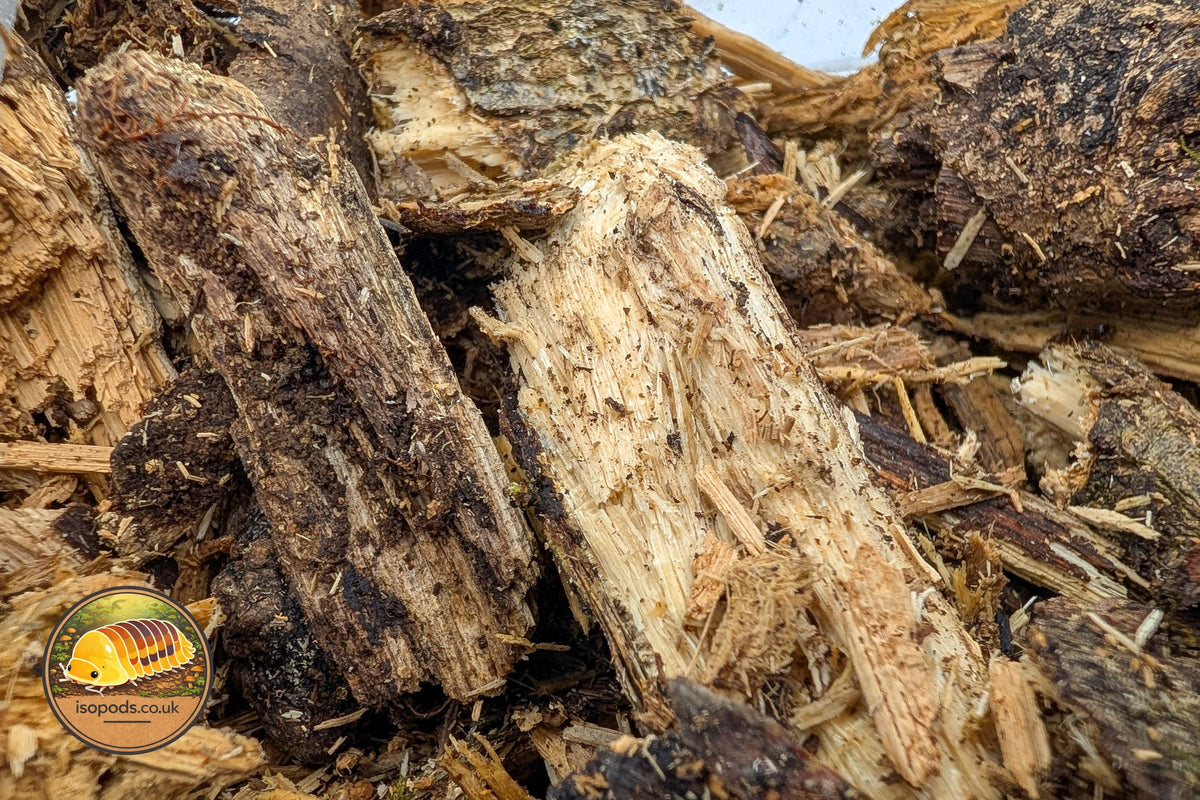
Rot Wood for Isopod Enclosures
42 in stock
Regular price
£7.50 GBP
Sale price
£7.50 GBP
Regular price
Unit price
per
Tax included.
Shipping calculated at checkout.
Couldn't load pickup availability
- Fully secure checkout
- Trusted by thousands
- Rated and reviewed
Want next day delivery? Be quick!
You just missed it!
Question about this product?
We're happy to help.
Rot Wood for Isopod Enclosures
Rot wood helps turn an enclosure into part of the diet rather than a tub that depends too heavily on fresh food. Soft, well-decomposed wood gives isopods another long-term grazing surface, adds organic matter, and creates sheltered places to feed under cover. When wood is being worn down alongside leaf litter, the food base is usually steadier than in setups built mostly around extras.
What Rot Wood Does
Rot wood works as a secondary food source alongside leaf litter, mature substrate, and other decomposing material. Because it breaks down slowly, it helps keep feeding value in the enclosure between top-ups of leaves or supplements. It also gives isopods more places to sit against, graze under, and move through, especially when part of the wood sits into the substrate and part stays exposed.
Isopods are detritivores, so the enclosure itself should carry much of the diet. If a colony only responds strongly when fresh food appears, the long-term food base may be too weak. Rot wood helps build that base instead of pushing you to rely too heavily on extras. For a fuller breakdown of feeding roles, see what do isopods eat.
How to Use Rot Wood
Use soft, decomposed pieces rather than hard fresh wood. Rot wood is most useful when placed so some of it contacts the substrate while some remains accessible from the surface. That gives the colony damp feeding contact below and slightly airier grazing surfaces above.
It usually works best as part of a wider setup with cork bark for covered resting areas, a clear damp refuge, and enough leaf litter for the surface to stay usable. The aim is not to drop one piece into a bare tub, but to make the enclosure itself a better place to graze and hide.
Where It Fits in the Setup
Rot wood belongs in the enclosure as part of the food base, not as a stand-alone add-on. It can be tucked partly into the top substrate layer, placed under cover, or used where the colony already spends time grazing. In many setups, it pairs well with a damp refuge supported by sphagnum moss and a surface layer that still includes plenty of leaves.
Used well, it helps the enclosure feel less bare and gives the colony more places to feed without crossing open exposed ground. That is often more useful than offering rich foods too often.
When It Is Most Useful
Rot wood is especially useful in enclosures built around a richer detritus base, and it is often worth adding if you want steadier grazing between supplemental feeds. It can help most in setups where the colony spends time under bark, in lower cover, or around decomposing material.
If you are still building out the basics, pairing rot wood with leaf litter usually makes more difference than relying on richer fresh foods alone. The two do different jobs: leaves provide broad surface cover and constant grazing, while rot wood adds denser sheltered feeding points that break down more slowly.
Common Mistakes
-
Using hard or fresh wood: if the wood stays firm and clean-looking, the colony usually cannot graze it properly. Use decomposed wood that breaks down gradually instead. -
Treating it as the main diet: rot wood supports the food base, but leaf litter should still carry most of the long-term feeding role. -
Letting it dry out completely: very dry wood becomes less usable, especially in setups that rely on quiet under-cover grazing. -
Adding too much into a stale wet tub: extra organic material will not fix poor airflow or overwatering. If the enclosure smells sour or stays muddy, correct the setup first. The isopod habitat setup guide explains how to balance damp and drier areas more clearly.
Who This Suits
This suits keepers who want to strengthen the long-term food base of an enclosure rather than relying mainly on fresh foods and supplements. It is a sensible addition for naturalistic setups, detritus-rich tubs, and colonies that already make steady use of decomposing material.
If your enclosure is very sparse, very dry, or built around decorative hardscape with little real litter and substrate value, rot wood will help most when the rest of the setup improves with it rather than when it is used on its own.
Why Choose Rot Wood
Choose rot wood if you want to add a natural feeding surface that lasts, breaks down gradually, and works as part of the enclosure rather than as a separate treat. It is most useful when paired with cover, leaf litter, moisture control, and a stable substrate base.
Must have?