🔥 Daily Isopod Auctions on WhatsApp! Grab species at auction prices, discover rare finds & join our growing community. Join Here
Cubaris Golden Rutilated Isopod
Low stock! Only 1 left
Regular price
£85.00 GBP
Sale price
£85.00 GBP
Regular price
Unit price
per
Tax included.
Shipping calculated at checkout.
Couldn't load pickup availability
- Fully secure checkout
- Trusted by thousands
- Rated and reviewed
Want next day delivery? Be quick!
You just missed it!
Question about this product?
We're happy to help.
Cubaris Golden Rutilated Isopods
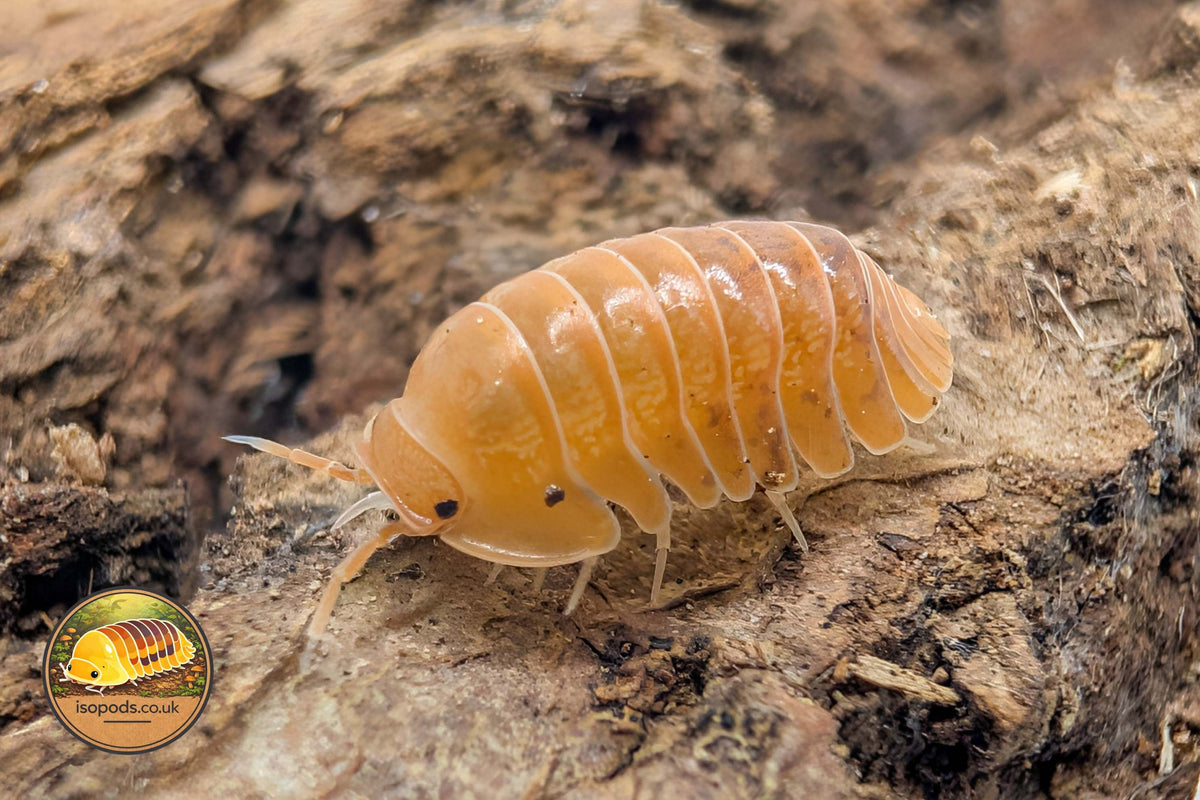
Golden Rutilated stand out for their warm golden-orange, rutilated look rather than a flat single colour. The appeal is in the finer patterning and the smaller, refined Cubaris feel, making them a strong choice for keepers drawn to collector-style tropical species with more detail than obvious open activity.
In practice, this is still very much a shelter-focused Cubaris. Expect them to spend much of their time under bark, within leaf litter, and around damp covered areas, especially while settling. If you want a colony for subtle behaviour, careful observation, and a more premium small-Cubaris feel, they make sense. If you want fast feedback and frequent open roaming, they are easier to admire than to rush.
What makes Golden Rutilated appealing
-
Pattern-led look: The draw here is the golden to orange rutilated patterning rather than a plain bright colour block. -
Smaller collector Cubaris feel: Better approached as a refined, lower-key species than a large, bold enclosure presence. -
Shelter-oriented behaviour: Usually seen around bark edges, leaf cover, and humid hiding places rather than crossing bare ground often. -
Steady colony pace: Best treated as slower to establish and slower to build than fast, openly active isopods. -
Setup-sensitive: Drying swings, stale wet patches, and exposed tubs can all suppress normal use.
How they usually behave in the enclosure
Golden Rutilated are best judged by where they settle, not by how often they sit in the open. A healthy colony may still spend long periods beneath cork bark, inside heavier litter, or against pieces of rot wood. Brief sightings near covered feeding spots or under bark are more realistic than constant surface display.
That quieter behaviour is normal for many Cubaris types. More useful signs are gradual wear on leaves, hidden feeding under cover, and animals turning up in more than one sheltered area instead of all compressing into one damp emergency corner.
Before ordering: prepare the enclosure for a smaller Cubaris
This species suits a humid tropical setup with depth, cover, and clean air exchange. Start with a generous layer of leaf litter, add bark hides and rotting wood, and keep one damp refuge reliable without soaking the whole tub. A moss pocket with sphagnum moss can help hold that humid side steady, but the enclosure should still smell fresh rather than sour.
Golden Rutilated do not suit sparse tubs. They tend to do better when they can move through covered areas instead of crossing exposed substrate. If the whole colony ends up forced into one wet patch, the rest of the enclosure is often too dry, too open, or too stale to use properly. If you want a broader overview of moisture balance and cover, the isopod habitat setup guide is a useful next read.
Feeding priorities
The main diet should come from the enclosure itself: litter, decomposing wood, mature substrate, and the films that build up on natural materials over time. Fresh foods are extras, not the base. For Golden Rutilated, that long-term food layer matters more than chasing a dramatic feeding response.
Keep wood and leaves available at all times, and leave a steady calcium source in the enclosure such as limestone. Quiet under-cover feeding is normal, so low visible response does not automatically mean the colony is struggling.
Who tends to enjoy this species most
This is a better fit for keepers who enjoy collector Cubaris, subtle pattern differences, and patient colony observation. It suits buyers willing to maintain humid substrate, shaded bark hides, decomposing wood, calcium access, and a stable routine without pushing for visibility.
It is less likely to satisfy anyone wanting a fast-breeding, openly active colony or a species that reads well in a simple, airy tub with limited cover.
Compare before you choose
If you are browsing within the same genus, explore more Cubaris isopods. For a larger contrasting look within Cubaris, Cubaris Giant Purple makes a useful comparison. If you prefer another smaller pattern-led option, Cubaris Happy Nun is also worth considering.
Ease of care
Preferred Temperature
Preferred Humidity
Popularity
Care Instructions
Care Instructions