🔥 Daily Isopod Auctions on WhatsApp! Grab species at auction prices, discover rare finds & join our growing community. Join Here
Cubaris "Happy Nun" Isopod
20 in stock
Regular price
£30.00 GBP
Sale price
£30.00 GBP
Regular price
Unit price
per
Tax included.
Shipping calculated at checkout.
Couldn't load pickup availability
- Fully secure checkout
- Trusted by thousands
- Rated and reviewed
Want next day delivery? Be quick!
You just missed it!
Question about this product?
We're happy to help.
Cubaris "Happy Nun" Isopods for Sale UK
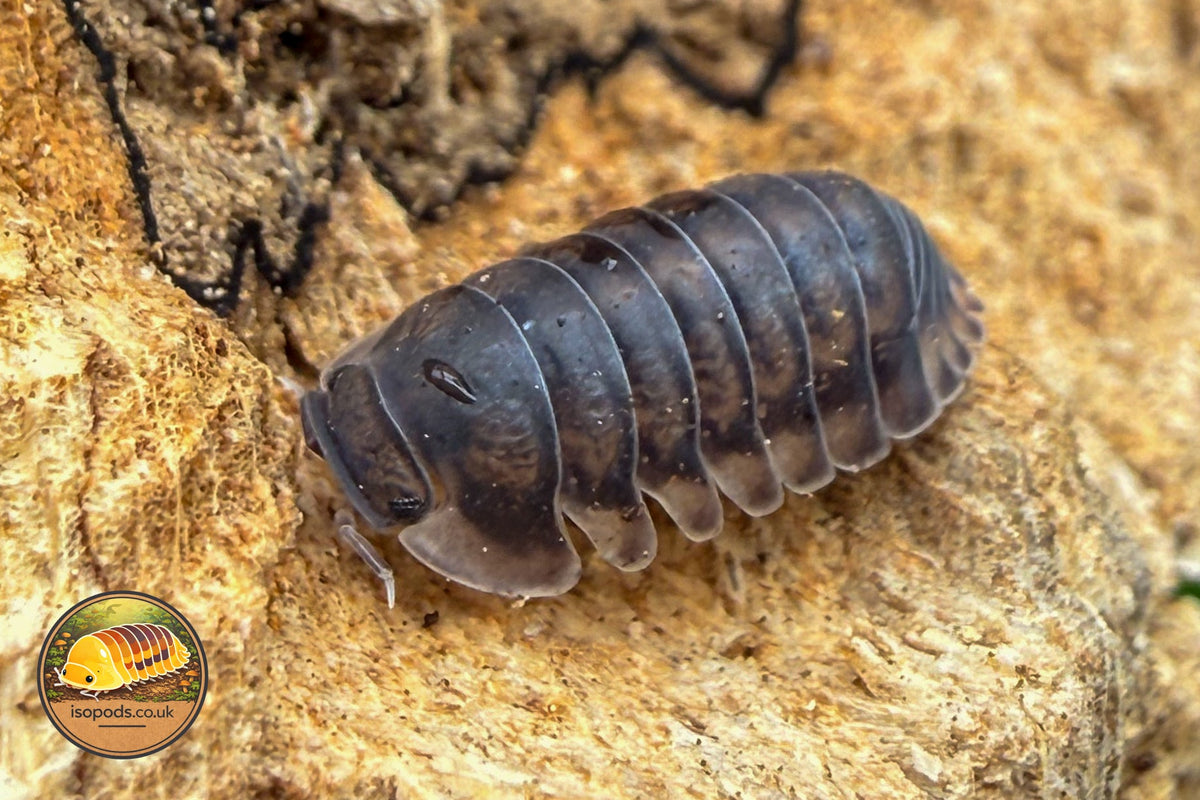
Cubaris "Happy Nun" stands out for its bright yellow body colour and dark black patterning, giving it a bold, high-contrast look that feels very different from softer panda-style markings or the rounder "ducky" visual type. If you are choosing with appearance first, this is one of those Cubaris that earns attention through pattern as much as shape.
In keeper terms, Happy Nun is best treated as a humid, shelter-loving Cubaris that rewards patience. New colonies are often reclusive while settling, and they are usually more satisfying for buyers who enjoy checking bark, leaf litter, and covered feeding spots than for anyone expecting constant open display.
What makes Happy Nun distinctive
-
Colour and pattern: bright yellow base with intricate black marking detail. -
Overall feel: a striking collector look rather than a plain tropical Cubaris. -
Comparison point: visually distinct from many panda, ducky, and mandarin-style Cubaris lines. -
Behaviour: often quiet at first, with better visibility once the colony is settled and numbers build. -
Care style: best approached as a stable humid setup species, not a sparse or fast-drying tub species.
What to expect in the enclosure
This species will usually spend much of its time under cover. Expect to find them under bark, within deeper leaf litter, around rotting wood, or close to the damp refuge rather than crossing bare open substrate for long periods. That lower visibility is not unusual for Cubaris, especially in the early settling stage.
More useful signs of success are gradual litter use, quiet feeding under cover, and animals turning up in more than one sheltered spot over time. If the whole colony stays compressed into one wet corner, the rest of the enclosure may be too dry, too exposed, or too stale to use comfortably.
Setup that suits this species
Happy Nun usually does best with deep substrate, a generous layer of leaf litter, bark hides, rotting wood, and one reliable damp refuge rather than a tub that is wet from end to end. The aim is to keep one side properly moist below the surface while still leaving a drier but covered area the colony can use.
cork bark works well here because it creates shaded undersides and tight sheltered gaps. A patch of sphagnum moss can help keep the humid refuge steady, while consistent access to limestone is worth providing as part of long-term calcium support.
Airflow matters as much as moisture. This is not a species to keep in a sealed, swampy tub. If the enclosure smells sour, stays muddy, or only offers one survivable damp pocket, conditions have usually drifted too far. If you want a broader setup reference before ordering, the isopod habitat setup guide explains how moisture, cover, and airflow should work together.
Feeding and colony pace
Like other Cubaris, Happy Nun should be treated as detritus-first. The main food base should come from leaf litter, rotting wood, and mature substrate rather than frequent rich feeding. Fresh foods can be offered in small amounts, but quiet under-cover feeding is usually more informative than a dramatic rush to exposed food.
Breeding is safer to describe as slow to steady rather than fast. Settled colonies may become easier to observe as numbers build, but this is still better chosen for patient keepers than for buyers who want quick visible colony expansion.
Who tends to enjoy this species most
Happy Nun is a better match if you want a visually distinctive Cubaris and you do not mind a more reclusive start. It suits keepers willing to prepare a deeper, more mature tropical enclosure with litter, wood, bark, calcium access, and a dependable humid refuge.
It may be a weaker fit if your main priority is constant visibility, rapid colony growth, or a simple low-cover tub. Reducing cover to force sightings usually makes hidden tropical species harder to read, not easier.
Compare before you choose
If you want to browse similar sheltered tropical options, start with the Cubaris isopods collection. If you are comparing visual styles within the genus, Cubaris murina Glacier offers a very different look and general keeper appeal. For a broader tropical browse beyond Cubaris, the tropical isopods collection is the next useful step.
Ease of care
Preferred Temperature
Preferred Humidity
Popularity
Care Instructions
Care Instructions