🔥 Daily Isopod Auctions on WhatsApp! Grab species at auction prices, discover rare finds & join our growing community. Join Here
Cubaris murina Glacier Isopod
20 in stock
Regular price
£6.00 GBP
Sale price
£6.00 GBP
Regular price
Unit price
per
Tax included.
Shipping calculated at checkout.
Couldn't load pickup availability
- Fully secure checkout
- Trusted by thousands
- Rated and reviewed
Want next day delivery? Be quick!
You just missed it!
Question about this product?
We're happy to help.
Cubaris murina Glacier Isopods for Sale UK
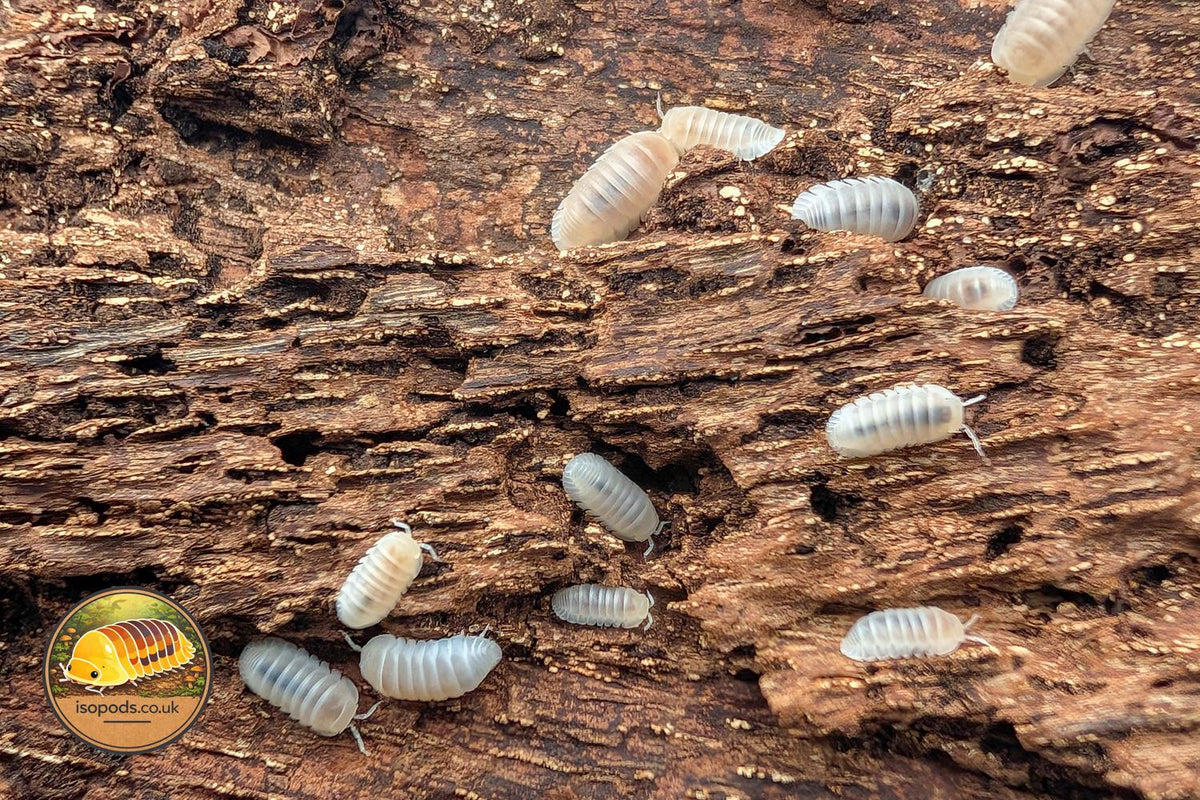
Cubaris murina Glacier is the clean white, frosted-looking form of murina, with an almost glassy pale body, white eyes, and very light legs and antennae. On dark substrate, bark, and leaf litter, that icy colour stands out immediately, so this morph has a very different visual effect from warmer murina lines.
Just as importantly, Glacier should be approached as a murina-type Cubaris rather than a highly hidden specialist. It is often more readable than many collector Cubaris, with regular sightings around bark, litter, and feeding areas once settled, but it still does best with humid shelter, a strong leaf-litter base, rotting wood, steady calcium access, and airflow that keeps the enclosure fresh rather than stale.
The Glacier look
-
Colour impression: almost completely white to frosted pale -
Eyes: white -
Legs and antennae: noticeably pale -
Best display contrast: dark substrate, bark, and leaf litter make the white morph stand out strongly -
Overall appeal: a cleaner, colder-looking murina form than brighter orange or peach-toned alternatives
What to expect in the enclosure
This morph is often easier to read than many shelter-heavy Cubaris, but it should not be bought as a constant open-display species. A settled colony may show itself around bark edges, under leaf litter, and near covered food spots, especially when the enclosure has enough cover to let them move without crossing bare ground all the time.
If they seem quiet at first, that is not automatically a problem. Newly settled colonies often spend more time under cover. Better signs to watch are gradual use of leaf litter, animals turning up in more than one hiding place, and calm movement between the damp refuge and the more lightly moist covered areas.
Setup that suits murina Glacier
The safest approach is a humid tropical enclosure with one reliable damp refuge rather than a tub that stays wet everywhere. A deeper substrate helps hold moisture below the surface, while bark pieces and a thick layer of cork bark and leaf litter give them shaded places to rest and feed.
This morph benefits from a setup that already has a real food base built in. Rot wood is especially useful here because it adds both sheltered grazing and extra cover, which suits the more active murina style better than a sparse tub with just one hide.
A patch of sphagnum moss can help keep the humid side dependable for hydration and moulting, while the rest of the enclosure stays a little drier on the surface but still covered with litter and bark. Keep air moving enough that the enclosure smells earthy rather than sour.
Before you order
- Make sure the enclosure already has a damp refuge, not just a fully wet substrate.
- Add plenty of leaf litter so they can hide and graze at the same time.
- Include bark and rotting wood so the colony has several covered places to use.
- Keep a calcium source available; limestone is a practical option.
- Avoid setting them up in a bare tub if you want their normal movement and colour contrast to show well.
Feeding notes
Like other Cubaris, murina Glacier should be treated as detritus-first. Leaf litter, rotting wood, mature substrate, and decomposing plant matter should do most of the work. Fresh foods can be offered in small amounts, but they are support items rather than the foundation of the diet.
If the colony only seems active when fresh food goes in, the enclosure may need more litter and wood rather than richer feeding. Quiet under-cover feeding is normal, and a steady detritus base usually gives better long-term results than frequent heavy additions.
Who tends to enjoy this morph most
This is a good fit for buyers who want a pale, high-contrast Cubaris that is often easier to observe than many more secretive tropical collector species. It makes sense if you like white morphs, want a cleaner frosted look than orange murina forms, and are happy to provide a proper humid, covered setup.
It may be a weaker fit if you want constant open activity like a bold surface-running Porcellio, or if your usual setup style is sparse, dry, or heavily exposed.
Compare before you choose
If you want another murina form with a warmer look, Cubaris murina Mandarin is the clearest next comparison. For broader browsing, the Cubaris isopods collection shows how Glacier sits alongside other Cubaris types. If you are still building the enclosure first, the isopod habitat setup guide is the most useful next step.
Ease of care
Preferred Temperature
Preferred Humidity
Popularity
Care Instructions
Care Instructions