🔥 Daily Isopod Auctions on WhatsApp! Grab species at auction prices, discover rare finds & join our growing community. Join Here
Cubaris Murina Mandarin
Low stock! Only 10 left
Regular price
£6.00 GBP
Sale price
£6.00 GBP
Regular price
Unit price
per
Tax included.
Shipping calculated at checkout.
Couldn't load pickup availability
- Fully secure checkout
- Trusted by thousands
- Rated and reviewed
Want next day delivery? Be quick!
You just missed it!
Question about this product?
We're happy to help.
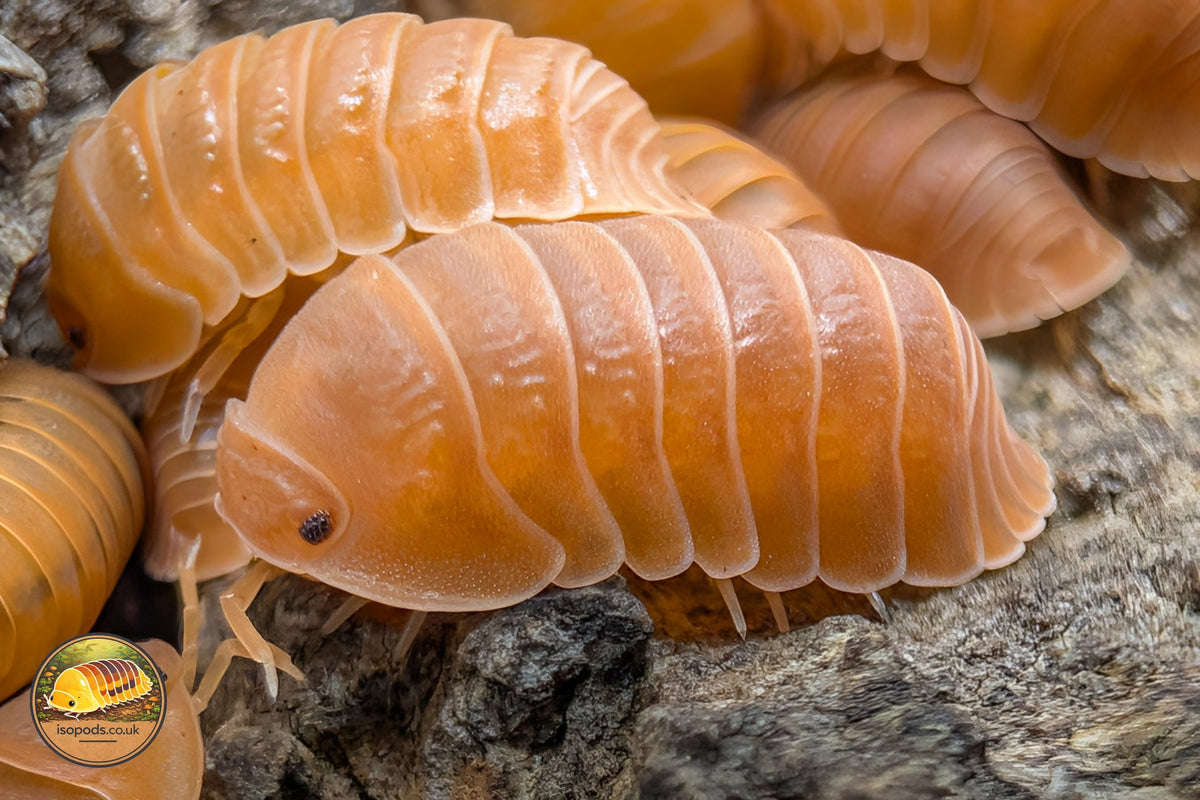
Cubaris murina 'Mandarin' Isopods
Cubaris murina 'Mandarin' is the bright orange Mandarin form of C. murina, offering a warmer, clearer colour look than the usual grey or brown murina types. It is a small-to-medium Cubaris that can be easier to spot than many more secretive collector Cubaris, especially around bark, leaf litter, and covered feeding areas once settled.
That makes it a useful choice for keepers who want a colourful tropical isopod without jumping straight to the most hidden or specialist-looking Cubaris types. It still needs the usual basics done properly: plenty of cover, a reliable damp refuge, mature food in the enclosure, and enough airflow to keep the tub fresh rather than sour.
What stands out about Mandarin
-
Colour: bright orange overall, with a warmer visual impact than standard murina forms. -
Size: small-to-medium, so it works well in planted or naturalistic-looking setups without needing a huge footprint. -
Visibility: often more readable than very hidden Cubaris, but still not an open-roaming display species. -
Behaviour: usually seen around cork edges, leaf litter, and sheltered humid spots rather than on bare substrate.
Before you order
Set the enclosure up with a thick layer of leaf litter, bark or cork bark, a damp refuge that stays moist below the surface, and a drier top layer elsewhere so the colony has some choice. Mandarin murina usually does better when it can move between covered damp and drier areas without crossing a lot of bare open ground.
If the whole tub is wet, muddy, or stale, they often become harder to read. If the enclosure dries too quickly, they may compress into the last safe damp pocket. A small patch of sphagnum moss can help keep one humid refuge stable without soaking everything.
How they usually behave in the enclosure
This morph can be more noticeable than many Cubaris sold mainly for hidden collector value, but expectations still need to stay realistic. You are more likely to find them under cover, along bark undersides, or working through litter than walking constantly across exposed floor space.
A healthy settled colony may still spend long periods hidden. Better signs to watch are gradual litter use, quiet feeding under cover, and individuals turning up in more than one sheltered area. If all of them stay packed into one corner, the rest of the setup may be too dry, too exposed, or too stale.
Feeding and support
Like other murina-type Cubaris, Mandarin should be treated as detritus-first. The main food base should come from leaf litter, mature substrate, and decomposing wood rather than repeated heavy feeding of rich extras. Adding rot wood gives them another long-term grazing surface and another sheltered place to feed.
Fresh foods can be offered in small amounts, but they should stay supplemental. Consistent calcium access is also worth keeping available, and limestone is one practical option in a Cubaris enclosure.
Who tends to enjoy this one most
Mandarin murina makes most sense for buyers who want a colourful tropical Cubaris with a more approachable feel than many highly hidden lines. It suits keepers who enjoy checking bark, litter, and covered areas for activity rather than expecting constant open-floor movement.
If you mainly want bold, always-obvious enclosure behaviour, a more openly active genus may suit you better. If you want a bright orange Cubaris that still behaves like an isopod rather than a display insect, this is a more realistic fit.
Compare before you choose
If you want another murina form to compare colour and overall presentation, Cubaris murina "Anemone" is a good next look. If you are still weighing up broader options, you can browse the wider Cubaris isopods range or read the Cubaris care guide for a fuller picture of how these sheltered tropical species are usually kept.
Ease of care
Preferred Temperature
Preferred Humidity
Popularity
Care Instructions
Care Instructions