We only dispatch when temperatures are at least 1°C at both the sending location and the delivery location.
Cold weather notice

Cold weather notice
We’ll confirm the next posting date when conditions allow.


Couldn't load pickup availability
Delivery options and costs are shown at checkout. Live dispatch depends on suitable weather. Read our shipping information.
We're happy to help.
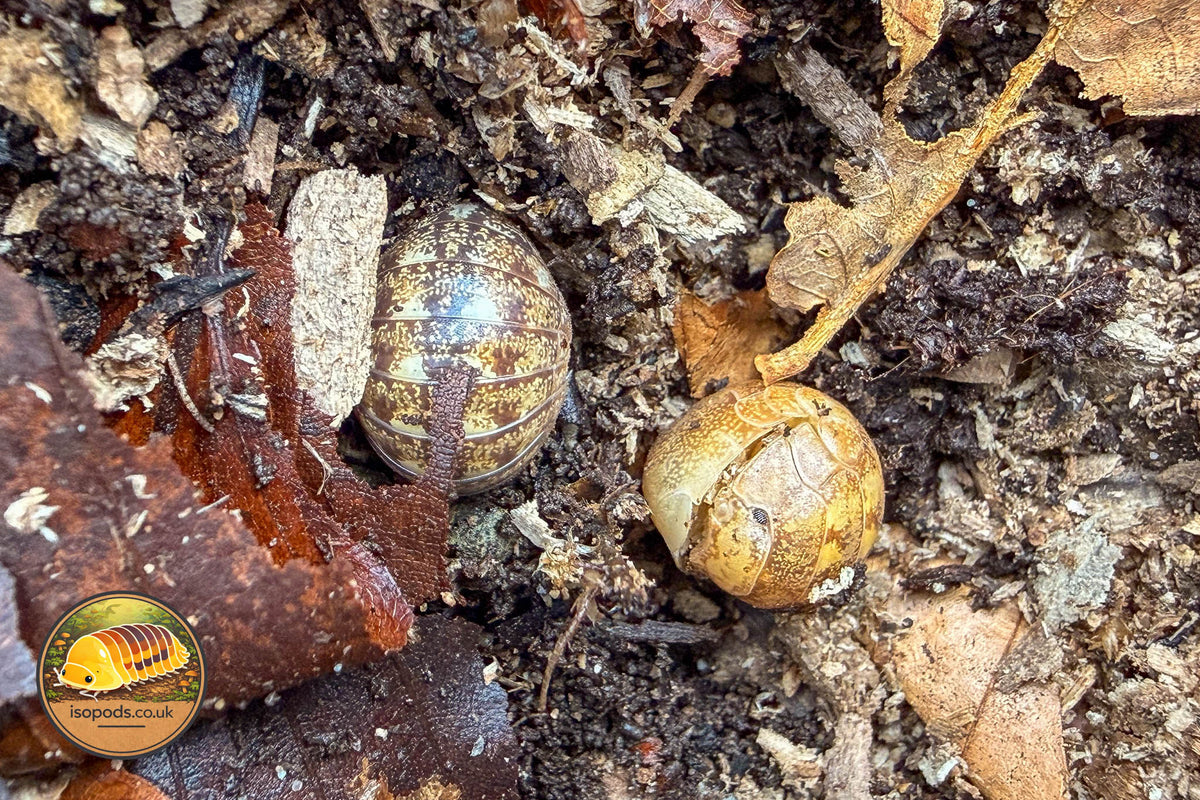
Helleria brevicornis stands out for size, shape, and behaviour rather than bright pattern. This large yellow-brown rolling isopod from Corsica, Sardinia, and the northern Tyrrhenian region has a smooth rounded look and a distinctive ability to tuck into a tight cannonball-like sphere, which gives it a very different feel from flatter, faster surface species.
For many keepers, the appeal is collector-led: a big, heavy-bodied roller with a more primitive-looking presence, group-living habits, and quieter enclosure behaviour. It is best treated as a specialist setup species that rewards deep organic substrate, heavy leaf litter, calcium access, fresh air, and low disturbance rather than a sparse, frequently checked display tub.
This species is often found in and around leaf litter, humus-rich lower layers, bark cover, and sheltered floor areas. It may burrow into the upper substrate and spend long periods under cover, especially while settling. That is usually normal for this type of isopod and should not be judged by open-floor visibility alone.
A settled group may spread between several covered areas rather than sitting fully exposed. If they stay packed into one damp refuge all the time, the rest of the enclosure may be too dry, too bare, or too stale to use comfortably. Low disturbance matters here; repeated checking can make the colony seem less active than it really is.
Prepare the enclosure first. Giant Cannonball isopods suit a deeper, organic substrate with enough body to hold moisture without turning muddy, plus a thick layer of leaf litter across much of the surface. Add bark or cork hides so they have shaded places to rest, feed, and move without crossing exposed ground.
Keep one area reliably damp, but do not run the whole enclosure wet. A patch of sphagnum moss can help hold a usable moist refuge, while the rest of the tub stays less wet but still covered with litter and hides. Fresh air is important; this species should not be treated like a sealed tropical wet-tub isopod.
Calcium should also be available from the start. Limestone works well as a long-term mineral source in a drier accessible area.
The main diet should come from the enclosure itself: leaf litter, decomposing organic matter, mature substrate, and sheltered grazing surfaces. Rotting wood can also add long-term feeding value as well as extra cover, so rot wood is worth considering as part of the enclosure rather than as an occasional extra.
Fresh foods can be offered sparingly, but they should not become the whole feeding strategy. If supplements get all the attention while the litter layer stays thin, the enclosure base is too weak. For a broader overview of what should carry the diet, see what do isopods eat.
This species makes more sense for keepers who enjoy large rollers, island-locality interest, and subtle behaviour under cover. It is a good fit if you like building deeper naturalistic tubs with litter, humus, bark, and a real damp-to-drier choice.
It is less suitable if you want frequent open activity, a simple low-maintenance starter species, or an enclosure that is checked and rearranged all the time. Giant Cannonball isopods are usually better approached as a careful long-term project than an instant display colony.
If you want another large isopod with stronger open feeding response and a more obvious surface presence, Porcellio laevis "Milkback" offers a very different giant-isopod experience. If you prefer to read more about balancing airflow, cover, and moisture before committing, the isopod habitat setup guide is the best next step. You can also browse the wider all isopods range if you are still comparing colony styles.