🔥 Daily Isopod Auctions on WhatsApp! Grab species at auction prices, discover rare finds & join our growing community. Join Here
Helleria brevicornis (Giant Cannonball Isopod)
Low stock! Only 2 left
Regular price
£30.00 GBP
Sale price
£30.00 GBP
Regular price
Unit price
per
Tax included.
Shipping calculated at checkout.
Couldn't load pickup availability
- Fully secure checkout
- Trusted by thousands
- Rated and reviewed
Want next day delivery? Be quick!
You just missed it!
Question about this product?
We're happy to help.
Helleria brevicornis (Giant Cannonball Isopod) for Sale UK
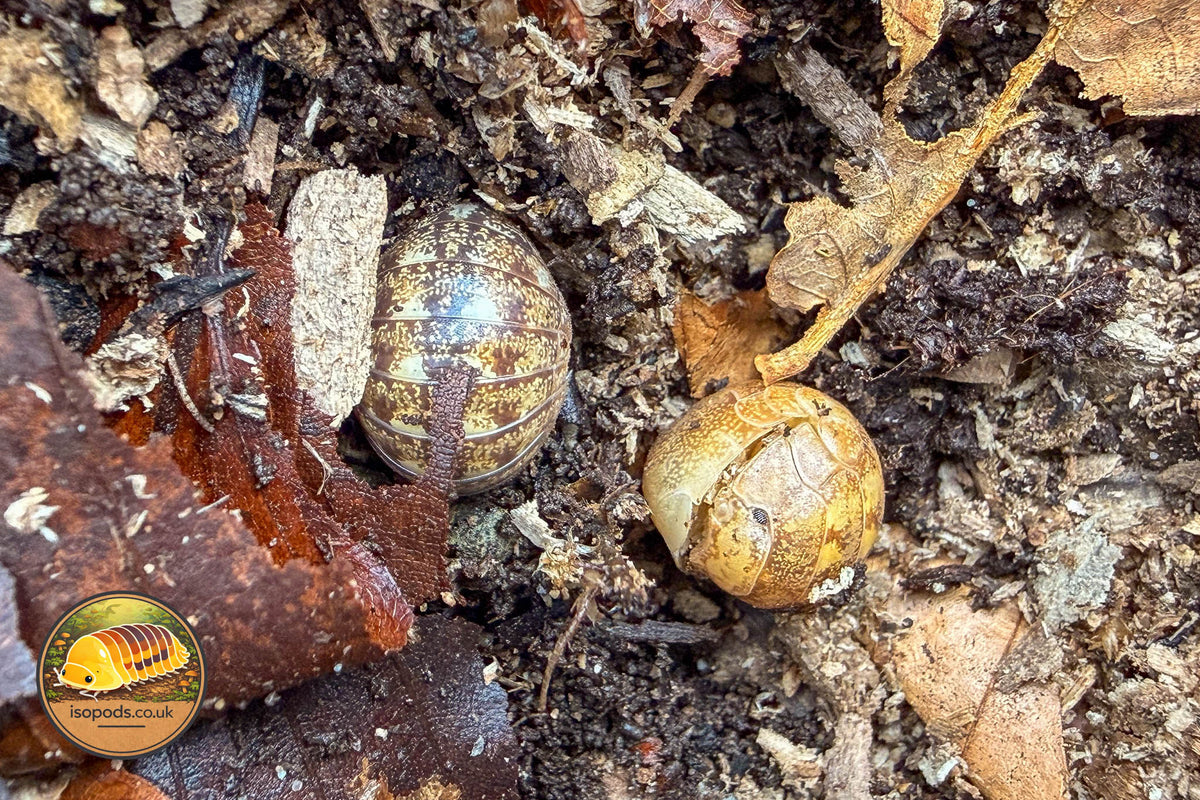
Helleria brevicornis stands out for size, shape, and behaviour rather than bright pattern. This large yellow-brown rolling isopod from Corsica, Sardinia, and the northern Tyrrhenian region has a smooth rounded look and a distinctive ability to tuck into a tight cannonball-like sphere, which gives it a very different feel from flatter, faster surface species.
For many keepers, the appeal is collector-led: a big, heavy-bodied roller with a more primitive-looking presence, group-living habits, and quieter enclosure behaviour. It is best treated as a specialist setup species that rewards deep organic substrate, heavy leaf litter, calcium access, fresh air, and low disturbance rather than a sparse, frequently checked display tub.
What makes Giant Cannonball different
-
Visual hook: large, smooth, rounded, and earthy rather than brightly coloured. -
Defensive behaviour: rolls tightly into a compact ball when disturbed. -
Enclosure style: more at home in deep litter, humus-rich substrate, and covered areas than on open bare floor. -
Keeper expectation: better for patient observation than constant surface activity. -
Approach: advanced and collector-led, with stable conditions more important than frequent adjustment.
Behaviour in captivity
This species is often found in and around leaf litter, humus-rich lower layers, bark cover, and sheltered floor areas. It may burrow into the upper substrate and spend long periods under cover, especially while settling. That is usually normal for this type of isopod and should not be judged by open-floor visibility alone.
A settled group may spread between several covered areas rather than sitting fully exposed. If they stay packed into one damp refuge all the time, the rest of the enclosure may be too dry, too bare, or too stale to use comfortably. Low disturbance matters here; repeated checking can make the colony seem less active than it really is.
Before you order
Prepare the enclosure first. Giant Cannonball isopods suit a deeper, organic substrate with enough body to hold moisture without turning muddy, plus a thick layer of leaf litter across much of the surface. Add bark or cork hides so they have shaded places to rest, feed, and move without crossing exposed ground.
Keep one area reliably damp, but do not run the whole enclosure wet. A patch of sphagnum moss can help hold a usable moist refuge, while the rest of the tub stays less wet but still covered with litter and hides. Fresh air is important; this species should not be treated like a sealed tropical wet-tub isopod.
Calcium should also be available from the start. Limestone works well as a long-term mineral source in a drier accessible area.
Feeding and enclosure base
The main diet should come from the enclosure itself: leaf litter, decomposing organic matter, mature substrate, and sheltered grazing surfaces. Rotting wood can also add long-term feeding value as well as extra cover, so rot wood is worth considering as part of the enclosure rather than as an occasional extra.
Fresh foods can be offered sparingly, but they should not become the whole feeding strategy. If supplements get all the attention while the litter layer stays thin, the enclosure base is too weak. For a broader overview of what should carry the diet, see what do isopods eat.
Who is likely to enjoy this species
This species makes more sense for keepers who enjoy large rollers, island-locality interest, and subtle behaviour under cover. It is a good fit if you like building deeper naturalistic tubs with litter, humus, bark, and a real damp-to-drier choice.
It is less suitable if you want frequent open activity, a simple low-maintenance starter species, or an enclosure that is checked and rearranged all the time. Giant Cannonball isopods are usually better approached as a careful long-term project than an instant display colony.
Common mistakes to avoid
-
Keeping the whole tub wet: this often removes choice and can leave the enclosure stale. -
Too little depth: shallow setups make it harder for the colony to use litter and lower layers naturally. -
Too little cover: one hide in an exposed tub often leads to compression under that single shelter. -
Overchecking: repeated lifting of hides can slow settling and make behaviour look worse than it is. -
Relying on fresh food alone: the enclosure food base should do most of the work.
Compare before you choose
If you want another large isopod with stronger open feeding response and a more obvious surface presence, Porcellio laevis "Milkback" offers a very different giant-isopod experience. If you prefer to read more about balancing airflow, cover, and moisture before committing, the isopod habitat setup guide is the best next step. You can also browse the wider all isopods range if you are still comparing colony styles.
Ease of care
Preferred Temperature
Preferred Humidity
Popularity
Care Instructions
Care Instructions