🔥 Daily Isopod Auctions on WhatsApp! Grab species at auction prices, discover rare finds & join our growing community. Join Here
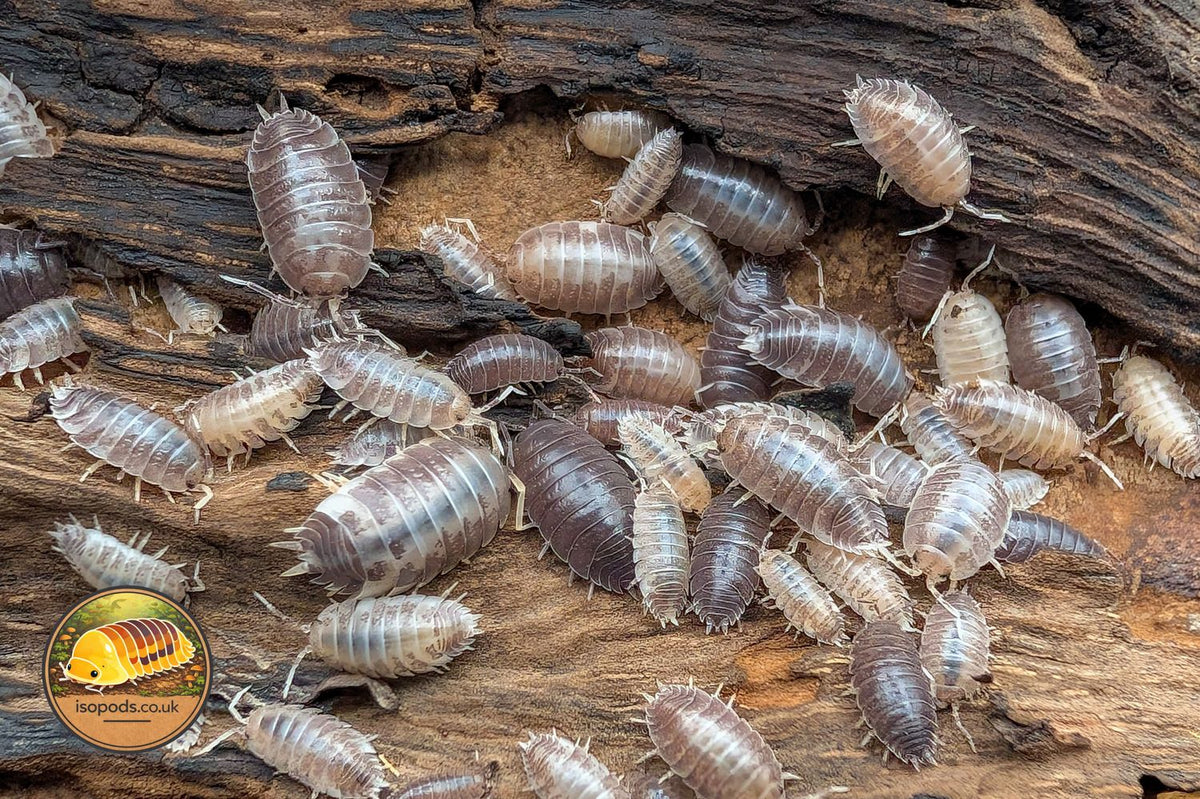
Porcellio laevis "Milkback" Isopod
50 in stock
Regular price
£3.00 GBP
Sale price
£3.00 GBP
Regular price
Unit price
per
Tax included.
Shipping calculated at checkout.
Couldn't load pickup availability
- Fully secure checkout
- Trusted by thousands
- Rated and reviewed
Want next day delivery? Be quick!
You just missed it!
Question about this product?
We're happy to help.
Porcellio laevis "Milkback" Isopods for Sale UK
Porcellio laevis "Milkback" stands out for its softer look within the laevis group: pale milky-white dorsal markings over a darker grey base, a smooth body shape, and the larger, lively feel many keepers already associate with P. laevis. If you like isopods that are easier to observe than hidden tropical species but want a gentler pattern than the sharper contrast seen in Dairy Cow-type laevis, Milkback is a strong option.
Once settled, this morph is often seen around food, bark edges, and open routes between the damp refuge and drier side. That visible, food-responsive behaviour is a big part of the appeal, but it still depends on a ventilated enclosure with cover, leaf litter, and a moisture gradient rather than a wet tub from end to end.
What makes Milkback different
-
Colour and pattern: milky white striping or patches over a darker grey base for a softer, less high-contrast look. -
Body type: smooth-bodied, with the larger laevis look many keepers enjoy. -
Behaviour: usually bolder and easier to spot than more secretive tropical genera. -
Feeding response: often lively around food, which makes enclosure behaviour easier to read. -
Display value: often rewarding for keepers who want movement and visible enclosure use without needing constant open activity.
Enclosure style that suits them
Milkback is best treated like a practical, active Porcellio: give it good airflow, a reliable damp refuge, and a drier side that is still usable rather than bare. A thick layer of leaf litter should cover much of the surface, with bark or cork pieces creating shaded places to rest, feed, and move through the enclosure.
cork bark works well here because it gives the colony covered edges and undersides without removing all open floor space. The damp area can be anchored with a patch of sphagnum moss, but the aim is one dependable moist zone, not wall-to-wall wet substrate.
If the whole tub stays damp, this morph often becomes less readable. A colony that should be spreading between cover, feeding spots, and surface routes may instead compress into the least soggy area or stay under one hide.
Food base before extras
As with other Porcellio, the enclosure should do most of the feeding work. Keep rot wood and leaf litter available as long-term grazing material, then add fresh foods or occasional protein as supplements rather than the foundation of the diet.
Because laevis often show a quick feeding response, it is easy to add too much rich food. Small portions are safer, especially in humid corners where leftovers can foul quickly. A steady calcium source such as limestone is also worth keeping in the enclosure.
Who usually enjoys this morph most
Milkback tends to suit keepers who want a colony with visible movement, clearer feeding feedback, and a more active feel than many hidden tropical species. It is also a sensible choice if you want a laevis morph with a softer natural-looking pattern rather than a very high-contrast black-and-white appearance.
It may be less satisfying if your preferred setup style is very humid, sealed, or heavily wet throughout, or if you want a species that thrives in a sparse tub with minimal cover.
Before ordering
- Make sure the enclosure has ventilation rather than stale trapped humidity.
- Prepare a damp refuge and a separate drier side with cover.
- Use plenty of leaf litter, not just a decorative scattering.
- Add bark or cork so they have sheltered feeding and resting spots.
- Keep rot wood and calcium available from the start.
Compare before you choose
If you are browsing similar species, see our Porcellio isopods collection. If you want a close laevis comparison with a cleaner, lighter overall look, Porcellio laevis Crystal White is worth comparing. For broader setup and troubleshooting help with this genus, the Porcellio care guide is the best next step.
Ease of care
Preferred Temperature
Preferred Humidity
Popularity
Care Instructions
Care Instructions