🔥 Daily Isopod Auctions on WhatsApp! Grab species at auction prices, discover rare finds & join our growing community. Join Here
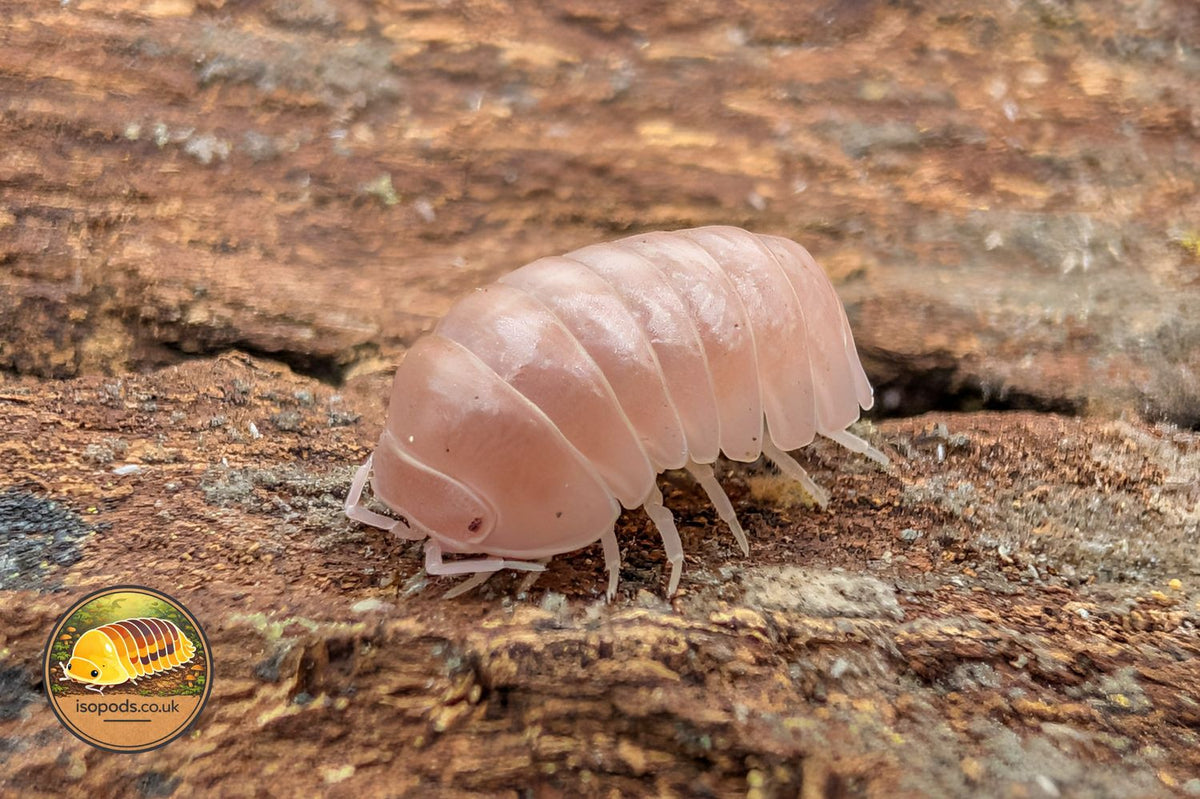
Armadillo officinalis Pink Isopod
15 in stock
Regular price
£35.00 GBP
Sale price
£35.00 GBP
Regular price
Unit price
per
Tax included.
Shipping calculated at checkout.
Couldn't load pickup availability
- Fully secure checkout
- Trusted by thousands
- Rated and reviewed
Want next day delivery? Be quick!
You just missed it!
Question about this product?
We're happy to help.
Armadillo officinalis Pink Isopods for Sale UK
Armadillo officinalis Pink stands out for a softer look than the deeper red or brighter orange forms in the hobby. Expect pale pink, rose, and beige-pink tones that give this morph a more pastel, refined appearance rather than a neon one, paired with the rounded shape and strong rolling response that make A. officinalis so distinctive.
The other big draw is behaviour. This Southern European and Mediterranean Armadillo officinalis type is best known for classic conglobation and the characteristic hissing or stridulation response when disturbed. In a settled enclosure, they are often found under bark, within leaf litter, or around sheltered edges rather than roaming constantly across open ground, so they suit buyers who enjoy colour and behaviour together rather than nonstop surface activity.
What makes the Pink form different
-
Colour: softer pink, rose, and beige-pink tones rather than the heavier saturation seen in deeper Red or brighter Orange Crush forms -
Shape: rounded roller build with strong conglobation when startled -
Signature behaviour: the well-known A. officinalis hissing or stridulation response adds extra collector appeal -
Display style: more subtle and elegant than loud, high-contrast morphs
How they usually behave in the enclosure
This is a cover-using roller species. Once settled, they are usually easier to spot under cork, among leaves, and around sheltered feeding spots than out on bare substrate. That quieter style does not mean the colony is doing badly. With enough cover, it often means they feel secure enough to use the enclosure normally.
Rolling up when disturbed is expected, and the hissing response is part of the appeal of this species. Judge them by whether they use more than one covered area, feed gradually, and move between the damp refuge and drier side, not by whether they stay in the open all day.
Setup that suits Armadillo officinalis Pink
Think Mediterranean-style balance rather than tropical wetness. A good enclosure should include a generous layer of leaf litter, several pieces of cork bark, a clear damp refuge, and a drier side that still has cover instead of bare exposed floor. They make better use of the enclosure when they can move between sheltered areas without crossing too much open ground.
The damp refuge can be supported with sphagnum moss, but it should stay comfortably moist rather than soggy. Good airflow matters as much as moisture here. If the enclosure smells sour, the damp side stays muddy, or the whole colony compresses into one patch, the tub is often too wet, too stale, or too exposed elsewhere.
Calcium should be available long term, and limestone is a simple way to keep that support in the enclosure. This species makes more sense in a fresh, covered setup with a moisture gradient than in a flat wet tub.
Feeding notes
The main diet should come from the enclosure itself: leaf litter, mature substrate, and decomposing plant material. Rot wood is worth including as part of that long-term grazing base as well as a sheltered place to sit against.
Fresh foods can be offered in smaller amounts, but they should stay secondary. If added foods go untouched while leaves and wood are being used slowly, that is not automatically a problem. For a broader feeding overview, see what do isopods eat.
Who tends to enjoy this species most
This form suits keepers who want a calmer roller isopod with a softer colour palette and one of the hobby's most recognisable defensive behaviours. It is a strong choice for someone who enjoys checking bark undersides, leaf litter edges, and covered feeding spots rather than expecting constant open display.
If you mainly want bold, always-obvious activity on exposed ground, this may feel quieter than expected. The Pink form is more about subtle colour, classic A. officinalis behaviour, and a well-prepared enclosure than instant high-visibility movement.
Before you order
- Prepare a tub with a clear damp refuge and a drier covered side
- Add enough leaf litter to cover most of the surface, not just a decorative scattering
- Include cork or bark hides so they have shaded resting places from day one
- Keep calcium available in the enclosure
- Aim for fresh air and moisture balance, not tropical saturation
Compare before you choose
If you prefer a stronger, more saturated look in the same species, compare this morph with Armadillo officinalis Red or Armadillo officinalis Orange Crush. If the softer pastel look and classic hissing behaviour are the main draw, this Pink form is the more understated option. You can also browse all isopods for a wider comparison.
Ease of care
Preferred Temperature
Preferred Humidity
Popularity
Care Instructions
Care Instructions