🔥 Daily Isopod Auctions on WhatsApp! Grab species at auction prices, discover rare finds & join our growing community. Join Here
Ardentiella Lava Pastel Isopod
Low stock! Only 5 left
Regular price
£125.00 GBP
Sale price
£125.00 GBP
Regular price
Unit price
per
Tax included.
Shipping calculated at checkout.
Couldn't load pickup availability
- Fully secure checkout
- Trusted by thousands
- Rated and reviewed
Want next day delivery? Be quick!
You just missed it!
Question about this product?
We're happy to help.
Ardentiella Lava Pastel Isopods for Sale UK
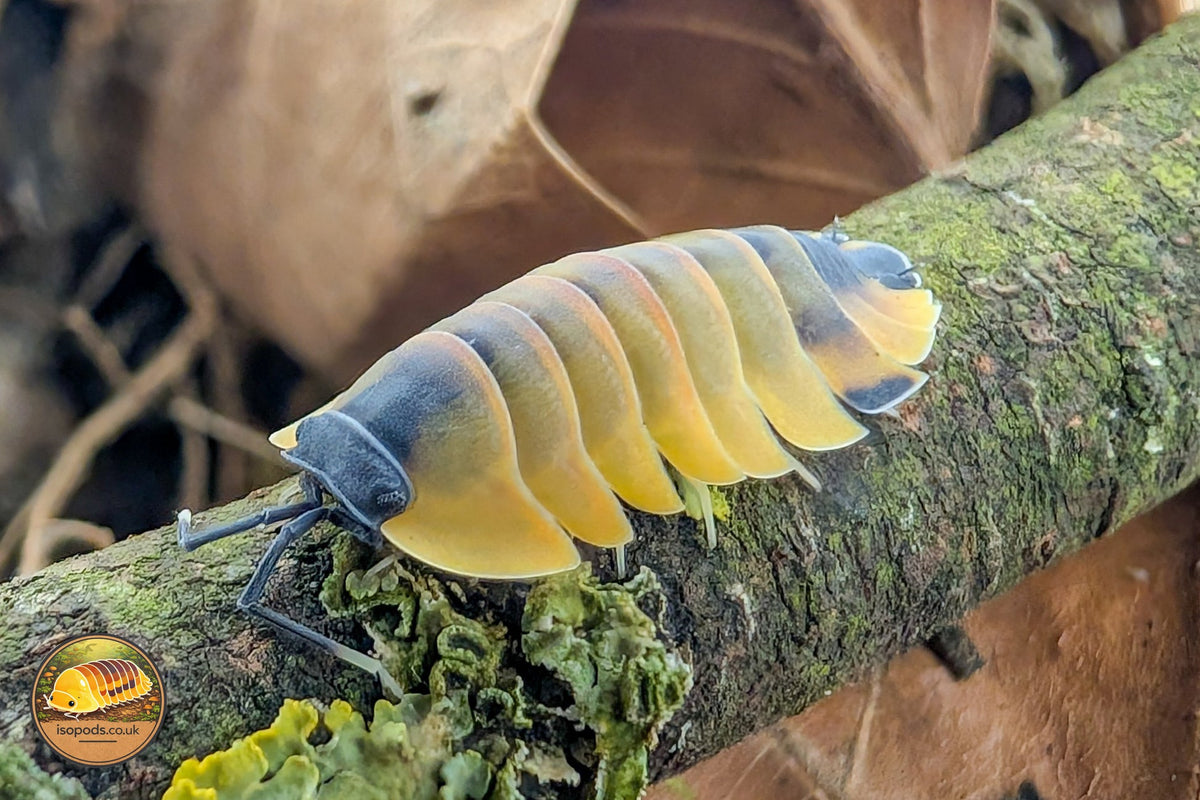
Ardentiella Lava Pastel stands out for its warmer lava-style colour softened into a more delicate pastel look, with salmon, peach, coral, and diffuse orange-red tones rather than heavy block contrast. For buyers choosing with appearance first, this is the appeal: a collector-led Ardentiella that keeps the genus' bark-and-lichen character while presenting it in a gentler, more refined colour expression.
Care should still be approached as true Ardentiella care, not as an easier pastel form. This species is usually more likely to be seen on bark faces, cork edges, mossy cover, and reachable lichen-bearing surfaces than crossing bare substrate, and it does best in a humid enclosure with fresh air, climbing cover, decaying wood, and several sheltered places to use.
Colour and collector appeal
Lava Pastel is best understood as a softened take on a warm Lava-style Ardentiella. Instead of a harsher or more blocky look, the overall impression is warmer and more diffuse, with peach, coral, salmon, and orange-red tones that read as pastel rather than loud. That makes it a strong choice for keepers who enjoy visually distinctive tropical isopods but still want the characteristic Ardentiella look and behaviour.
What to expect in the enclosure
-
Where you will usually spot them: around bark, cork, mossy cover, and sheltered lichen-bearing surfaces rather than out on open floor. -
Normal behaviour: climbing, resting, and grazing around covered bark faces, cork edges, angled surfaces, and shaded gaps. -
Visibility style: often more readable on usable bark and cork than many quieter tropical isopods, but still not a constant display species. -
Setup sensitivity: can become harder to observe if the enclosure is too flat, too exposed, too dry across usable areas, or humid but stale.
Setup that suits Ardentiella Lava Pastel
A flat tub with one hide is a poor match for this species. Give them a base of bioactive substrate, a generous layer of leaf litter, and bark or cork placed so they can use raised, angled, and shaded surfaces rather than just the floor. The enclosure should include one reliable damp refuge, but the whole tub should not be soaked.
Ardentiella often make best use of bark, cork, branches, and lichen-bearing surfaces when those items are easy to reach and stay humid without becoming stale. Decaying wood matters as well, both as shelter and as part of the long-term food base, so rot wood is worth treating as part of the enclosure rather than an occasional extra. If you are still building the enclosure, the isopod habitat setup guide is a useful next step for balancing a damp refuge, usable cover, and airflow.
The drier side should still have leaf litter, bark, and hiding places. If the only comfortable area is one wet mossy corner, the setup is too limited. A better enclosure lets them move between humid and less damp areas under cover instead of forcing them onto bare open ground.
Feeding notes
This species should be treated as detritus-first. Leaf litter, decaying wood, mature substrate, and the films that build up on natural surfaces should carry most of the feeding. Ardentiella also make practical use of bark and lichen-bearing surfaces, so those items are not just decorative.
Fresh foods are best used as occasional extras rather than the foundation of the diet. If the colony only reacts when rich foods are added, the enclosure food base may be too weak. In humid setups, smaller amounts in sheltered feeding spots are usually safer than heavy feeding that can foul quickly.
Who tends to enjoy this species most
Lava Pastel is likely to suit buyers who want a warm-toned collector Ardentiella and are happy to build around bark, cork, litter, wood, humid pockets, and good ventilation. It is a better fit for keepers who enjoy watching isopods use surfaces and cover than for anyone expecting constant open-floor activity.
If your preference is a species that stays obvious on exposed substrate or forgives sparse, simple setups, this one may feel less satisfying.
Before ordering
It is worth preparing the enclosure first: make sure there is usable bark or cork, a stable damp refuge, litter across much of the surface, decaying wood, and enough airflow to keep humidity fresh rather than stuffy. Newly arrived colonies may stay tucked into cover at first, so judge them by whether they start using several sheltered areas over time rather than by immediate open visibility.
Compare before you choose
If you want to stay within the same visual family, Ardentiella Pastel is a sensible comparison. If you want another tropical Ardentiella with a different colour route, Ardentiella Purple Wasp offers a useful contrast. You can also browse the wider Ardentiella isopods range if you are choosing mainly by genus style rather than by this specific pastel-lava look.
Ease of care
Preferred Temperature
Preferred Humidity
Popularity
Care Instructions
Care Instructions