🔥 Daily Isopod Auctions on WhatsApp! Grab species at auction prices, discover rare finds & join our growing community. Join Here
Ardentiella Pastel Isopod
Out of stock
Regular price
£75.00 GBP
Sale price
£75.00 GBP
Regular price
Unit price
per
Tax included.
Shipping calculated at checkout.
Couldn't load pickup availability
- Fully secure checkout
- Trusted by thousands
- Rated and reviewed
Want next day delivery? Be quick!
You just missed it!
Sorry, it's out of stock.
But we can let you know when it's back in.
Question about this product?
We're happy to help.
Sold out
Ardentiella Pastel Isopods for Sale UK
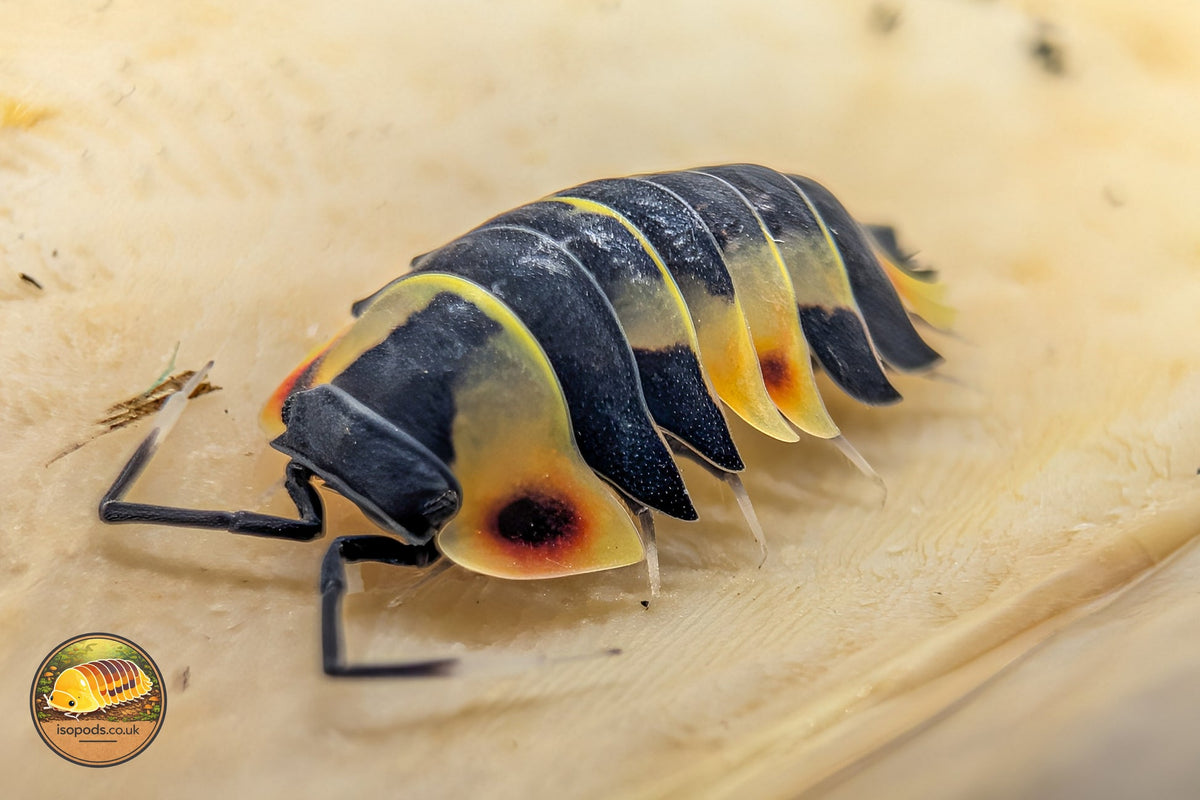
Ardentiella Pastel stands out for its softened colour palette rather than harsh contrast, with salmon, peach, coral, and orange-red tones blending into a more diffuse pastel look. For buyers drawn to premium Ardentiella lines, the appeal here is less about bold blocks of colour and more about a warmer, more layered finish when the colony is settled on bark and cork.
That visual appeal comes with the same kind of setup logic Ardentiella are known for. This is a humid tropical species best kept with climbing surfaces, bark faces, cork edges, lichen-bearing cover, decaying wood, and fresh air. They can be easier to appreciate around angled bark and sheltered surfaces than out on open substrate, so they suit keepers who enjoy watching enclosure use rather than expecting constant open-floor activity.
What makes Pastel different
Pastel is best approached as the softer-looking Ardentiella option. Instead of a harder, more sharply blocked look, this form leans into muted warm tones that can read as peachy, coral, salmon, or gently orange-red depending on the individual and the viewing angle. That makes it a strong choice for collectors who want an Ardentiella with a more blended, refined visual style.
How they use the enclosure
Like other Ardentiella, they are often most readable on bark, cork, branches, and sheltered raised surfaces. When the enclosure is working well, you may notice them resting along cork edges, moving over angled bark, or grazing where mossy or lichen-bearing surfaces meet cover. They are usually less about roaming across bare floor space and more about using humid surfaces that still have airflow.
Hidden periods are still normal, especially after disturbance or during settling-in. Low open visibility on its own is not a failure sign. It becomes more worth checking the setup if the whole colony stays packed into one wet corner, abandons bark use, or avoids most of the enclosure.
Before you order
-
Build upwards as well as across: give them bark or cork bark they can sit against and climb over, not just a flat floor with one hide. -
Keep a damp refuge: one area should stay properly moist below the surface, while the rest of the enclosure stays usable rather than soaked. -
Add a real food base: a deep layer of leaf litter and pieces of rot wood help support long-term grazing under cover. -
Prioritise airflow: high humidity works better here when the tub still smells fresh and earthy rather than stale.
Setup fit and common mistakes
Ardentiella Pastel is a poor match for sparse, flat, stuffy tubs. They usually do better when the enclosure includes bark faces, cork edges, sheltered gaps, decaying wood, and humid pockets they can use without sitting in stale wet air. Moss-covered sticks, branches, or other textured pieces of wood can also provide more sheltered raised surfaces for this bark-oriented setup.
The common mistakes are making the whole enclosure wet, relying on one hide, or giving humidity without enough ventilation. If the tub smells sour, stays heavily wet, or leaves the drier side bare and exposed, they may retreat and become harder to read. If you want a broader overview of moisture, cover, and airflow balance, the isopod habitat setup guide is a useful next step.
Feeding notes
This species should be fed through the enclosure first. Leaf litter, aged surfaces, decaying wood, and mature detritus should carry most of the long-term diet, with accessible bark and lichen-bearing surfaces adding useful grazing value. Fresh foods are better treated as extras than as the foundation.
Consistent calcium access is also worth providing, and limestone is an easy way to keep that available. If fresh foods get all the attention but litter and wood are weak or missing, the enclosure food base is usually the first thing to improve.
Who tends to enjoy this species
Ardentiella Pastel makes the most sense for keepers who want a visually refined tropical isopod and are happy to build the enclosure around bark, cover, and breathable humidity. If you enjoy spotting isopods on cork faces, sheltered branches, and covered grazing areas, this type is likely to be more satisfying than a species chosen mainly for open-floor activity.
If you want frequent obvious movement on bare substrate, or you prefer simpler tubs with minimal cover, this one may feel more demanding than expected.
Compare before you decide
If you are browsing within the genus, see the wider Ardentiella isopods range. If you want another same-genus option with a different look, Ardentiella Glass Phoenix is a useful comparison. For broader browsing across similar humidity-led species, you can also explore tropical isopods.
Ease of care
Preferred Temperature
Preferred Humidity
Popularity
Care Instructions
Care Instructions