🔥 Daily Isopod Auctions on WhatsApp! Grab species at auction prices, discover rare finds & join our growing community. Join Here
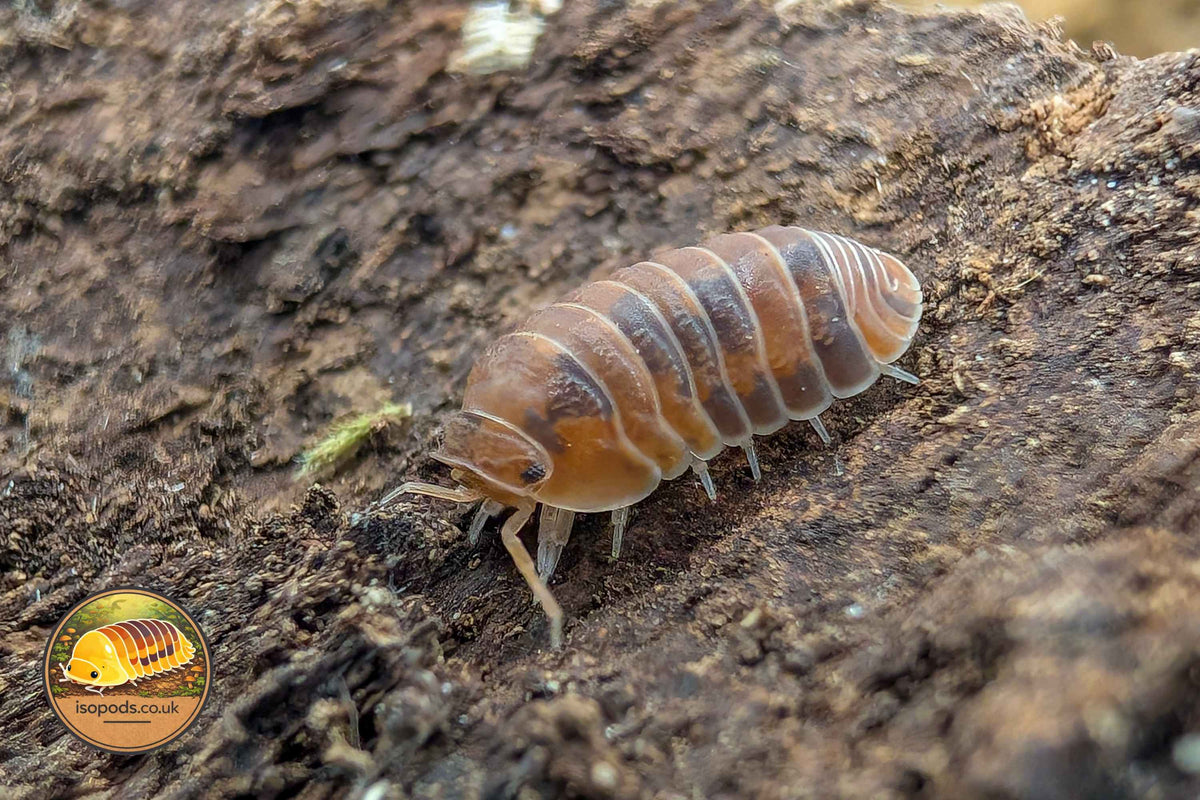
Cubaris murina "Anemone" Isopod
Low stock! Only 10 left
Regular price
£12.00 GBP
Sale price
£12.00 GBP
Regular price
Unit price
per
Tax included.
Shipping calculated at checkout.
Couldn't load pickup availability
- Fully secure checkout
- Trusted by thousands
- Rated and reviewed
Want next day delivery? Be quick!
You just missed it!
Question about this product?
We're happy to help.
Cubaris murina "Anemone" Isopods for Sale UK
Cubaris murina "Anemone" stands out for its soft, mottled look: an orange base colour broken up with pale sea-anemone-style markings, darker splotches, and colony-to-colony variation that gives it a calico-like feel rather than a clean uniform pattern. If you want a colourful Cubaris that feels more mixed and natural-looking than many high-contrast morphs, this is the appeal.
In keeper terms, this is still a humid-cover Cubaris, but murina are often easier to read than many more secretive tropical species. Once settled, they may spend time grazing across leaf litter and around bark edges when conditions are right, rather than staying hidden every hour of the day. That makes "Anemone" a good fit for buyers who want colour and readable behaviour without jumping straight to more specialist ducky-type projects.
What makes the Anemone morph different?
-
Pattern: Softer mixed mottling rather than one flat block of colour. -
Colour impression: Orange base tones with pale patches and darker scattered markings. -
Colony look: Calico-like variation across individuals, so the group tends to look more varied than a single-pattern morph. -
Murina behaviour: Often more surface-readable than many hidden Cubaris, especially around leaf litter, bark edges, and covered feeding areas.
Enclosure style that suits them
This morph should still be treated as a tropical, cover-loving isopod. Give it a reliable damp refuge, plenty of leaf litter, bark or cork to create shaded undersides, and some decaying wood in the enclosure so the colony can feed and rest under cover. cork bark works especially well because it creates the tight sheltered spaces murina often use between feeding bouts.
The best results usually come from a humid setup with airflow, not a sealed wet tub. Keep one side reliably damp below the surface, keep the other side drier but still covered, and avoid leaving them with one tiny wet corner doing all the work. If the whole colony is packed into one refuge all the time, the rest of the enclosure may be too dry, too exposed, or too stale.
If you want help building that damp refuge without soaking everything, sphagnum moss can help hold moisture in one sheltered area.
Feeding and long-term support
Like other murina, these do best when the enclosure itself carries most of the diet. Leaf litter, rotting wood, and mature substrate should do the heavy lifting, with fresh foods used as extras rather than the foundation. If you are unsure how to balance that, what do isopods eat gives a practical overview of the detritus-first approach.
A steady calcium source is also worth keeping available, and limestone is a simple way to provide that ongoing support. Fresh foods and protein can be offered in small amounts, but overfeeding in a humid enclosure is an easy way to create sour patches and mouldy leftovers.
Who usually enjoys this morph most?
Cubaris murina "Anemone" is a good match for keepers who want a colourful Cubaris with more day-to-day readability than many shelter-heavy collector species. It suits setups with deep litter, bark, humid cover, and a bit of patience, but it is usually more rewarding than very hidden forms if you enjoy spotting natural movement through the enclosure.
It may be a weaker choice if what you really want is a constantly exposed species for open-floor display, or if your setup style is sparse, dry, or short on leaf litter and sheltered feeding areas.
Before ordering
Have the enclosure ready with a damp refuge, a drier covered side, bark or cork hides, plenty of litter, and a stable food base already in place. Murina often settle better when they arrive to an enclosure that already feels usable, rather than a bare fresh tub with one wet patch and little cover.
Compare before you choose
If you want to browse more options in the same group, see our Cubaris isopods. If you want another murina morph to compare pattern style against, Cubaris murina "Papaya" is the closest useful comparison. If you are still deciding between colourful but approachable tropical options and more specialist-looking Cubaris, you can also browse the wider tropical isopods range.
Ease of care
Preferred Temperature
Preferred Humidity
Popularity
Care Instructions
Care Instructions