🔥 Daily Isopod Auctions on WhatsApp! Grab species at auction prices, discover rare finds & join our growing community. Join Here
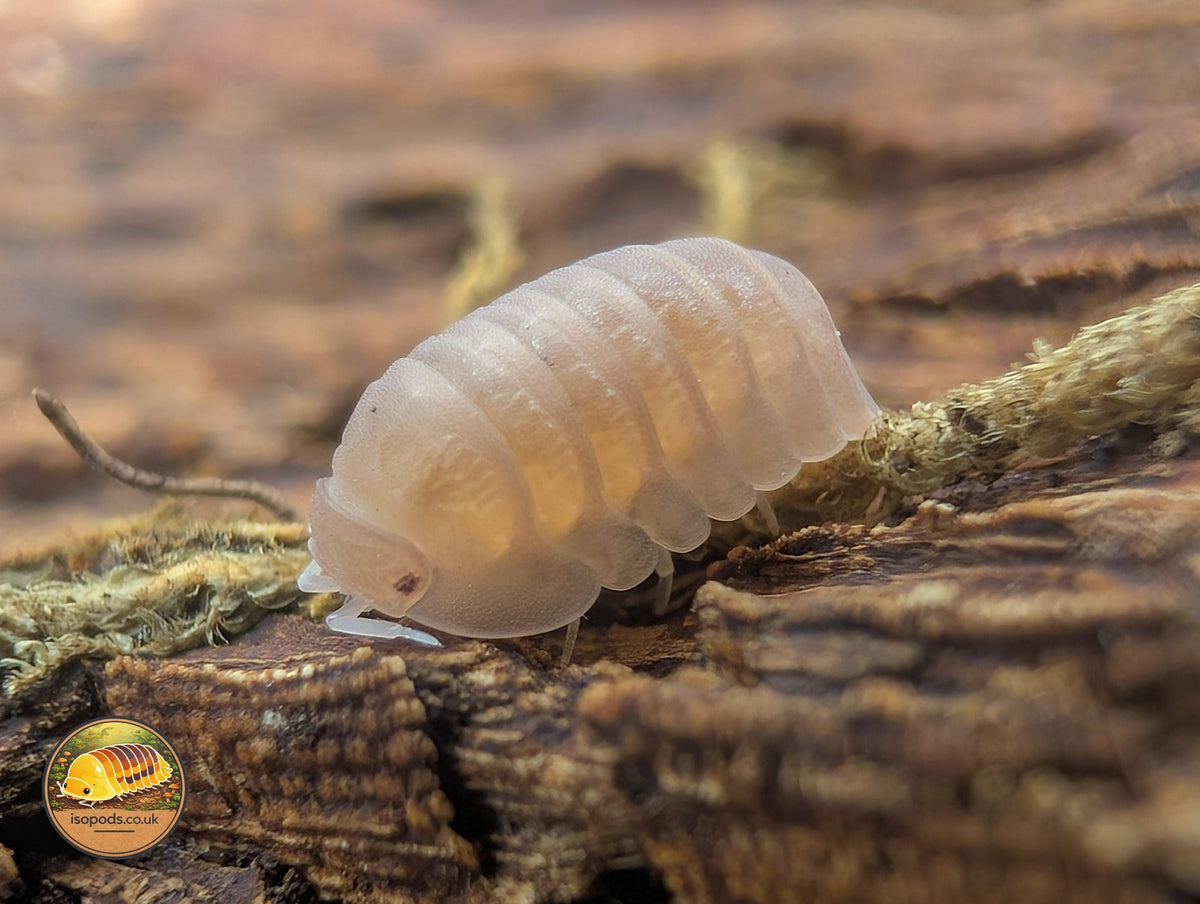
Cubaris murina "Papaya" Isopod
20 in stock
Regular price
£6.00 GBP
Sale price
£6.00 GBP
Regular price
Unit price
per
Tax included.
Shipping calculated at checkout.
Couldn't load pickup availability
- Fully secure checkout
- Trusted by thousands
- Rated and reviewed
Want next day delivery? Be quick!
You just missed it!
Question about this product?
We're happy to help.
Cubaris murina "Papaya" Isopods for Sale UK
Cubaris murina "Papaya" stands out for its soft fruit-toned colouring: dull pink, peach, orange-pink, and pale albino-like shades that can vary across the colony. If you like murina forms with a warmer, gentler look than standard stock, Papaya is the one that brings that washed papaya-and-peach feel rather than the plainer tones of Normal or the cleaner white look of Glacier.
In keeper terms, this is still a murina-style Cubaris rather than a fragile showpiece species. It is often more adaptable and easier to read than many specialist Cubaris, with more regular movement around leaf litter, bark edges, and covered feeding spots once settled. It still needs a humid, well-covered enclosure with steady moisture, good leaf litter, rotting wood, bark, and reliable calcium access.
What makes Papaya different?
-
Colour tone: warm pink-orange, peach, papaya, and pale creamy tones rather than a plain grey-brown murina look. -
Colony variation: colour can vary between individuals, with some appearing softer or lighter than others. -
Compared with Murina Normal: usually warmer and more fruit-toned. -
Compared with Glacier: usually less pure white and more peachy or orange-pink overall. -
General behaviour: often more open and adaptable than many Cubaris, but still best with plenty of cover rather than a sparse tub.
How they usually behave
Murina forms are often a more forgiving way into Cubaris-style keeping than very hidden collector species, and Papaya follows that broad pattern. You may see them moving around litter, under bark, along cork edges, or appearing around food more often than you would with quieter tropical species, but they should not be treated like a constantly exposed display isopod.
A healthy colony may still spend long periods under cover. Normal behaviour usually looks like animals using several sheltered areas, gradual wear on leaf litter, and regular use of bark, rotting wood, and the damp refuge. If the whole colony stays packed into one wet corner, the rest of the enclosure may be too dry, too open, or too stale.
Before you order
Prepare an enclosure with a reliable damp refuge and a drier side that is still covered, not bare. A strong surface layer of leaf litter is important for both grazing and shelter. Add cork bark and rot wood so the colony has shaded undersides, bark edges, and quiet places to feed without sitting in the open.
A patch of sphagnum moss can help hold one humid refuge steady, but avoid turning the whole tub wet. Murina do best when the enclosure stays humid without becoming sour, muddy, or airless. Steady calcium access is also worth giving from the start, and limestone is a practical option.
Feeding and enclosure support
Like other Cubaris, Papaya should be treated as detritus-first. The main diet comes from leaf litter, rotting wood, and the mature organic base of the enclosure. Fresh foods can be added sparingly, but they should not replace the long-term food base.
If fresh food always gets a strong response but litter and wood are barely being used, the enclosure may be too new or too thin on natural food sources. In a humid tub, leftovers should be kept small and monitored so they do not foul under cover.
Who tends to enjoy this form most
Papaya suits keepers who want a warmer, softer murina morph and prefer colour interest without needing a species that is visible every minute of the day. It makes sense for buyers who like tropical enclosures with bark, litter, and wood, and who enjoy watching a colony settle into several covered areas rather than expecting constant open-floor activity.
If your main goal is a bright white murina line, Glacier is the cleaner comparison. If you want a more standard murina look, Normal may make more sense. Papaya sits in the middle as the warmer, fruit-toned option.
Compare before you choose
If you are deciding between murina forms, compare Papaya with Cubaris murina Normal for a more standard look, or Cubaris murina Glacier for a paler white-leaning alternative. You can also browse more Cubaris isopods if you want to compare Papaya against other tropical options, and the isopod habitat setup guide is a useful next step if you are still building the enclosure before ordering.
Ease of care
Preferred Temperature
Preferred Humidity
Popularity
Care Instructions
Care Instructions