🔥 Daily Isopod Auctions on WhatsApp! Grab species at auction prices, discover rare finds & join our growing community. Join Here
Cubaris Murina Isopod
Low stock! Only 10 left
Regular price
£6.00 GBP
Sale price
£6.00 GBP
Regular price
Unit price
per
Tax included.
Shipping calculated at checkout.
Couldn't load pickup availability
- Fully secure checkout
- Trusted by thousands
- Rated and reviewed
Want next day delivery? Be quick!
You just missed it!
Question about this product?
We're happy to help.
Cubaris murina Isopods for Sale UK
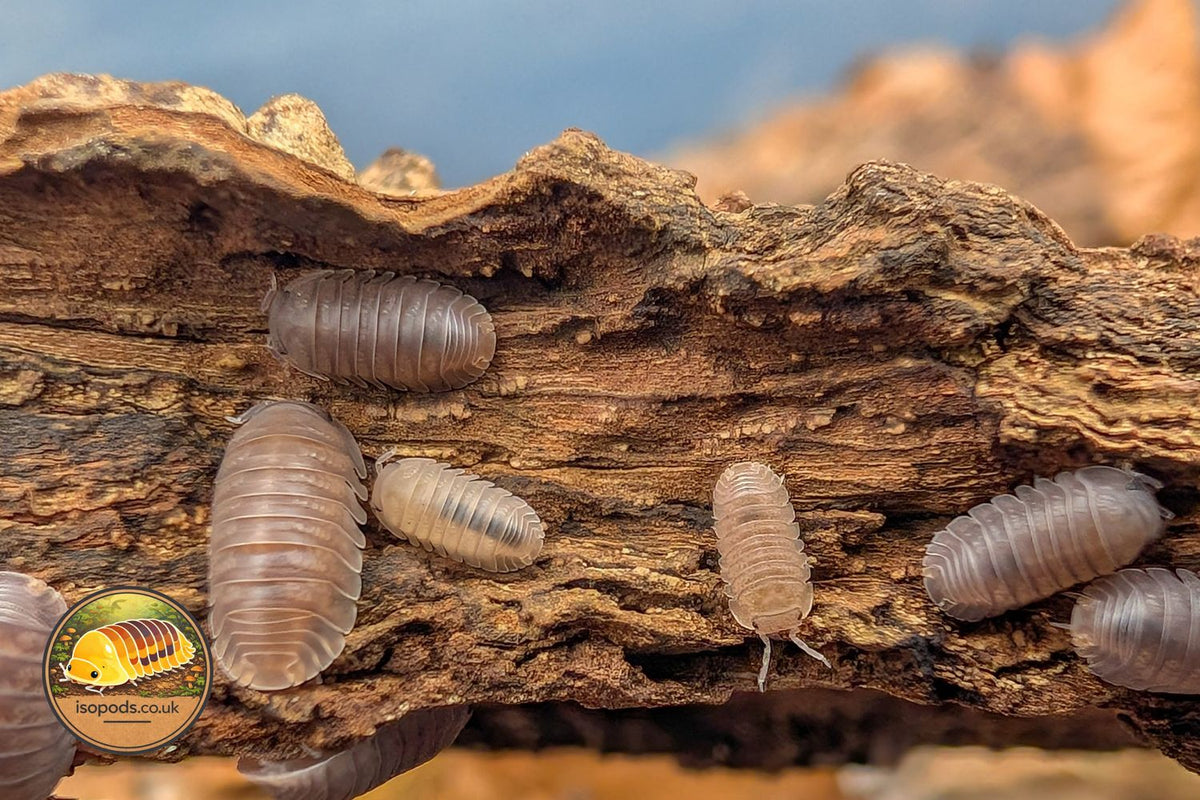
Cubaris murina (Normal) is the practical baseline form of murina: smaller, muted, and more understated than many collector-led Cubaris, with natural grey-brown tones and a more everyday enclosure presence than ducky-style or cave-leaning forms. If you want to understand what murina is like without starting from the brightest morphs, this is the reference point.
In a settled enclosure, this form is often easier to read than more secretive Cubaris. You may see it grazing through leaf litter, using bark edges, and moving between the damp refuge and covered surface areas, rather than staying hidden in one tight pocket all the time. That does not make it carefree, but it does make it a useful choice for keepers who want a tropical Cubaris that still gives readable day-to-day behaviour.
What makes Murina Normal worth choosing?
-
Natural look: muted wild-type grey-brown colouring rather than a bright selective morph. -
Useful comparison point: a good baseline if you also browse murina forms such as Papaya or other colourful lines. -
Readable behaviour: often seen around litter, bark, and upper substrate more readily than many specialist Cubaris. -
Practical tropical setup fit: wants humid shelter, cover, calcium, and airflow, but is not as niche in feel as some higher-profile Cubaris types.
What to expect in the enclosure
This species is still best approached as a shelter-loving tropical isopod. Expect most activity around covered areas rather than long periods on bare open substrate. Normal sightings often happen under cork, along bark edges, within leaf litter, and near the top of the substrate where moisture and cover meet.
Once settled, a healthy colony may spread through several sheltered spots instead of packing into one damp corner. That is a better sign than chasing constant visibility. If the whole group stays in one wet pocket, the rest of the enclosure may be too dry, too exposed, or lacking enough bark, litter, and covered routes.
Setup that usually works well
Murina Normal does best with a mature detritus base and enough cover to let it move without crossing too much bare ground. A useful setup usually includes plenty of leaf litter, some rot wood for long-term grazing, bark or cork hides, and a reliable damp refuge that stays moist below the surface without turning the whole tub soggy.
A patch of sphagnum moss can help hold one humid refuge, while flat pieces of cork bark create shaded undersides and feeding cover. Good airflow still matters. This species usually does better in humid, fresh conditions than in a sealed wet tub that turns stale or sour.
Calcium should also stay available. Limestone is a simple way to keep that support in the enclosure without making feeding more complicated.
Feeding style
Like other Cubaris, Murina Normal should be treated as detritus-first. The core diet comes from leaf litter, decomposing wood, mature substrate, and the films that build up across a settled enclosure. Fresh foods are useful as extras, not the foundation.
If you are building the enclosure from scratch, the isopod feeding guide is a useful primer on why litter and wood matter more than dramatic feeding response. Quiet grazing under cover is normal here, so do not judge the colony only by how fast it rushes to added food.
Who tends to enjoy this species most?
This form makes sense for buyers who want a grounded, less flashy Cubaris with natural colouring and more approachable behaviour than many collector-first types. It suits keepers who enjoy watching litter use, bark use, and steady enclosure activity over time.
It is less suitable if your main goal is a bold display species that stays out in the open for long periods, or if your setup style is sparse, dry, or heavily exposed.
Before ordering
Have the enclosure ready with a clear damp refuge, a drier but still covered side, heavy litter cover, and at least a few proper hiding places. This species is often broad in its enclosure use when it feels secure, but it can still retreat if the tub is flat, stale, or missing enough cover.
Compare before you choose
If you want to stay within the same genus, browse more Cubaris isopods for comparison. If you are deciding between baseline murina and brighter morphs, Papaya is the clearest next look. If you want a darker tropical Cubaris with a different visual feel, Cubaris Black Castle is another useful contrast.
Ease of care
Preferred Temperature
Preferred Humidity
Popularity
Care Instructions
Care Instructions