🔥 Daily Isopod Auctions on WhatsApp! Grab species at auction prices, discover rare finds & join our growing community. Join Here
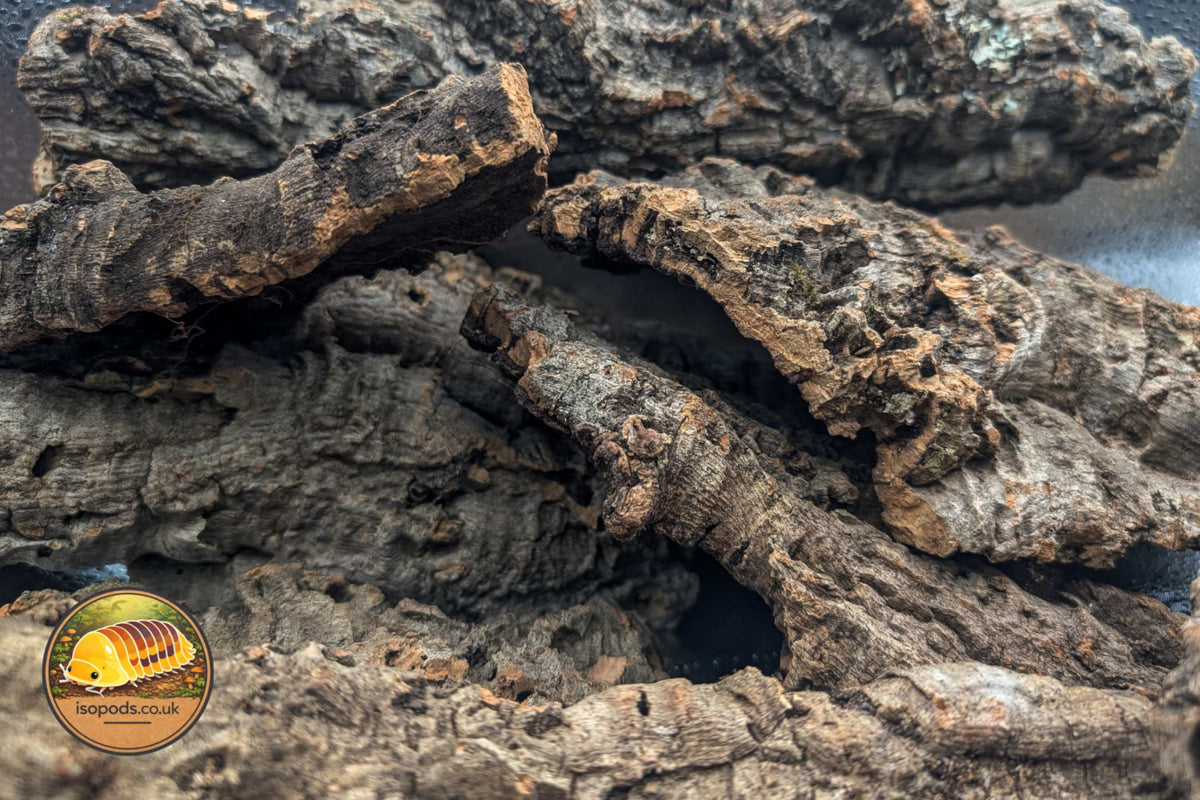
Cork Bark for Isopod Enclosures
47 in stock
Regular price
£8.50 GBP
Sale price
£8.50 GBP
Regular price
Unit price
per
Tax included.
Shipping calculated at checkout.
Couldn't load pickup availability
- Fully secure checkout
- Trusted by thousands
- Rated and reviewed
Want next day delivery? Be quick!
You just missed it!
Question about this product?
We're happy to help.
Cork Bark for Isopod Enclosures
Cork bark gives an isopod enclosure more usable cover, not just a better look. It creates shaded undersides, bark edges, and sheltered routes where isopods can rest, feed, and move without crossing long stretches of bare open ground.
It is especially helpful when a tub feels exposed, when most of the colony is squeezed under one hide, or when the damp refuge and drier side feel disconnected rather than part of one usable setup.
What Cork Bark Does
This is a cover item first. Cork bark adds shelter above the substrate and gives isopods more places to settle, graze, and move under cover. Many species make better use of the enclosure when there are bark faces, shaded undersides, and sheltered edges instead of open surface with only one main hide.
It can also help connect different parts of the enclosure. A piece that bridges part of the damp side and part of the drier side gives the colony more choice without making the whole tub uniformly wet.
How to Use It
Cork bark usually works better when it is slightly raised or angled rather than pressed flat into the substrate. That leaves a usable gap underneath while still allowing air to move around the bark.
- Place it so there is shaded space underneath, not just a flat decorative surface.
- Let some pieces sit near the moist refuge, with others extending into the drier covered area.
- Use it alongside leaf litter and other enclosure materials rather than as the only shelter item.
- Watch whether the colony starts using several bark edges and hiding spots instead of crowding into one corner.
If you are still planning the enclosure layout, the isopod habitat setup guide explains how bark, moisture, cover, and airflow work together.
Where It Fits in a Setup
Cork bark helps make both the damp refuge and the drier side easier to use by adding shelter where the enclosure would otherwise feel open. In many setups, it pairs well with sphagnum moss to keep a damp retreat underneath or beside the bark while leaving other areas less wet.
It is often a useful addition when you want more shaded feeding spots, more hiding places, or better covered routes across the enclosure. Some species use bark and covered edges more heavily than others, but most colonies benefit from having more than a flat open floor.
When It Is Most Useful
Cork bark is most useful when the enclosure already has substrate but still lacks usable cover above it. It can make a clear difference if the colony stays under one object, avoids open areas, or rarely moves far from the wettest patch.
It may matter less in a setup that already has deep litter, layered wood, and several good hides. Even then, bark can still add shelter without taking up much floor space.
Common Mistakes
-
Using it for appearance only: if the bark does not create shaded gaps or usable undersides, it is doing very little for the colony. -
Laying every piece flat: this limits the sheltered space underneath and reduces the value of the bark as cover. -
Putting all of it on the wet side: this can crowd the damp refuge while leaving the drier side bare and underused. -
Expecting bark to do every job: cork bark adds cover, but it does not replace a proper food base, a working moist refuge, or enough surface litter.
Who This Is For
This suits keepers who want better cover, more bark surfaces, and more sheltered routes through the enclosure. It is particularly useful for tubs that look open, have only one main hide, or need a clearer transition between damp and drier areas.
If you are unsure whether the main issue is cover, moisture balance, or feeding, the isopod care guide can help you read what the enclosure is showing you.
Why Choose Cork Bark
Cork bark is a simple way to make an enclosure more usable without making it crowded. It adds shaded resting places, reduces exposed floor space, and gives the colony more sheltered paths through the setup. Used well, it helps the enclosure feel more practical for the animals rather than just fuller to look at.
Must have?