🔥 Daily Isopod Auctions on WhatsApp! Grab species at auction prices, discover rare finds & join our growing community. Join Here
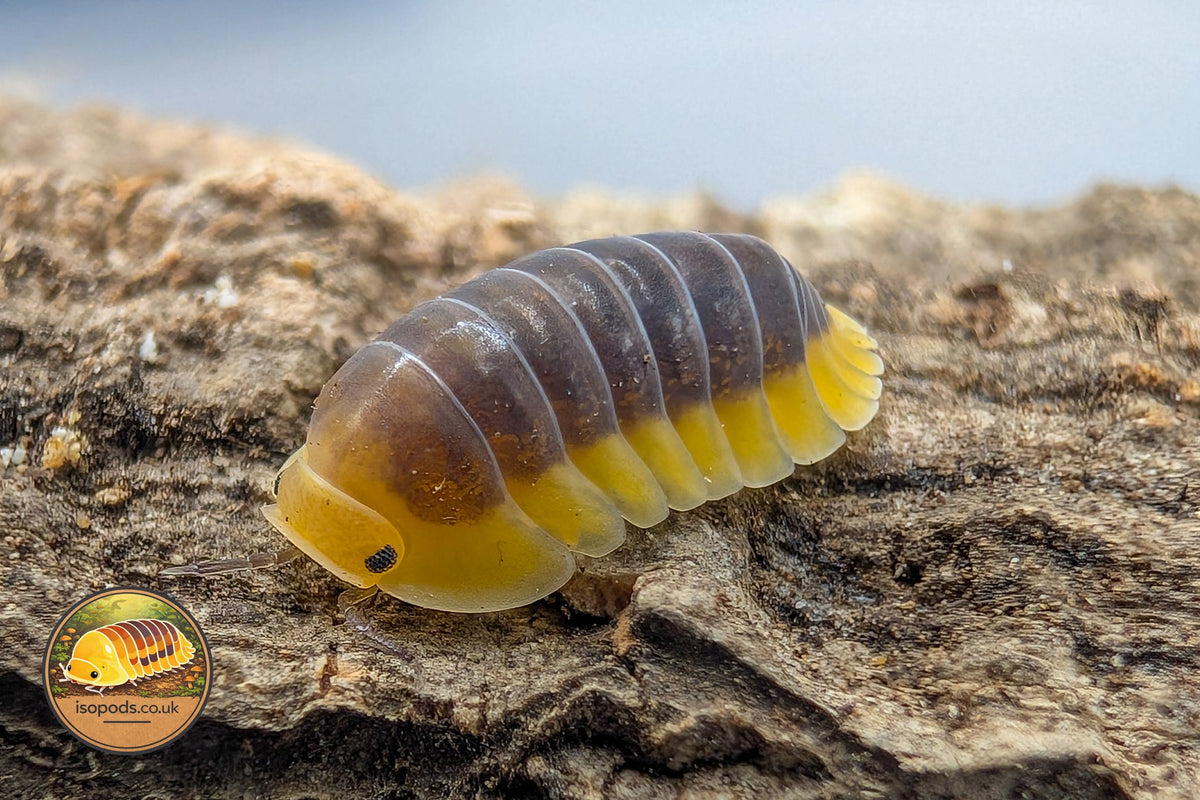
Cubaris Lemon Blue Isopod
Low stock! Only 2 left
Regular price
£85.00 GBP
Sale price
£85.00 GBP
Regular price
Unit price
per
Tax included.
Shipping calculated at checkout.
Couldn't load pickup availability
- Fully secure checkout
- Trusted by thousands
- Rated and reviewed
Want next day delivery? Be quick!
You just missed it!
Question about this product?
We're happy to help.
Cubaris Lemon Blue Isopods for Sale UK
Cubaris Lemon Blue stands out for its unusual two-tone contrast: lemon-yellow edging or body highlights set against softer powder-blue, blue-grey, or blue-tinged inner segments. It is an eye-catching Cubaris for keepers who enjoy colour-led species, but the look is best approached honestly rather than as a fixed promise, because yellow and blue tones can shift with age, diet, and captive conditions.
In enclosure terms, this is still very much a humid tropical Cubaris. Expect a colony that spends more time under bark, leaf litter, and other shaded damp cover than crossing open substrate. If you want a visually distinctive species with quieter, more hidden behaviour rather than constant display movement, Lemon Blue fits that brief well.
What makes Lemon Blue different
-
Main appeal: strong yellow-and-blue contrast rather than a flat single-tone look -
Normal visibility: usually easier to find under cover than out in the open -
Typical behaviour: calm, shelter-oriented, and better judged by enclosure use than surface activity -
Colour expectation: attractive contrast can vary between individuals and may look richer or softer depending on age and conditions -
Keeper style: suits patient Cubaris keepers more than display-first buyers
Colour, contrast, and collector appeal
The reason to choose this species is visual character. Lemon Blue has the kind of soft but striking contrast that stands out in a collection, especially when seen against dark substrate, bark, or leaf litter. Some keepers also associate this type with Thailand in the hobby, which adds to its collector interest, but the main buying reason here is the look in captivity rather than any inflated rarity story.
It is worth keeping expectations grounded: not every animal will show the exact same strength of yellow or blue at all times. A settled colony with a good detritus base, mineral access, and stable humid conditions may hold colour better than one kept too dry, too exposed, or too inconsistently fed, but no honest product page should promise permanent peak colour in every individual.
Enclosure style that suits them
Lemon Blue does best in a covered tropical setup with deep substrate, a reliable damp refuge, and enough shelter that the colony can move without crossing too much bare ground. A strong layer of leaf litter should cover much of the surface, while pieces of cork bark create shaded undersides and tighter hiding spaces where Cubaris often rest and feed.
Add rotting wood as part of the enclosure rather than treating it as an occasional extra. The damp side should stay moist below the surface, but the whole tub should not be soaked. This species usually responds better to humid cover with fresh air than to a sealed wet box that turns stale or sour.
Before ordering this species
- Prepare a humid refuge that stays damp without flooding the whole enclosure.
- Make sure the tub has bark, leaf litter, and sheltered feeding spots from day one.
- Use deep organic substrate with rotting wood already in place.
- Keep a steady calcium source available, such as limestone.
- Avoid buying this species for a sparse or fast-drying setup.
Feeding approach
The core diet should come from the enclosure itself: litter, rotting wood, mature substrate, and the microbial films that build up in a settled tub. Fresh foods are best used as small extras rather than the main food source. If the colony only seems active when rich food is added, the long-term food base is usually too weak.
Calcium should be continuously available rather than added as an afterthought. Feed lightly in humid enclosures, because leftovers can spoil quickly under cover. If you want a broader overview of detritus-first feeding, what do isopods eat explains how litter, wood, and supplements fit together.
Who usually enjoys Lemon Blue most
This is a good match for keepers who enjoy colour-focused Cubaris, patient observation, and building a proper humid enclosure with bark, wood, and heavy litter. It is less likely to satisfy buyers who want frequent open activity, bold feeding displays, or a species that looks equally vivid in every individual at all times.
Compare before you decide
If you are browsing within the same genus, the Cubaris isopods collection is the best place to compare similar tropical shelter-loving species. For a lighter, pale comparison within Cubaris, look at Cubaris Snow Queen. If you prefer a darker, moodier collector look over bright contrast, Cubaris Black Castle may be the closer fit.
Ease of care
Preferred Temperature
Preferred Humidity
Popularity
Care Instructions
Care Instructions