🔥 Daily Isopod Auctions on WhatsApp! Grab species at auction prices, discover rare finds & join our growing community. Join Here
Cubaris Snow Queen Isopod
Low stock! Only 10 left
Regular price
£30.00 GBP
Sale price
£30.00 GBP
Regular price
Unit price
per
Tax included.
Shipping calculated at checkout.
Couldn't load pickup availability
- Fully secure checkout
- Trusted by thousands
- Rated and reviewed
Want next day delivery? Be quick!
You just missed it!
Question about this product?
We're happy to help.
Cubaris Snow Queen Isopods for Sale UK
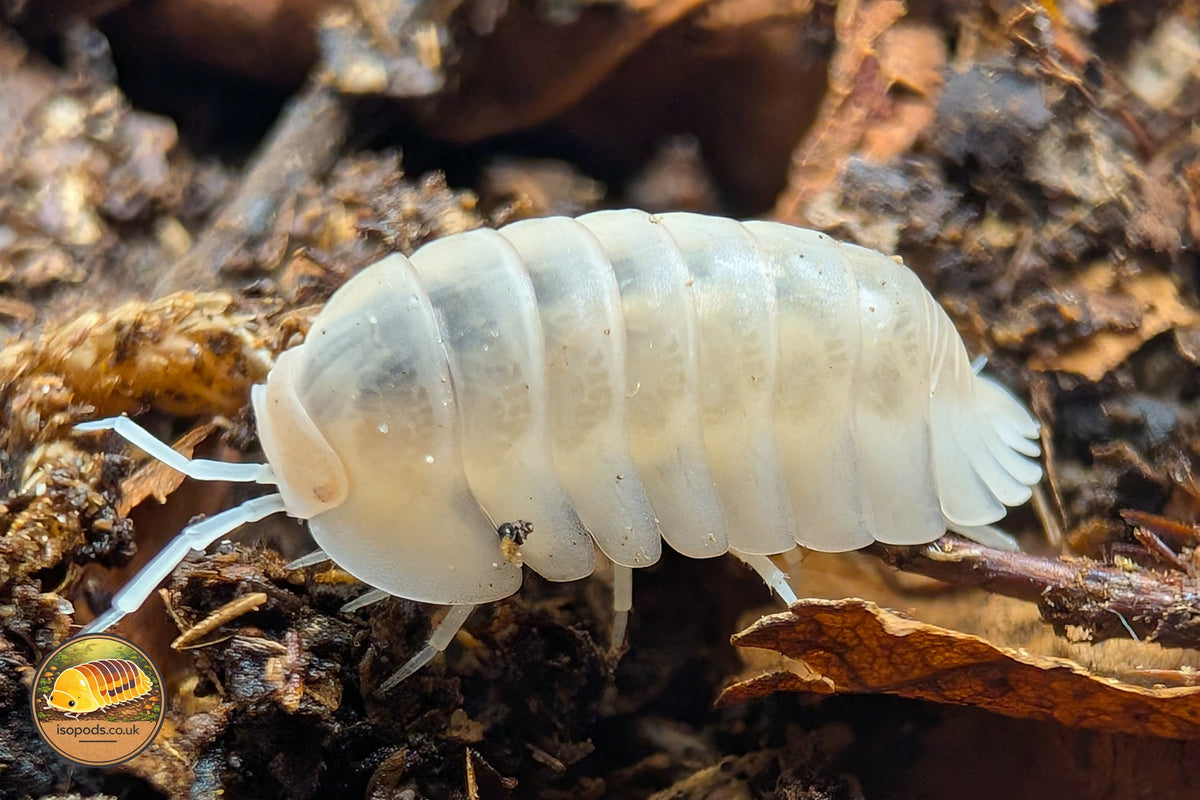
Cubaris Snow Queen is best known for its pale, frosted look: snow-white, pearl-white, and soft cream tones that can stand out sharply against dark substrate, bark, and leaf litter. That high-contrast appearance is the main draw here, but it is still a Cubaris first and foremost, so it is usually better suited to keepers who enjoy a refined tropical species with quieter behaviour rather than constant open display.
Once settled, Snow Queen may be noticed around bark edges, under leaf litter, and in sheltered humid areas, with more movement often happening after dark or when the enclosure has had time to mature. If you want a pale Cubaris with a clean visual effect and you are prepared to give it deep substrate, reliable cover, and a damp refuge without turning the whole tub wet, this is the kind of species that can be very rewarding.
What stands out about Snow Queen
-
Look: pale cream to snow-white tones that show especially well against darker enclosure materials. -
Visibility: usually more hidden than openly active surface genera; often seen under cover rather than out on bare substrate. -
Behaviour: shy at first, then steadier once established in a settled enclosure. -
Best viewed as: a collector-leaning tropical Cubaris with subtle behaviour and strong visual contrast.
How they usually behave in the enclosure
Snow Queen should be approached like other shelter-loving Cubaris. They may spend long periods under cork, bark, leaf litter, or in humid lower layers, especially during settling-in. Limited open-floor sightings do not automatically mean the colony is struggling.
A healthier sign is when individuals turn up in more than one covered area over time, with gradual wear on litter and quiet feeding under shelter. If the whole colony stays packed into one damp corner, the rest of the tub may be too dry, too exposed, or too stale to use comfortably.
Before you order
Prepare a tropical enclosure with a proper food base already in place. A thick layer of leaf litter should cover much of the surface, with rot wood and bark or cork creating shaded feeding and hiding areas. A damp refuge can be supported with sphagnum moss, but the whole enclosure should not be soaked end to end.
Snow Queen usually does best when there is deep substrate, one reliable humid side, and a drier but still covered side rather than a flat wet tub with one hide. If you are unsure how to balance moisture, cover, and airflow together, the isopod habitat setup guide is the most useful preparation step.
Feeding priorities
This species is best treated as detritus-first. The main diet should come from leaf litter, decaying wood, mature substrate, and the microbial films that build up in a stable enclosure. Fresh foods can be offered in small amounts, but they should support the enclosure food base rather than replace it.
Steady calcium access is worth providing, so keeping limestone available is a sensible long-term support item. Hidden feeding is common in Cubaris, so it is better to judge the colony by gradual litter use and quiet under-cover feeding than by dramatic reactions to supplements.
Who will enjoy this species most
Snow Queen makes the most sense for buyers who want the pale visual appeal of a white-toned Cubaris and are happy with a more patient style of keeping. It suits someone who likes dark substrate, bark, and litter setups where the isopods appear in flashes rather than staying on show all day.
If your main priority is regular open activity or a stronger visible feeding response, other isopods may feel more satisfying. If you are comparing within the same group, browse Cubaris isopods for similar sheltered tropical species.
Good to avoid
- keeping the whole enclosure wet and stale
- using too little leaf litter or too little wood
- setting them up in an exposed tub with minimal cover
- overchecking and repeatedly lifting hides while the colony is settling
Compare before you choose
If you want another pale or visually striking Cubaris to weigh against Snow Queen, Cubaris Cappuccino Cream is a useful comparison. If your interest is broader and you want to stay within humid, shelter-loving species, the tropical isopods collection is the best next browse.
Ease of care
Preferred Temperature
Preferred Humidity
Popularity
Care Instructions
Care Instructions