🔥 Daily Isopod Auctions on WhatsApp! Grab species at auction prices, discover rare finds & join our growing community. Join Here
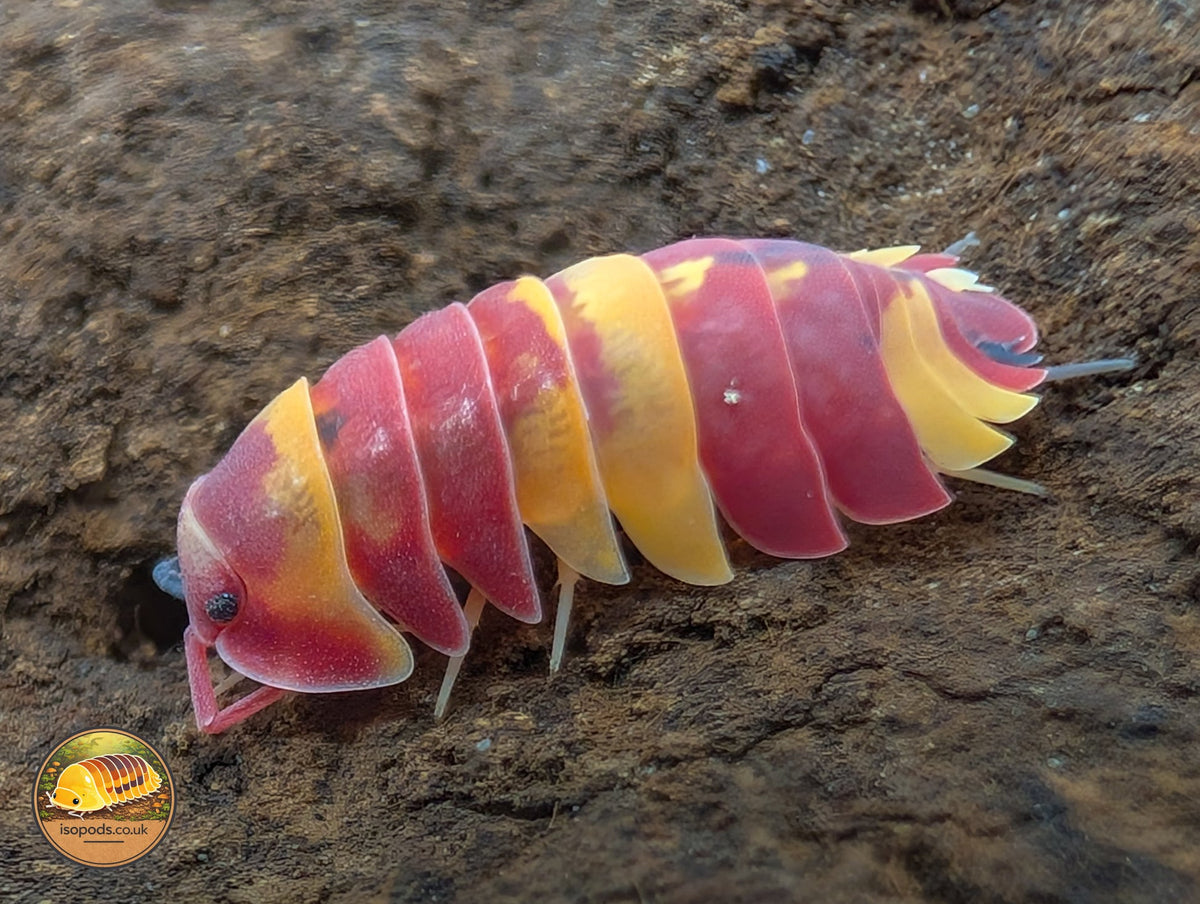
Ardentiella Scarlet Isopod
Low stock! Only 2 left
Regular price
£75.00 GBP
Sale price
£75.00 GBP
Regular price
Unit price
per
Tax included.
Shipping calculated at checkout.
Couldn't load pickup availability
- Fully secure checkout
- Trusted by thousands
- Rated and reviewed
Want next day delivery? Be quick!
You just missed it!
Question about this product?
We're happy to help.
Ardentiella Scarlet Isopods for Sale UK
Ardentiella Scarlet is chosen first for colour. The strongest draw here is the vivid scarlet red and yellow look, which can stand out especially well when the colony is settled and using bark, cork, branches, and other sheltered raised surfaces rather than disappearing into a plain floor-only setup.
This is also one of the more visually rewarding Ardentiella options for keepers who enjoy active enclosure use, but it still needs the right setting to show that well. Expect better observation around bark faces, cork edges, mossy cover, and lichen-bearing surfaces than on bare open substrate, and prepare for a humid but breathable tropical enclosure rather than a flat wet tub.
What makes Scarlet stand out
-
Colour: bright scarlet red and yellow tones are the main reason many keepers choose this listing. -
Enclosure presence: often more interesting when seen moving over bark, cork, and sheltered surfaces than staying only in the lower litter. -
Behaviour style: can be more active and readable than very hidden tropical species, but should still not be treated as constantly visible. -
Genetics note: black offspring are often referred to in the hobby as scarlet-tri colour, and those offspring may still produce full scarlets later on. -
Setup fit: best matched to a layered tropical enclosure with bark, litter, cover, and fresh air rather than a sparse box with one damp corner.
Why this one gets attention
Scarlet has the kind of contrast that tends to catch the eye quickly, especially when the colony is using upright bark, cork edges, branches, or shaded raised areas. That combination of strong colour and noticeable enclosure use is what makes this listing feel different from tropical species that are mainly appreciated under litter or deep in lower cover.
That said, good visibility still depends on setup and settling time. A healthy colony may hide after disturbance, spend long periods tucked against cover, or favour humid sheltered surfaces over open floor. The realistic appeal is not nonstop display, but a more vivid Ardentiella that can be very satisfying to watch in a well-built enclosure.
Set the enclosure up first
Build this enclosure around usable surfaces, not just damp substrate. A generous layer of leaf litter, some rot wood, and upright or angled pieces of cork bark will give the colony places to rest, graze, and move while staying under cover.
Keep one damp refuge reliable, but avoid turning the whole tub wet and stale. Ardentiella generally do better with humidity plus air exchange than with sealed stuffy conditions. If you are still deciding how to balance bark, moisture, and airflow, the isopod habitat setup guide is the best supporting read before ordering.
Feeding and surface use
The main food base should still come from leaf litter, decaying wood, mature substrate, and the films that build up on natural enclosure materials. Fresh foods are extras, not the core diet. If the colony only seems responsive when richer foods are added, the enclosure itself may not be carrying enough long-term food value.
For Ardentiella, accessible bark and lichen-bearing surfaces can add useful grazing area as well as visual interest. Lichen sticks work best when placed where the colony can use them close to cover rather than out in the open.
Who tends to enjoy Scarlet most
This listing makes most sense for keepers who want a bright, showy tropical isopod and are willing to build around bark, branches, litter, and humid fresh air. It suits buyers who like watching enclosure behaviour on surfaces and edges, not just waiting for open-floor movement.
If you want a species mainly for very simple setups or constant open wandering, Scarlet may not be the best fit. It usually shows better in an enclosure with layered cover, sheltered routes, and surfaces the colony can actually use.
Compare before you choose
If you want another same-genus comparison with a softer colour route, Ardentiella Lava Pastel is a useful next look. If you want a broader browse of similar bark-and-surface tropicals, see the Ardentiella isopods collection. For a brighter mixed-colour alternative within the same wider tropical style, Ardentiella Quadcolour is also worth comparing.
Ease of care
Preferred Temperature
Preferred Humidity
Popularity
Care Instructions
Care Instructions