🔥 Daily Isopod Auctions on WhatsApp! Grab species at auction prices, discover rare finds & join our growing community. Join Here
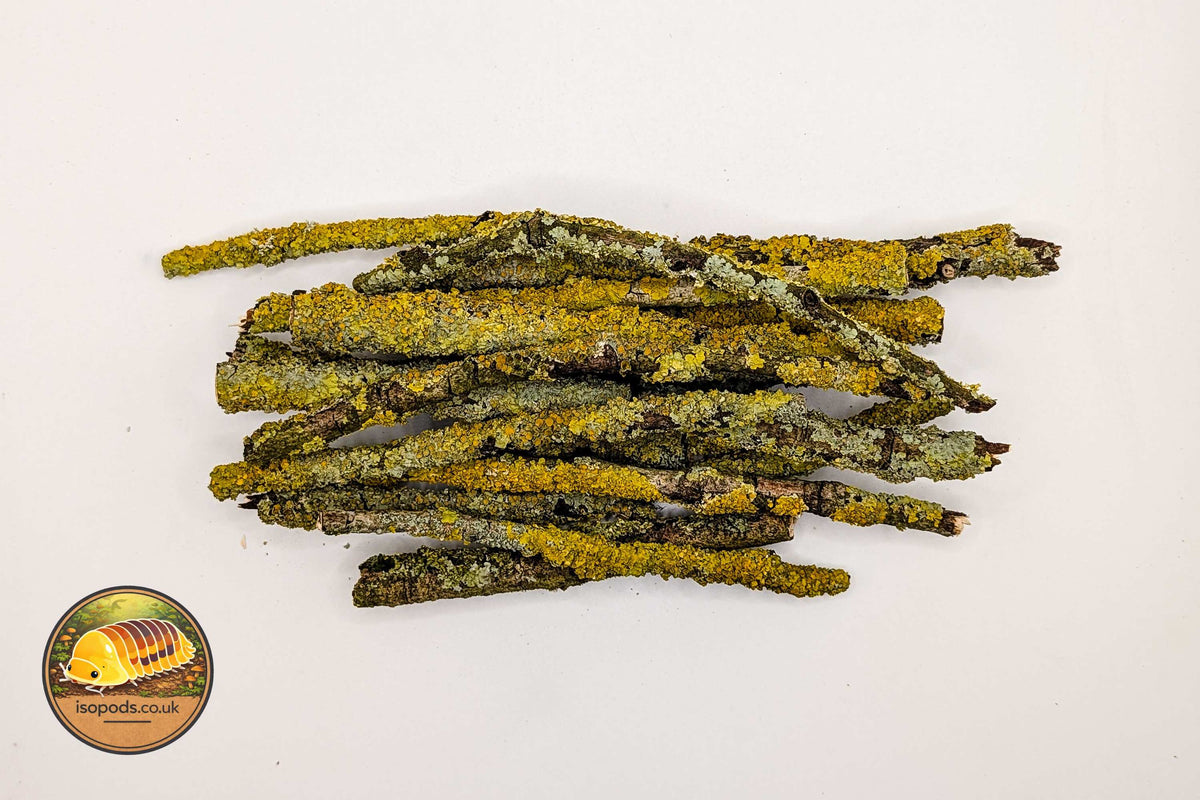
Lichen Sticks for Isopod Enclosures
48 in stock
Regular price
£7.50 GBP
Sale price
£7.50 GBP
Regular price
Unit price
per
Tax included.
Shipping calculated at checkout.
Couldn't load pickup availability
- Fully secure checkout
- Trusted by thousands
- Rated and reviewed
Want next day delivery? Be quick!
You just missed it!
Question about this product?
We're happy to help.
Lichen Sticks for Isopod Enclosures
Lichen sticks add extra grazing space above the substrate, which can be useful in enclosures where isopods already spend time around bark, wood, and other covered raised surfaces. They are usually better treated as a practical support item than as decoration.
What They Do in the Enclosure
Many isopods prefer to feed under cover rather than out on open substrate. Lichen sticks can extend that feeding space by adding a grazeable surface to bark faces, angled wood, and sheltered edges. They are most useful where the colony already uses raised cover instead of doing all of its feeding on the floor.
They work best as part of a broader detritus-based setup, not as a replacement for core foods. A proper layer of leaf litter still matters, because isopods are detritivores first and should not depend on one supplementary item alone.
How to Use Lichen Sticks
- Place them on or against bark, wood, or other raised cover where isopods already pause, hide, or graze.
- Keep them accessible above the substrate rather than burying them.
- Use them to make sheltered upper areas more usable, not just to decorate the enclosure.
- Replace them when the lichen has been heavily grazed or the stick is no longer offering much useful surface.
Where They Fit in a Setup
Lichen sticks make the most sense in enclosures that already have good cover, a damp refuge, and a usable drier side. They pair naturally with cork bark or similar hard surfaces, because those pieces create shaded undersides and edges that isopods may use while feeding.
If the enclosure feels bare, flat, or overly wet, lichen alone will not correct the underlying problem. The colony still needs cover, airflow, and a working food base. If you are building or adjusting the enclosure first, the isopod habitat setup guide explains how moisture, cover, and air exchange work together.
When You Are Most Likely to Need Them
This product is often most useful for keepers running enclosures for species or genera that make noticeable use of bark, wood, and sheltered raised surfaces, including some lines often associated with lichen grazing. In those setups, lichen sticks can help spread feeding activity beyond the substrate and make more of the enclosure usable.
For more generalist colonies, they may be an optional extra rather than a core item. If your isopods already feed well through litter, wood, and the lower cover layer, lichen sticks can still add variety without needing to do the main nutritional work.
Common Mistakes
-
Using them as decoration only. If the sticks are placed where the colony rarely goes, they add little practical value. Put them where isopods already shelter or travel. -
Burying them in substrate. That reduces their role as an exposed grazing surface and can make them less usable. -
Expecting them to replace the food base. Lichen can support feeding, but it should sit alongside litter, decomposing material, and mature substrate rather than replacing them. -
Trying to fix a poor enclosure with one item. If the setup is stale, muddy, or too bare, improve the enclosure first instead of relying on lichen sticks to change colony behaviour on their own.
Who This Product Suits
Lichen sticks suit keepers who want to add more feeding surface around bark, wood, and sheltered edges for bark-using or cover-oriented isopods. They are most worth considering when the enclosure already has good basic support in place and you want to make raised areas more useful.
If you are unsure whether your setup already has the right balance of food base and cover, it can also help to read what do isopods eat before treating lichen as a primary feeding solution.
Must have?