🔥 Daily Isopod Auctions on WhatsApp! Grab species at auction prices, discover rare finds & join our growing community. Join Here
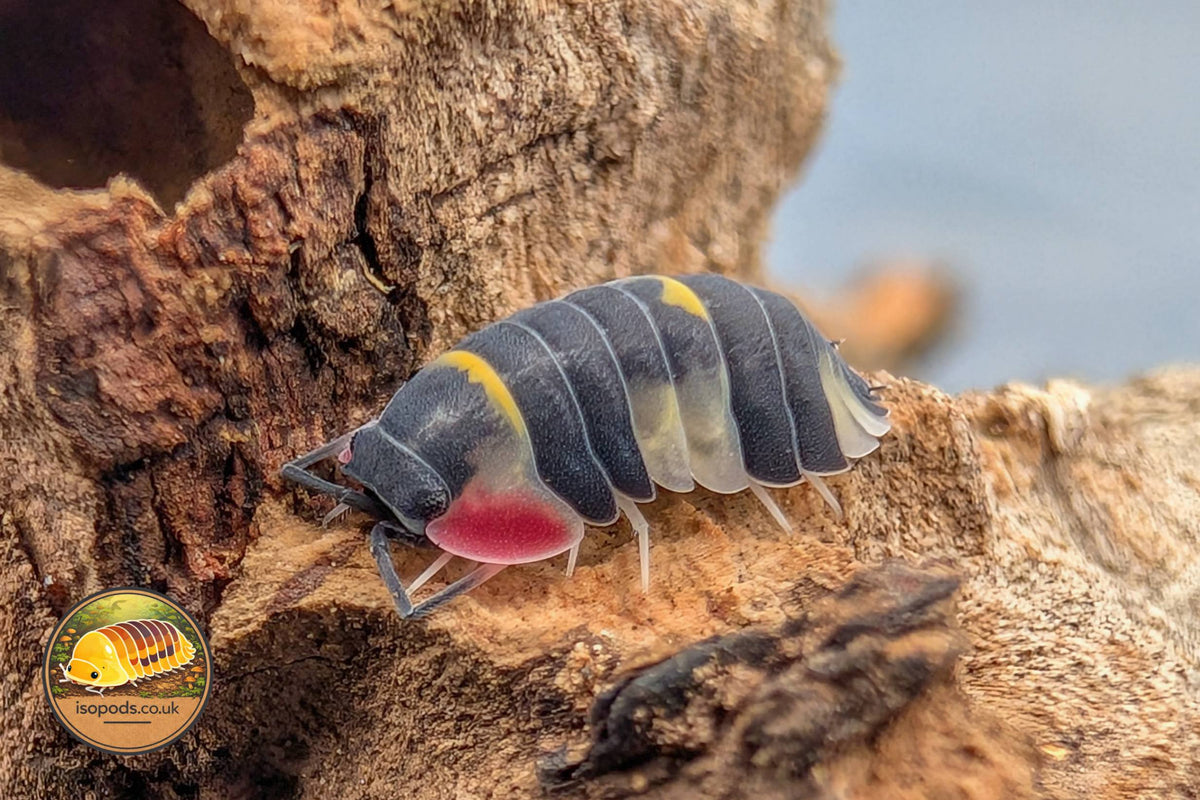
Ardentiella Quadcolour Isopod
Low stock! Only 7 left
Regular price
£75.00 GBP
Sale price
£75.00 GBP
Regular price
Unit price
per
Tax included.
Shipping calculated at checkout.
Couldn't load pickup availability
- Fully secure checkout
- Trusted by thousands
- Rated and reviewed
Want next day delivery? Be quick!
You just missed it!
Question about this product?
We're happy to help.
Ardentiella Quadcolour Isopods for Sale UK
Ardentiella Quadcolour tends to be most interesting when the enclosure gives it usable bark, moss, and lichen-bearing surfaces rather than just a damp floor. Keepers are more likely to notice this species resting or grazing on cork edges, shaded bark faces, and other covered raised areas than crossing bare substrate. If that surface use disappears, or the colony compresses into one wet corner, the setup is often too flat, too exposed, or too stale.
Key Traits
-
Visibility: Often easier to spot on bark, moss, and lichen-covered surfaces than out on open substrate. -
Behaviour: Usually grazes on sheltered surfaces and retreats quickly after disturbance. -
Growth rate: Best treated as steady rather than fast-expanding. -
Sensitivity: Can respond poorly to stale air, missing bark cover, or weak access to usable lichen surfaces. -
Difficulty: Better suited to keepers who can hold humidity steady without letting the enclosure become stagnant.
Behaviour and Enclosure Use
This is a species to judge by where it chooses to spend time. In a settled enclosure, Ardentiella Quadcolour is more likely to use angled bark, cork edges, mossy patches, and reachable lichen than to bury deeply or roam open floor for long periods. That fits the wider Ardentiella pattern of using bark and sheltered raised surfaces more than many lower-cover tropical species.
Lower open visibility is not automatically a problem. They may stay tucked into bark faces and shaded gaps for long stretches, especially after shipping, rehousing, or frequent checking. More useful warning signs are a whole colony packed into one wet patch, little use of bark surfaces, or a sudden shift away from areas they were using before.
When conditions suit them, the behaviour is often subtle but readable: quiet grazing, repeated use of bark and lichen, and movement between humid covered areas rather than constant wandering across open substrate.
Habitat and Setup
Ardentiella Quadcolour usually does better in an enclosure built around cork bark, leaf litter, mossy cover, and reachable lichen-bearing surfaces than in a flat tub with one damp patch. Upright or angled bark gives them shaded faces and sheltered routes, which makes it easier for the colony to rest and graze without sitting fully exposed.
The lower layer still matters. Use a substrate that holds moisture without turning muddy, cover much of the surface with leaf litter, and keep one clear moist refuge damp below the surface. The rest of the enclosure should stay usable rather than soaked. A humid setup should still have fresh air, so avoid both sealed stagnant conditions and harsh drying.
If you want a broader overview of moisture balance, cover, and airflow, the isopod habitat setup guide is a useful next step.
Feeding
Lichen appears to be an important feeding and behaviour anchor for this listing, so it is better treated as part of the enclosure than as a decorative extra. Place it where the colony can reach it under cover, not out in exposed open areas. Moss-covered sticks, branches, or textured pieces of wood can also add more usable raised surfaces instead of leaving all the interest on the enclosure floor.
The enclosure still needs a proper detritus base. Leaf litter should remain available at all times, and rot wood supports longer-term grazing and sheltered feeding. Fresh foods and protein can be offered carefully, but they should stay supplemental. If the colony only reacts to offered foods and the litter base is weak, the enclosure is probably underbuilt.
Reliable mineral access is also worth keeping available. Limestone can work as a steady calcium source alongside the main detritus base.
Common Failure Points
-
Too little usable bark or cover: the colony stays hidden, uses only one small area, or stops appearing on raised surfaces. -
Stale humid air: activity drops, the enclosure smells flat or sour, and bark use often becomes weaker. -
Lichen placed badly or not kept available: less surface grazing and more withdrawn behaviour can follow. -
Whole enclosure kept wet: the colony loses meaningful choice and may cluster in the least usable corner instead of spreading through the enclosure. -
Overfeeding fresh foods: leftovers foul quickly in humid conditions and can destabilise the feeding area.
Who This Species Suits
Ardentiella Quadcolour suits keepers who enjoy watching how a colony uses bark, lichen, and covered raised surfaces over time. It usually makes more sense for someone willing to build around bark, litter, damp cover, and airflow than for a buyer expecting constant open-floor activity.
It may be less satisfying for anyone wanting a species that spends long periods fully out in the open, or for anyone planning a very simple flat setup with limited bark cover.
Why Choose This Species
The interest here is not just the name or colour contrast. This Ardentiella stands out most when it is using bark, moss, and lichen-bearing surfaces well, giving the enclosure a more vertical and surface-focused feel than many quieter floor-oriented tropical species.
Related Species and Next Steps
For broader browsing within the same genus, see Ardentiella isopods. If you want another Ardentiella option for comparison, Ardentiella Blister Fire offers another useful same-genus reference point. For a wider tropical browse, you can also explore tropical isopods.
Ease of care
Preferred Temperature
Preferred Humidity
Popularity
Care Instructions
Care Instructions