🔥 Daily Isopod Auctions on WhatsApp! Grab species at auction prices, discover rare finds & join our growing community. Join Here
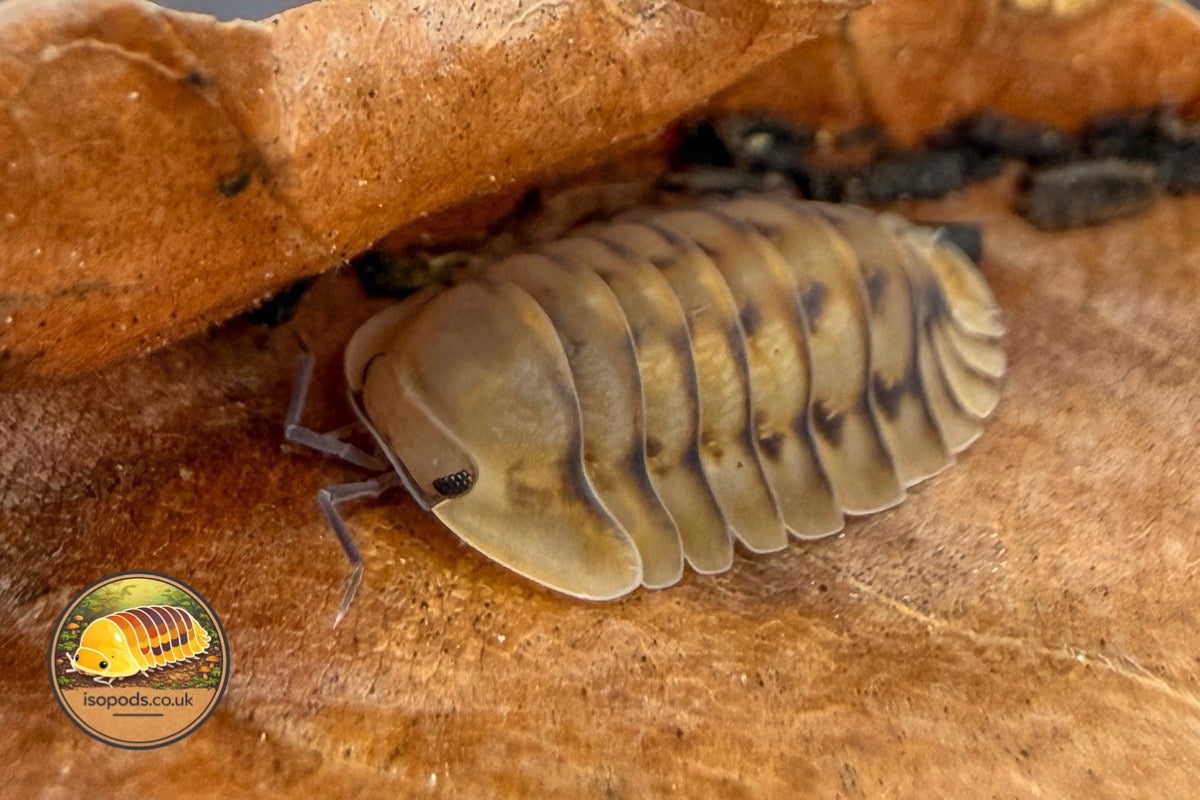
Nesodillo archangeli "Honeymoon Tiger" Isopod
Low stock! Only 2 left
Regular price
£45.00 GBP
Sale price
£45.00 GBP
Regular price
Unit price
per
Tax included.
Shipping calculated at checkout.
Couldn't load pickup availability
- Fully secure checkout
- Trusted by thousands
- Rated and reviewed
Want next day delivery? Be quick!
You just missed it!
Question about this product?
We're happy to help.
Nesodillo archangeli "Honeymoon Tiger" Isopods for Sale UK
Nesodillo archangeli "Honeymoon Tiger" stands out for two reasons: warm tiger-like contrast and a more active, surface-using style than many buyers expect from collector isopods. When settled, this type may be seen foraging across leaf litter, open substrate, and enclosure surfaces more readily than hidden tropical forms that spend most of their time tucked away.
That makes it a strong choice for keepers who want a lively enclosure without relying on a species that must stay fully exposed to be enjoyable. It is still best given cover and a proper moisture gradient, but the appeal here is not quiet under-hide behaviour alone. The draw is the combination of striking patterning and more readable movement around the enclosure.
What makes Honeymoon Tiger different?
-
Pattern: warm tiger-style striping or contrast gives this morph a bold, high-interest look. -
Behaviour: often more active across the enclosure surface than many hidden tropical isopods. -
Visibility style: may be seen moving over litter, bark, and open areas when the setup feels secure. -
Best kept with: humid shelter, good airflow, plenty of leaf litter, and consistent calcium access. -
Expectation to keep in mind: active does not mean visible every hour of the day.
Behaviour you are more likely to notice
This is the kind of Nesodillo archangeli that can reward regular observation. Rather than treating the whole page like a hidden-species care sheet, it makes more sense to approach "Honeymoon Tiger" as a colony you may catch roaming, browsing, and crossing between cover more often than a cave-style Cubaris. That extra movement is a big part of the appeal.
Even so, they should not be forced into a sparse tub just to chase visibility. A good colony often becomes easier to watch when it has enough litter, bark, and shaded resting places to feel secure. If they vanish completely, stay packed into one damp corner, or avoid most of the enclosure, the issue is usually setup balance rather than the species suddenly becoming "inactive".
Setup that suits this morph
Give them a warm, humid enclosure with fresh air, not a sealed wet box. A useful starting layout is stable substrate, a thick layer of leaf litter, bark or cork hides, one reliable damp refuge, and a drier side that is still covered rather than bare. That lets the colony move, feed, and rest without having to choose between being too wet and too exposed.
cork bark works well here because it creates shaded undersides and edges for resting between active periods. If you are still refining moisture, cover, and airflow, the isopod habitat setup guide is the best next read before ordering.
Feeding priorities
The main diet should still come from the enclosure itself: leaf litter, mature substrate, and decomposing wood. Adding rot wood helps build a stronger long-term food base and gives the colony more sheltered grazing areas. Fresh foods can be offered as support, but they should not replace the detritus base.
Calcium should also stay available. Limestone is a practical way to keep mineral access present all the time, especially in a warm humid setup where you want long-term stability rather than constant intervention. For broader food guidance, see what do isopods eat.
Who usually enjoys this one most
"Honeymoon Tiger" makes the most sense for keepers who want a more display-friendly Nesodillo without expecting nonstop open activity. If your ideal colony is one that may be seen foraging across litter and enclosure surfaces, while still using cover normally, this morph is an attractive fit.
It may be less satisfying if you mainly want a species that thrives in sparse setups or if you prefer very hidden tropical isopods that stay tucked away most of the time. This one sits in a more active middle ground: lively when settled, but still dependent on proper cover, moisture choice, and airflow.
Before you order
- Make sure the enclosure already has a damp refuge and a drier covered side.
- Do not rely on one hide only; spread bark, litter, and resting cover across the tub.
- Keep the enclosure humid, but avoid stale wet conditions and heavy condensation.
- Have calcium available from the start rather than adding it later as a correction.
Compare before you decide
If you want a close same-species comparison, Nesodillo archangeli (Yellow Tiger) is the most useful place to start. If your taste leans more toward hidden tiger-patterned tropical species, Cubaris Orange Tiger gives a different kind of enclosure experience. For a wider browse across current options, see all isopods.
Ease of care
Preferred Temperature
Preferred Humidity
Popularity
Care Instructions
Care Instructions