🔥 Daily Isopod Auctions on WhatsApp! Grab species at auction prices, discover rare finds & join our growing community. Join Here
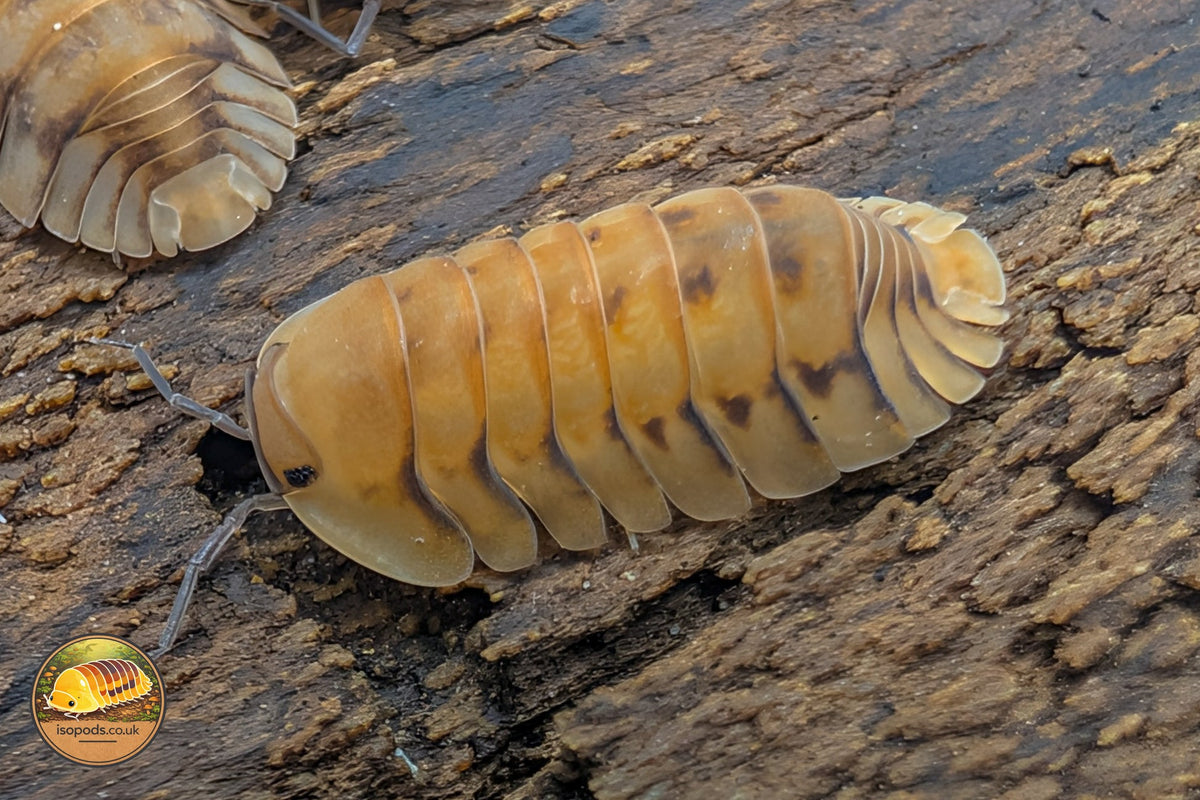
Nesodillo archangeli (Yellow Tiger) Isopod
Out of stock
Regular price
£50.00 GBP
Sale price
£50.00 GBP
Regular price
Unit price
per
Tax included.
Shipping calculated at checkout.
Couldn't load pickup availability
- Fully secure checkout
- Trusted by thousands
- Rated and reviewed
Want next day delivery? Be quick!
You just missed it!
Sorry, it's out of stock.
But we can let you know when it's back in.
Question about this product?
We're happy to help.
Sold out
Nesodillo archangeli (Yellow Tiger) Isopods for Sale UK
Nesodillo archangeli (Yellow Tiger) stands out for its yellow tiger-style contrast and a more readable, more interactive enclosure presence than many hidden tropical isopods. Rather than behaving like a deep-cover Cubaris type, this morph is often chosen by keepers who want a Nesodillo with stronger surface interest across leaf litter, bark edges, and covered substrate.
That does not mean constant visibility or a sparse setup. Yellow Tiger still does best with cover, a reliable humid shelter, and enough airflow to keep the enclosure fresh. When settled, the appeal is the combination of pattern and movement: a colony that can be rewarding to watch without needing to turn the whole tub into bare display space.
What makes Yellow Tiger appealing
-
Colour contrast: chosen for tiger-like yellow patterning rather than a plain roller look. -
More surface-readable behaviour: often a better fit for keepers who enjoy seeing movement around litter and cover, not just under one hide. -
Still a covered-species setup: best results come from leaf litter, bark or cork, and sheltered routes through the enclosure. -
Different feel from many hidden tropical species: easier to enjoy if you want more visible enclosure use than a very secretive Cubaris-style colony.
How they usually use the enclosure
This Nesodillo type is best judged by where it appears once settled. You are more likely to notice it moving through leaf litter, around bark edges, and across covered floor space than buried away like a deeply hidden tropical species. Open-floor roaming should not be treated as the default, but this morph can feel more readable and more interactive than quieter, lower-visibility options.
If the whole colony stays packed into one wet corner or one cramped refuge, the issue is usually the enclosure balance rather than the species being naturally inactive. Check whether the rest of the tub is too bare, too dry, or too stale to use comfortably.
Setup that suits this species
Start with a stable substrate, a generous layer of leaf litter, bark or cork hides, one damp refuge, and a drier side that still has cover. This species is better approached with several shaded places to move through than with a flat tub and one token hide.
Cork bark helps create sheltered undersides and edges to rest under, while rot wood adds long-term grazing value as well as more covered feeding spots. If you are still working out how to balance moisture, cover, and airflow together, the isopod habitat setup guide is the best supporting read before ordering.
Before you order
Prepare the enclosure so the colony arrives to a tub that already has food and cover built in. The simplest check is this: there should be enough litter and bark that the isopods can move between damper and drier areas without spending most of their time exposed on bare substrate.
A useful setup is humid in one refuge, drier elsewhere, and fresh-smelling throughout. Avoid making the whole enclosure wet, but also avoid leaving the dry side bare and harsh.
Feeding notes
The main diet should come from leaf litter, mature substrate, and decomposing wood rather than from frequent fresh foods. Fresh extras can be offered sparingly, but they should support the enclosure food base rather than replace it. If you want a broader feeding refresher, what do isopods eat covers the detritus-first approach clearly.
Consistent mineral access is also worth keeping available, and limestone is a simple long-term option to leave in the enclosure.
Who is most likely to enjoy them
Yellow Tiger suits buyers who want a visually striking Nesodillo with more movement to watch than many hidden tropical isopods, while still being happy to provide proper cover and a balanced moisture gradient. It is a better match for someone who enjoys natural enclosure behaviour across bark and litter than for someone expecting nonstop open display from day one.
Worth comparing next
If you want another same-species contrast piece, Nesodillo archangeli (Electric Blue) offers a very different look. If you want to stay with the tiger theme but compare against a more hidden tropical style, Cubaris Scarlet Tiger is a useful next comparison. For a broader browse beyond this morph, the tropical isopods collection is the main route.
Ease of care
Preferred Temperature
Preferred Humidity
Popularity
Care Instructions
Care Instructions