🔥 Daily Isopod Auctions on WhatsApp! Grab species at auction prices, discover rare finds & join our growing community. Join Here
Cubaris Orange Tiger Isopod
Out of stock
Regular price
£100.00 GBP
Sale price
£100.00 GBP
Regular price
Unit price
per
Tax included.
Shipping calculated at checkout.
Couldn't load pickup availability
- Fully secure checkout
- Trusted by thousands
- Rated and reviewed
Want next day delivery? Be quick!
You just missed it!
Sorry, it's out of stock.
But we can let you know when it's back in.
Question about this product?
We're happy to help.
Sold out
Cubaris Orange Tiger Isopods for Sale UK
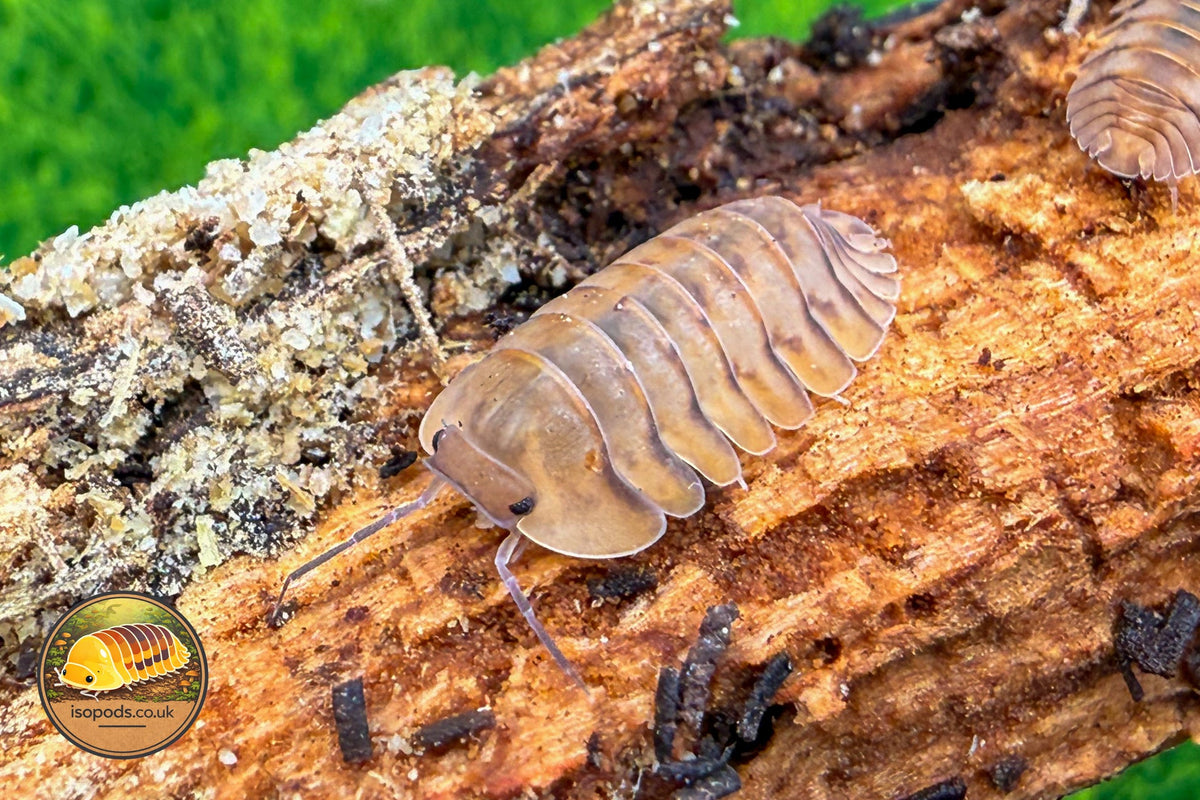
Cubaris Orange Tiger stands out for its rich orange body colour and darker tiger-style striping, giving it a bold patterned look without losing the natural feel that makes collector Cubaris so appealing. If you are choosing with appearance first in mind, this is the draw: strong contrast, warm tones, and a pattern that tends to look more defined than flat or washed out morphs.
In the enclosure, though, it should still be treated like a Cubaris. Expect more time under bark, leaf litter, and humid lower cover than out on open substrate, especially while the colony is settling. This is a better fit for keepers who enjoy sheltered tropical species and subtle behaviour than for buyers who want frequent open sightings.
What makes Orange Tiger stand out
-
Colour: warm orange tones with darker banding rather than an artificial neon look. -
Pattern: tiger-style striping gives this morph much of its visual impact. -
Behaviour: usually quieter and more cover-loving than openly active surface species. -
Keeper appeal: best appreciated as a patterned collector Cubaris rather than a constant-display isopod.
How they usually behave
This species is more likely to be found under cork, within deeper litter, around damp wood, or in sheltered lower pockets than walking openly across bare floor space. That can be completely normal. With Cubaris, low open visibility often says more about their natural preference for cover than about a problem.
The more useful question is whether the colony is using several hidden areas and feeding quietly over time. If they are spread between bark, litter, and the damp refuge, that is usually a better sign than expecting them to stay visible. If every animal is pressed into one wet corner, the rest of the enclosure may be too dry, too open, or too stale to use properly.
Best enclosure style for this morph
Orange Tiger usually does best in a covered tropical setup with a dependable damp refuge, deep surface cover, and enough airflow to stop the tub becoming stale. A generous layer of leaf litter should cover much of the enclosure so they can graze and hide at the same time. Add bark or cork for shaded undersides, and include rot wood as part of the long-term food base rather than treating it as an optional extra.
cork bark works especially well for Cubaris because it creates tight, shaded spaces without flattening the enclosure into one damp patch. A pocket of sphagnum moss can help keep one humid refuge stable, but the whole tub should not be soaked. These isopods usually respond better to humid cover with fresh air than to either a fast-drying enclosure or a sealed wet one.
If you want a broader step-by-step layout before ordering, the isopod habitat setup guide is the most useful starting point.
Feeding and support
Like other Cubaris, Orange Tiger should be treated as detritus-first. The main diet should come from litter, decaying wood, and mature substrate, with fresh foods used as support rather than the foundation. Quiet feeding under cover is common, so a dramatic response to added food is not the only sign that the colony is doing well.
Steady mineral access is also worth providing. A simple calcium source such as limestone can be left in the enclosure, and leaf litter plus wood should remain available at all times. If you are still building the feeding side of the setup, what do isopods eat explains how to keep the food base stronger than the supplement tray.
Who will enjoy this species most
Orange Tiger suits buyers who want a visually striking Cubaris morph and are happy to keep it in a deep, humid, well-covered enclosure. It makes more sense for patient keepers who enjoy checking bark edges, litter pockets, and sheltered feeding spots than for someone expecting an always-visible display colony.
If your preference is for isopods that spend more time crossing open ground or reacting boldly at feeding time, another genus may feel more readable. If you enjoy colour, pattern, and slower tropical enclosure behaviour, this one is much more likely to feel rewarding.
Compare before you choose
If you want to browse more sheltered tropical options, start with the Cubaris isopods collection. If you are deciding between similar patterned types, Cubaris Red Tiger is a useful comparison for another tiger-marked look, while Cubaris Orange Freeze may appeal if you want a different orange-led Cubaris style.
Ease of care
Preferred Temperature
Preferred Humidity
Popularity
Care Instructions
Care Instructions