We only dispatch when temperatures are at least 1°C at both the sending location and the delivery location.
Cold weather notice

Cold weather notice
We’ll confirm the next posting date when conditions allow.


Couldn't load pickup availability
Delivery options and costs are shown at checkout. Live dispatch depends on suitable weather. Read our shipping information.
We're happy to help.
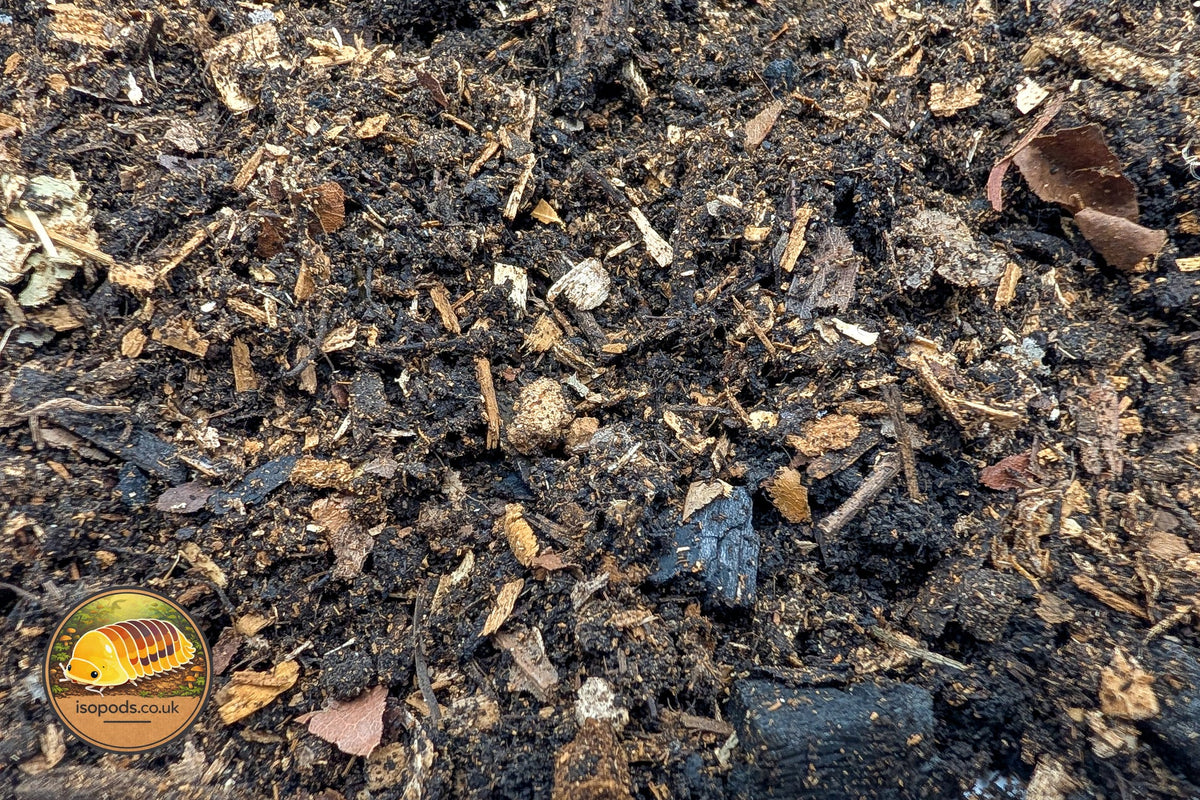
This bioactive substrate forms a base for suitable invertebrate terrariums. It supports the litter and cover above it and helps manage moisture beneath them.
Use the base as part of the mix where appropriate. Add enough suitable decayed leaves and hardwood for the species, and allow the depth needed for burrowing and moulting. Check moisture below the surface.
When the base layer is doing its job, the enclosure is usually easier to manage. You are more likely to see gradual leaf wear, steady use of the damp refuge, and activity spread through covered areas instead of the whole colony being pushed into one wet corner.
Substrate is more than bedding. It supports the moist refuge, helps the drier side stay usable below the surface, and gives litter, wood, and hides a stable base to sit on. It also helps organic matter break down over time, so the colony is not relying only on added foods.
A good substrate should stay moist where you want moisture without turning muddy, compacted, or sour. If it stays waterlogged or starts to smell stale, the enclosure often becomes much harder for isopods to use properly.
Use it as the main base across the enclosure floor. Keep one side more consistently damp to form a moist refuge, and leave the other side drier on the surface so the colony has a real gradient rather than one evenly wet tub.
This substrate is also suitable for millipedes and roaches, with the setup adapted to the species. For millipedes, see our millipede enclosure and substrate guide for planning substrate depth, decomposing plant matter and moisture.
This product works as the lower habitat layer under your surface materials. On top of it, bark or cork can create shaded hiding places and covered feeding spots, while litter and wood help turn the enclosure itself into part of the food base.
Browse substrates, food and natural supplies for complementary litter, wood and cover to use above and alongside the base layer.
If you are building a longer-term setup rather than a simple temporary tub, cork bark adds sheltered undersides above the substrate. If you are trying to keep the base layer open and workable over time, how to prevent substrate compaction in isopod enclosures covers the main warning signs and fixes.
A bioactive substrate is most useful when you want the enclosure to function as more than a holding tub. It matters most in setups where you want a reliable damp refuge, a usable drier side, and a stable lower layer under litter and cover.
If you keep isopods in very temporary tubs, or in setups with minimal depth and frequent full changes, you may not get the same value from a substrate intended for longer-term enclosure use.
This suits keepers building or refreshing an isopod enclosure with a proper lower layer rather than a thin temporary base. It is especially useful if you want the colony to spread between damp and drier covered areas instead of staying compressed into one small refuge.
If you want a broader overview of how substrate, litter, moisture, and enclosure balance work together, see our isopod husbandry guide for healthy colonies.
This product is for keepers who want the enclosure base to do a real job. Used with litter, wood, cover, and a sensible moisture gradient, it helps the tub function more like a working isopod setup and less like a bare container with food added on top.