🔥 Daily Isopod Auctions on WhatsApp! Grab species at auction prices, discover rare finds & join our growing community. Join Here
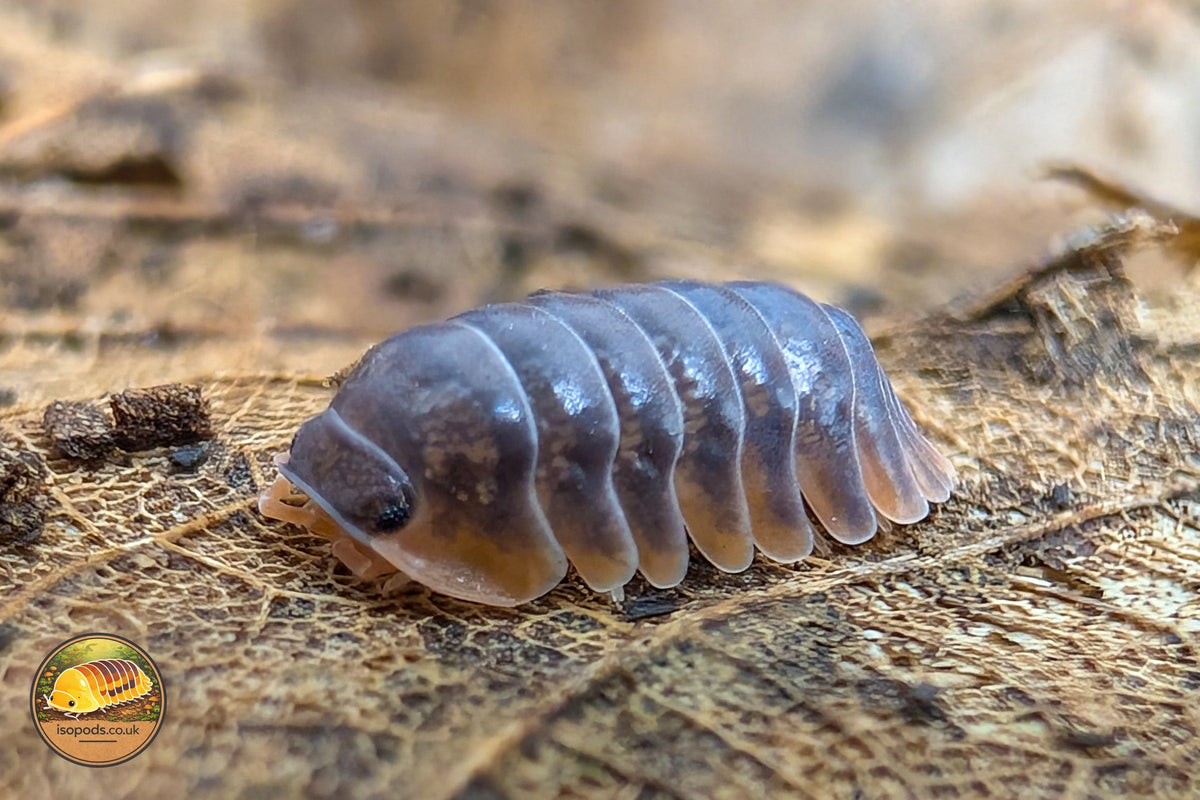
Cubaris miyako Isopod
Out of stock
Regular price
£15.00 GBP
Sale price
£15.00 GBP
Regular price
Unit price
per
Tax included.
Shipping calculated at checkout.
Couldn't load pickup availability
- Fully secure checkout
- Trusted by thousands
- Rated and reviewed
Want next day delivery? Be quick!
You just missed it!
Sorry, it's out of stock.
But we can let you know when it's back in.
Question about this product?
We're happy to help.
Sold out
Cubaris miyako Isopods for Sale UK
Cubaris miyako is a locality-led Cubaris line prized for its dark body and reddish-orange edging, with the colour showing around the skirting, outer edges, and antennae. In the hobby, this form is also associated with names such as Miyako or Japanese Red Edge, and the Miyako Island link is part of what makes it stand out for collectors.
As a keeper's species, though, it should still be approached like a tropical Cubaris rather than a constant display isopod. Expect most sightings under bark, within leaf litter, or around sheltered humid cover rather than regular open wandering.
What stands out about Miyako
-
Visual contrast: dark overall tone set off by warm red-orange edging and antennae. -
Locality appeal: linked in the hobby to Miyako Island in southern Japan. -
Trade-name clarity: often seen under Miyako or Japanese Red Edge. -
Enclosure behaviour: usually quieter and more cover-focused than openly active surface species.
How they usually behave in captivity
A settled colony will often spend long periods under bark, in deeper litter, or near the damp refuge. That is normal for many Cubaris types. They can be rewarding to keep, but the reward is usually in watching how they use sheltered areas over time rather than expecting bold, constant surface movement.
If the whole colony stays crammed into one wet corner, avoids most of the tub, or seems to vanish after the enclosure dries out, the setup usually needs checking. With this kind of Cubaris, more cover often helps more than less. A tub with bark, leaf litter, and several shaded hiding places usually gives more natural behaviour than a sparse box with one damp patch.
Setup that suits this species
Cubaris miyako is best treated as a humid, sheltered species with a reliable damp refuge and a drier but still covered side. A deep substrate helps hold lower moisture, while plenty of leaf litter gives both grazing and cover. Add firm hides such as cork bark so they have shaded undersides and tighter places to rest and feed.
A damp moss pocket can help hold one humid area steady, and sphagnum moss works well for that when kept damp rather than soaked. The whole tub should not be wet everywhere. This line is likely to do better when it can choose between a dependable humid refuge and other covered areas that stay usable instead of swampy.
Fresh air matters too. If the enclosure smells sour, the substrate turns muddy, or the colony only uses one emergency refuge, the problem may be stale wet conditions rather than lack of humidity.
Feeding notes
Like other Cubaris, Miyako should be treated as detritus-first. The main food base should come from leaf litter, decaying organic matter, and mature enclosure surfaces, with rot wood adding both food value and sheltered feeding space.
Fresh foods can be offered in small amounts, but they should stay secondary to the enclosure food base. Consistent calcium access is also worth providing, and limestone is a simple option to leave available.
Before you order
This species is a better fit if you already have the enclosure ready with deep substrate, heavy litter cover, bark hides, and one side that stays reliably damp without soaking the whole setup. It is less likely to suit buyers looking for fast visible feedback or a species that spends a lot of time out on open substrate.
Good fit for... and less satisfying for...
Good fit for: keepers who enjoy locality-linked Cubaris, subtle enclosure behaviour, and species with a distinctive colour edge rather than constant open activity.
Less satisfying for: buyers who want a bold display isopod, frequent open-floor sightings, or a species to judge mainly by how often it is out in the open.
Compare before you choose
If you want to browse similar sheltered species, see the wider Cubaris isopods range. If you are choosing between tropical setup styles, tropical isopods gives a broader overview. For another warm-toned Cubaris comparison, Cubaris Amber Panda is worth viewing, while Cubaris Plantin Tung Sung offers another useful species to compare.
Ease of care
Preferred Temperature
Preferred Humidity
Popularity
Care Instructions
Care Instructions