🔥 Daily Isopod Auctions on WhatsApp! Grab species at auction prices, discover rare finds & join our growing community. Join Here
Cubaris Amber Panda Isopod
Low stock! Only 1 left
Regular price
£125.00 GBP
Sale price
£125.00 GBP
Regular price
Unit price
per
Tax included.
Shipping calculated at checkout.
Couldn't load pickup availability
- Fully secure checkout
- Trusted by thousands
- Rated and reviewed
Want next day delivery? Be quick!
You just missed it!
Question about this product?
We're happy to help.
Cubaris Amber Panda Isopods for Sale UK
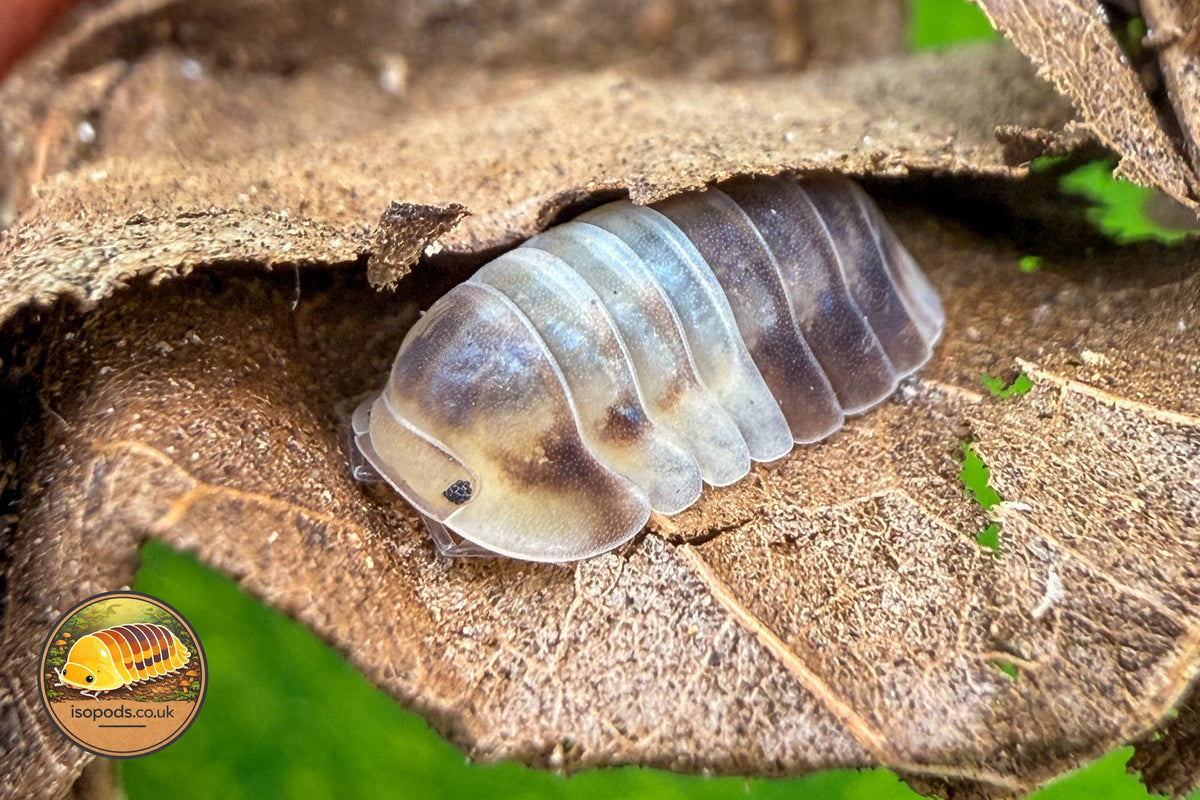
Cubaris Amber Panda stands out for its warm amber body colour and panda-style contrast, giving it a softer golden-brown appearance rather than a stark black-and-white look. Although "Panda" appears in the hobby name, Amber Panda is a separate species rather than simply another colour morph of the familiar Panda King.
In keeper terms, this is still very much a Cubaris-type isopod: usually quiet, cover-loving, and more likely to be found under bark, leaf litter, or within humid lower layers than out on bare substrate. It suits buyers who want a distinctive warm-toned colony and are happy to provide a settled tropical enclosure rather than expect constant display behaviour.
What makes Amber Panda different
The main appeal here is visual. Amber Panda has warm amber to golden-brown tones and contrasting markings that explain the hobby name, but it should not be treated as part of the Panda King colour-morph family. It is a distinct species with its own appearance and collector appeal.
As with many Cubaris lines, individuals can vary, so it is safest to expect the overall Amber Panda appearance rather than assume every animal will show identical colour or pattern strength.
How they usually behave
-
Visibility: Usually lower than open-roaming genera, with most sightings under cover or around sheltered feeding spots. -
Space use: Often found beneath bark, in deeper leaf litter, around rotting wood, or in damp shaded pockets. -
Settling in: New colonies may stay hidden for long periods before their enclosure use becomes easier to read. -
Disturbance: Frequent checking, rehousing, or repeated setup changes can push them deeper into cover.
A healthy colony may still be subtle. What you want to see over time is use of more than one covered area, gradual wear on leaf litter, and a clean earthy smell from the enclosure rather than the whole colony crammed into one emergency damp corner.
Enclosure style that suits them
Amber Panda is best treated as a sheltered tropical Cubaris. Give it deep substrate, plenty of leaf litter, rotting wood, bark hides, and a damp refuge that stays reliable below the surface without turning the whole tub wet. A few decorative leaves and one hide are rarely enough for this kind of species.
A piece of cork bark helps create shaded undersides and tighter hiding spaces, while rot wood adds both long-term grazing value and extra cover. The damp area can be buffered with sphagnum moss, but the rest of the enclosure should still stay usable rather than soggy or stale. If you want a broader setup refresher, the isopod habitat setup guide explains how to balance a humid refuge with covered drier areas.
Before you order
Prepare the enclosure first. Amber Panda is a poor fit for a flat bare tub, a fast-drying setup, or a sealed wet box with stale air. It is safer to have the litter layer, bark cover, wood, and damp refuge already established so the colony can settle with minimal disturbance from day one.
Steady calcium access is also worth keeping available. Limestone is a simple long-term option in Cubaris enclosures, especially where you want continuous mineral access without relying on occasional supplements.
Feeding expectations
Like other Cubaris, Amber Panda should be fed as a detritus-first species. Leaf litter and decomposing wood should carry most of the diet, with mature substrate doing a lot of hidden work in the background. Fresh foods can be offered in small amounts, but they should stay secondary to the enclosure food base.
If you only ever see strong feeding when fresh food appears, the enclosure may need more litter and wood rather than richer feeding. For a broader feeding overview, see what do isopods eat.
Who tends to enjoy this species
Amber Panda is likely to suit you if its warm colour and unusual appearance are the main draw and you enjoy quieter tropical colonies that reveal themselves gradually around bark edges, litter, and covered damp areas.
It may be less satisfying if you mainly want a colony that is out in full view for long periods or if your usual setup style is airy, exposed, and light on cover.
Compare before you choose
If you want to stay within the same genus, browse more Cubaris isopods. Despite sharing "Panda" in the name, Cubaris Panda King is a different species and provides a useful contrast if you want the more familiar black-and-white panda appearance.
Ease of care
Preferred Temperature
Preferred Humidity
Popularity
Care Instructions
Care Instructions