🔥 Daily Isopod Auctions on WhatsApp! Grab species at auction prices, discover rare finds & join our growing community. Join Here
Cubaris Panda King Isopod
29 in stock
Regular price
£5.00 GBP
Sale price
£5.00 GBP
Regular price
Unit price
per
Tax included.
Shipping calculated at checkout.
Couldn't load pickup availability
- Fully secure checkout
- Trusted by thousands
- Rated and reviewed
Want next day delivery? Be quick!
You just missed it!
Question about this product?
We're happy to help.
Cubaris Panda King Isopods for Sale UK
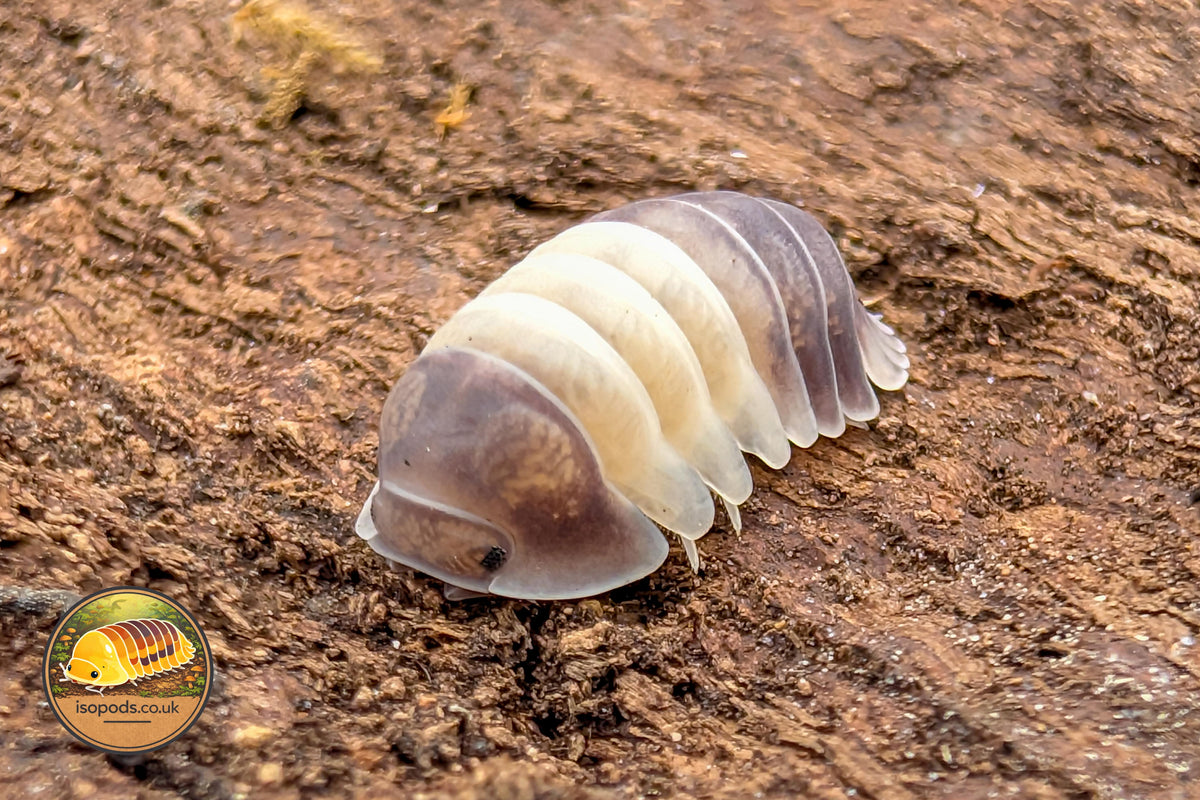
Cubaris Panda King is the classic black-and-white Cubaris look that made the "panda" style so recognisable in the hobby. The dark body, pale cream to white banding, and rounded Cubaris shape give this species a strong visual identity, even though it is usually appreciated under bark, in leaf litter, or during careful enclosure checks rather than as a constant open-display isopod.
For many keepers, Panda King is a useful entry point into the more sheltered Cubaris style: visually distinctive, widely recognised, and easier to understand than some ducky-type comparisons, while still needing proper tropical setup habits. Expect a colony that settles into deep substrate, bark hides, rotting wood, and humid covered areas, not one that spends all day crossing bare open ground.
What makes Panda King stand out
-
Recognisable pattern: one of the best-known black-and-white Cubaris looks in the hobby. -
Rounded Cubaris build: a compact, sheltered tropical type rather than a bold open runner. -
Collector familiarity: often chosen as a classic panda-pattern Cubaris rather than a novelty morph. -
Typical behaviour: usually found under cover, especially while settling in.
What you are likely to see in the enclosure
Panda King often spends time under bark, under curled leaves, around rotting wood, and in the damper lower layers. A settled colony may still be quiet in the open, so normal behaviour is better judged by where they are using the enclosure than by how often they appear on the surface.
If they are turning up under more than one hide, feeding quietly under cover, and using both the damp refuge and nearby sheltered areas, that is usually a better sign than open roaming. If the whole colony stays compressed into one wet corner, the rest of the tub may be too dry, too exposed, or too bare to use comfortably.
Before ordering Panda King
Prepare a tropical enclosure with depth, cover, and a dependable humid refuge. A generous layer of leaf litter should cover much of the surface, with bark pieces creating shaded undersides and tighter gaps to rest beneath. cork bark is especially useful here because it gives them secure hiding places without forcing the whole colony to stay buried.
Panda King usually responds best when the enclosure includes deep substrate, rotting wood, and one reliably damp area that stays moist below the surface without turning the whole tub wet. A patch of sphagnum moss can help hold moisture in that refuge, but the enclosure still needs airflow so it does not become stale or sour. If you want a broader walkthrough of moisture balance and cover, the isopod habitat setup guide is the clearest next step.
Feeding and mineral support
Like other Cubaris, Panda King should be treated as detritus-first. The enclosure itself should do most of the feeding work through leaf litter, rotting wood, mature substrate, and the films that build up on natural materials over time. Fresh foods can be offered in small amounts, but they should support the setup rather than replace it.
Steady calcium access is also worth providing. Limestone can be kept in the enclosure as a reliable mineral source, especially in a colony that is being maintained long term. If you want a broader feeding refresher, see what do isopods eat.
Who tends to enjoy this species
Panda King suits keepers who like distinctive patterning but are happy with quieter enclosure behaviour. If you enjoy checking under bark, watching gradual litter use, and building a more natural tropical setup with deep substrate and sheltered damp areas, this species makes sense.
It is less satisfying for buyers who want constant surface visibility, a strong exposed feeding response, or a sparse enclosure with very little cover. Removing hides to force sightings usually makes Cubaris behaviour harder to read, not easier.
Collector appeal
Panda King has stayed popular because it feels like a reference point for patterned Cubaris: dark, rounded, familiar, and easy to recognise at a glance. In keeper terms, it carries much of the visual appeal that draws people into Cubaris without depending on the more novelty-led ducky look. References to Vietnam or broader Southeast Asian Cubaris context fit the usual hobby framing, but in practical care terms the important point is the same: treat them as sheltered tropical isopods that want humidity, cover, rotting wood, and clean air exchange.
Compare before you decide
If you want to browse similar hidden tropical species, start with our Cubaris isopods. If you want a nearby comparison in the same panda-style corner of the hobby, Cubaris Panda Tapir is worth a look. If your interest is in a more famous ducky-type Cubaris look, compare with tropical isopods and decide whether you want a classic panda-pattern colony or a more ducky-led direction.
Ease of care
Preferred Temperature
Preferred Humidity
Popularity
Care Instructions
Care Instructions