🔥 Daily Isopod Auctions on WhatsApp! Grab species at auction prices, discover rare finds & join our growing community. Join Here
Cubaris Blue Pigeon Isopod
Out of stock
Regular price
£50.00 GBP
Sale price
£50.00 GBP
Regular price
Unit price
per
Tax included.
Shipping calculated at checkout.
Couldn't load pickup availability
- Fully secure checkout
- Trusted by thousands
- Rated and reviewed
Want next day delivery? Be quick!
You just missed it!
Sorry, it's out of stock.
But we can let you know when it's back in.
Question about this product?
We're happy to help.
Sold out
Cubaris Blue Pigeon Isopods for Sale UK
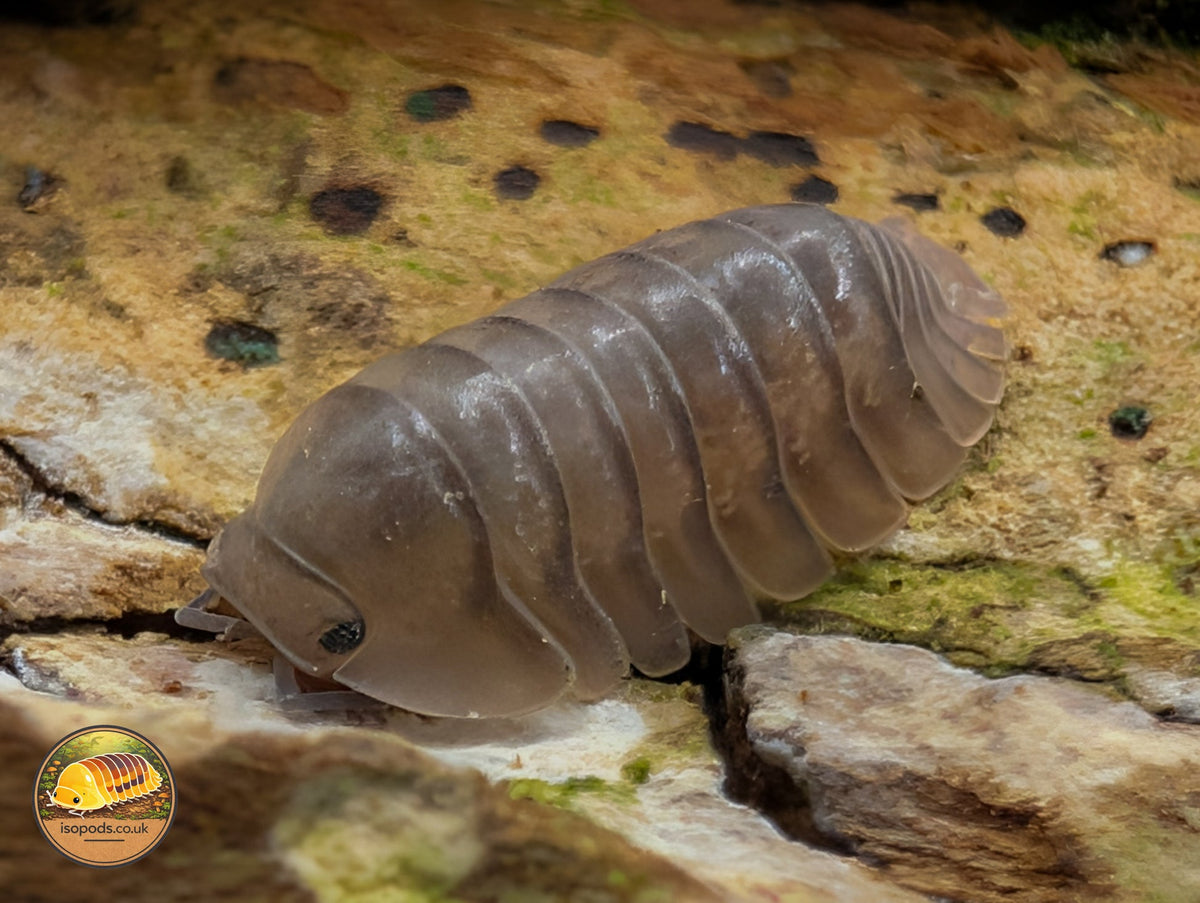
Cubaris Blue Pigeon stands out for its cool, smoky colour and distinctive shape. Depending on light and maturity, this Cubaris can show soft dove-blue, blue-grey, deeper grey, or a faint purple sheen, paired with a broader profile and flared outline that gives it a more sculptural look than many tropical isopods.
That visual appeal is the main reason to choose Blue Pigeon, but it should still be kept with realistic Cubaris expectations. This is usually a sheltered, tropical species that spends more time under bark, leaf litter, and other humid cover than roaming openly, with sightings often improving once the colony has settled rather than from constant display behaviour.
What makes Blue Pigeon appealing
-
Colour tone: often a cool blue-grey to deep grey look rather than a bright high-contrast pattern. -
Shape: a wide body profile with a flared, elegant outline that gives it a striking collector look. -
Movement: usually calmer and more deliberate than openly active surface species. -
Collector feel: well suited to keepers drawn to tropical Cubaris with subtle colour and form rather than obvious open activity.
What to expect in the enclosure
You are more likely to find Blue Pigeon under cork bark, along bark edges, beneath leaf litter, or around other covered damp areas than out on bare substrate. A healthy colony can still be quiet for long periods, especially during the day or after disturbance, so this species is better judged by steady enclosure use than by frequent open-floor sightings.
Once settled, they may become easier to spot around sheltered feeding areas and humid cover. If everything stays packed into one wet corner, though, the rest of the enclosure may be too dry, too exposed, or too stale to use comfortably.
Setup before ordering
Prepare this species as a humid tropical Cubaris setup with deep substrate, heavy leaf litter, rotten wood, and more than one covered hiding place. One side should stay reliably damp below the surface, ideally with moss or humid cover, while the rest of the tub remains usable rather than soaked from end to end. Rot wood is especially useful here because it adds both long-term grazing value and sheltered resting space.
Blue Pigeon is usually a poor fit for flat, sparse tubs with only one hide. They do better when they can move between bark, litter, and shaded damp areas without having to cross too much open bare ground. If you want a broader overview of this enclosure style, the Cubaris care guide is the most relevant next read.
Feeding priorities
Like other Cubaris, Blue Pigeon should be treated as detritus-first. Leaf litter should stay available in quantity, supported by wood-rich, mature substrate and decomposing wood. Fresh foods can be offered in small amounts, but they should stay secondary to the enclosure food base rather than becoming the main source of interest.
Consistent mineral access is also worth providing. Limestone can be a useful long-term calcium source in Cubaris setups where you want mineral support available without relying only on occasional supplements. For a broader feeding overview, see what do isopods eat.
Who will enjoy this species most
Blue Pigeon tends to suit buyers who want a visually distinctive Cubaris with a cooler, understated palette and a broad, elegant body shape. It is a better match for patient keepers who enjoy checking bark, leaf litter, and covered feeding spots than for buyers expecting a bold display species.
If your main goal is constant open visibility, fast feedback at feeding time, or a species that uses exposed areas more freely, another comparison may suit you better.
Compare before you choose
If Blue Pigeon appeals because of its tropical Cubaris look, browse more options in the Cubaris isopods collection. If you want another colourful tropical comparison from the same genus, Cubaris Daxin Tri-Colour is a useful contrast. If you prefer a different blue-toned Cubaris direction, Cubaris Thai Blue Angel may also be worth comparing.
Ease of care
Preferred Temperature
Preferred Humidity
Popularity
Care Instructions
Care Instructions