🔥 Daily Isopod Auctions on WhatsApp! Grab species at auction prices, discover rare finds & join our growing community. Join Here
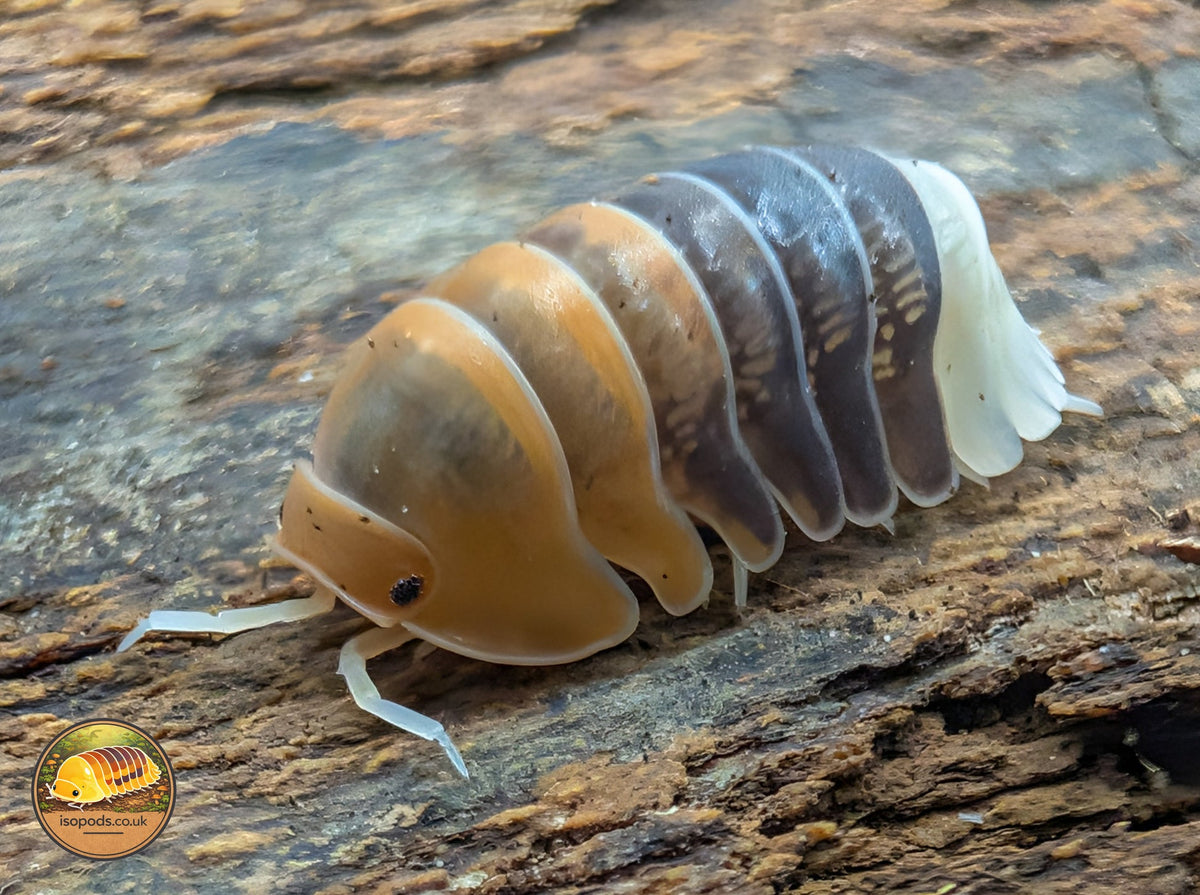
Cubaris Daxin Tri-Colour Isopod
Low stock! Only 8 left
Regular price
£55.00 GBP
Sale price
£55.00 GBP
Regular price
Unit price
per
Tax included.
Shipping calculated at checkout.
Couldn't load pickup availability
- Fully secure checkout
- Trusted by thousands
- Rated and reviewed
Want next day delivery? Be quick!
You just missed it!
Question about this product?
We're happy to help.
Cubaris Daxin Tri-Colour Isopods for Sale UK
Cubaris Daxin Tri-Colour stands out for its bold three-tone banding, with orange, black, and pale cream to white creating a distinctly colour-blocked look that feels very different from plainer Cubaris types. This locality-associated form is linked in the hobby to Daxin, Guangxi in southern China, which adds to its collector appeal without changing the fact that it should still be kept as a sheltered tropical Cubaris.
In enclosure terms, this is not a species to buy for constant open display. Daxin Tri-Colour will often spend daylight hours under bark, leaf litter, or in the upper substrate, with more visible movement once settled and during quieter periods. If the look is the main draw for you and you enjoy checking under cover rather than expecting nonstop surface activity, this species makes more sense.
What makes Daxin Tri-Colour distinctive
-
Visual appeal: strong orange, black, and cream-white banding rather than a flatter single-tone look -
Overall style: a more patterned, tricolour Cubaris with obvious contrast when viewed closely -
Behaviour: usually quiet and cover-focused rather than openly active -
Observation style: more rewarding for patient keepers than for display-first buyers
How they usually behave
Like many Cubaris, they are more likely to use bark undersides, leaf litter, damp sheltered pockets, and covered feeding areas than sit out on bare substrate. A settled colony may appear briefly around food or along bark edges, but much of their normal activity can still happen out of sight.
That hidden behaviour is not a problem on its own. The better signs to watch are gradual use of litter and wood, animals appearing in more than one covered area, and a clean earthy smell from the enclosure. If the whole colony stays compressed into one wet corner or one hide, the rest of the tub may be too dry, too exposed, or too stale to use properly.
Before you order
Prepare a humid, well-covered enclosure rather than a sparse tub. A generous layer of leaf litter, bark hides, and rot wood will help create the kind of sheltered grazing and resting spaces this species is more likely to use. The damp side should stay reliable below the surface, but the whole enclosure should not be soaked.
Pieces of bark or cork matter here because they create shaded undersides and tighter hiding places. If you need more guidance on balancing a damp refuge with a usable covered side, the isopod habitat setup guide is the best next read before ordering.
Feeding approach
Daxin Tri-Colour should be treated as a detritus-first Cubaris. The main food base should come from leaf litter, rotting wood, and mature substrate rather than frequent rich feeding. Fresh foods can be offered as extras, but they work best when the enclosure already has a strong long-term food base.
If added foods seem to get only a quiet response, do not assume the colony is failing. Feeding may happen under cover, and gradual wear on leaves and wood is often a more useful sign than dramatic rushes onto exposed food. A steady calcium source is also worth keeping available, such as limestone.
Who tends to enjoy this species most
This is a good fit for keepers who like visually striking Cubaris and do not mind a calmer, more hidden style of enclosure use. It suits people who are happy to build a mature setup with litter, wood, bark, and one dependable damp refuge, then give the colony time to settle.
It is less likely to satisfy buyers who mainly want frequent open-floor activity or quick visual feedback every time they check the enclosure.
Compare before you choose
If you want to stay within the same genus, browse the wider Cubaris isopods range for other sheltered tropical options. If you are comparing colour-led Cubaris, Cubaris Cherry Blossom is a useful contrast. If you want a fuller genus-level read before deciding, the Cubaris care guide explains what to expect from hidden tropical setups.
Ease of care
Preferred Temperature
Preferred Humidity
Popularity
Care Instructions
Care Instructions