🔥 Daily Isopod Auctions on WhatsApp! Grab species at auction prices, discover rare finds & join our growing community. Join Here
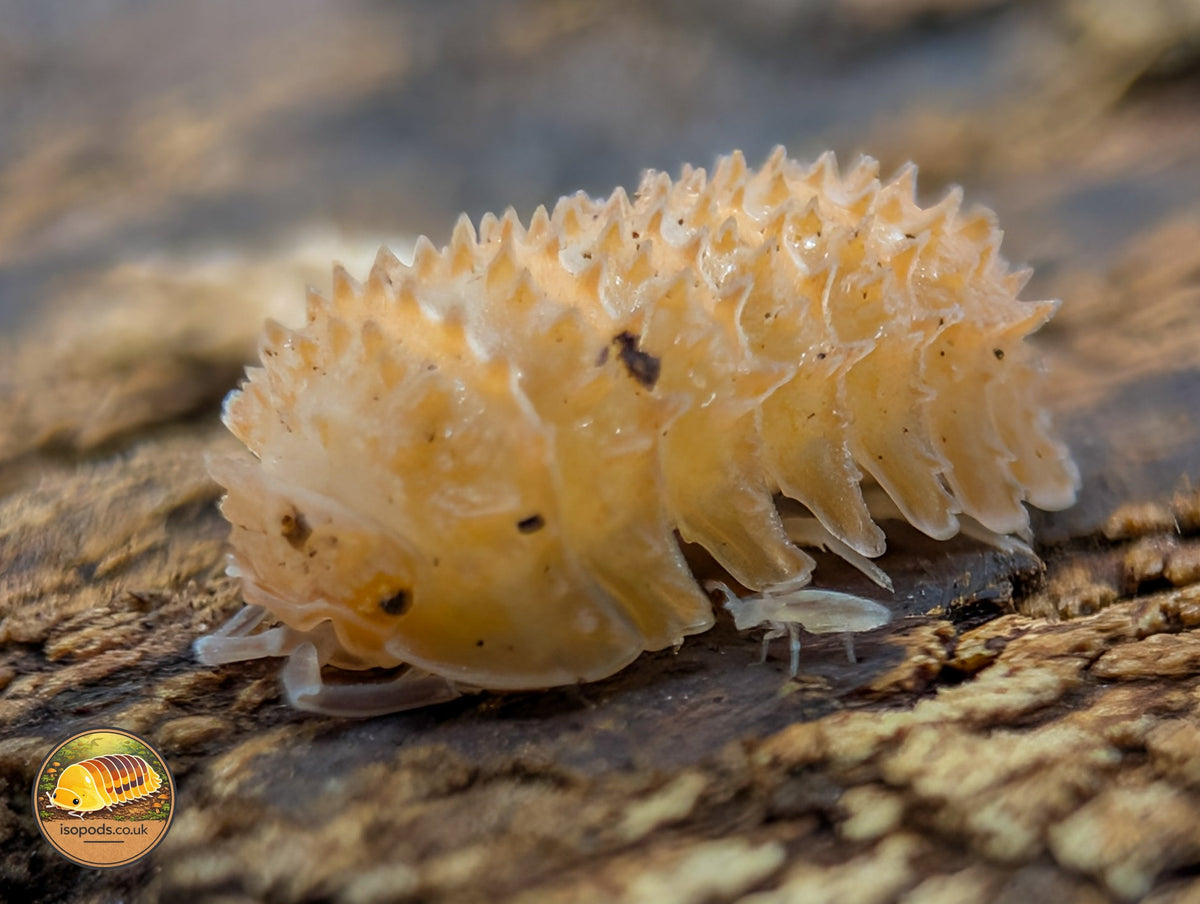
Cristarmadillidium muricatum "Pineapple" Isopod
Low stock! Only 9 left
Regular price
£10.00 GBP
Sale price
£10.00 GBP
Regular price
Unit price
per
Tax included.
Shipping calculated at checkout.
Couldn't load pickup availability
- Fully secure checkout
- Trusted by thousands
- Rated and reviewed
Want next day delivery? Be quick!
You just missed it!
Question about this product?
We're happy to help.
Cristarmadillidium muricatum "Pineapple" Isopods for Sale UK
Cristarmadillidium muricatum "Pineapple" is a small Spanish spiny pill woodlouse with a very distinctive textured look. The appeal is in the miniature detail: warm golden-yellow, peach, and soft orange tones over a shell covered in blunt bumps and short spines, giving this form its pineapple-like appearance.
This is not a species to buy for constant open display. It suits keepers who enjoy unusual morphology, subtle enclosure behaviour, and close observation around leaf litter, bark edges, and sheltered feeding spots rather than expecting a large bold isopod to sit out in the open.
What makes Pineapple stand out
-
Look: Tiny, textured, and spiny rather than smooth, with a warm yellow-to-peach colour range. -
Identity: Best approached as a European spiny pill woodlouse with collector appeal tied to form and detail. -
Visibility: Usually easier to notice around cover than on bare substrate, but the small size means observation is still more rewarding than flashy. -
Enclosure style: Prefers a stable setup with leaf litter, decaying wood, bark cover, fresh air, and a clear damp-to-drier choice.
How you are likely to see them
Once settled, this species may be found working through litter, resting under bark, or feeding in covered areas near the damp refuge. They can be visible at times, but their size matters here: even when the colony is using the enclosure well, the experience is usually about spotting small textured animals in the cover rather than watching constant open movement.
If the whole colony stays packed into one damp corner or one hide, the rest of the enclosure may be too exposed, too dry, or too stale. A healthier pattern is gradual use of more than one sheltered area, with individuals spread through bark, litter, and the moister end rather than trapped in one emergency patch.
Setup that suits this species
Pineapple does best in a balanced enclosure rather than a wet sealed tub. Start with a substrate that holds moisture below the surface without turning muddy, then give the colony a thick layer of leaf litter so they can hide and graze at the same time.
Add bark or cork for shaded undersides and tight covered edges. Rot wood is also useful here because it adds long-term food value and quiet feeding spots under cover. One patch of sphagnum moss can help keep a damp refuge stable, but the whole enclosure should not be wet. Keep a drier side usable as well, with litter and cover still in place so the colony does not have to cross bare open ground.
Good airflow matters. If the enclosure smells sour, holds heavy condensation, or the damp area starts feeling muddy, it is safer to improve ventilation than to keep adding water. If you want a broader setup reference, the isopod habitat setup guide explains how cover, airflow, and moisture work together.
Feeding notes
The main diet should come from the enclosure itself: leaf litter, decaying wood, and mature substrate. Fresh foods can be offered in small amounts, but they should stay supplemental. If added foods spoil quickly or become the only thing the colony seems to use, the enclosure food base is usually too weak or too wet.
Consistent mineral support is also worth providing. A dry, accessible source such as limestone can support long-term keeping, but it works best alongside stable moisture, fresh air, and a strong litter-and-wood base.
Who tends to enjoy this species most
This form is a better fit for keepers who like small, unusual isopods with a lot of surface detail, and for buyers who enjoy checking bark, litter, and covered feeding spots rather than expecting a large obvious showpiece.
It may be less satisfying if you want bold open visibility, a sparse enclosure, or a species that forgives stale wet conditions. Cristarmadillidium is safer to treat as a stability-first genus.
Compare before you decide
If you want something with a stronger orange visual impact from a different roller-type genus, Spherillo Orange Soda is worth comparing. If you prefer a more openly readable species with a very different pattern style, Caribodillo martinicensis Salmon gives a useful contrast. You can also browse the wider tropical isopods range if you are still deciding what level of visibility and enclosure style suits you best.
Ease of care
Preferred Temperature
Preferred Humidity
Popularity
Care Instructions
Care Instructions