🔥 Daily Isopod Auctions on WhatsApp! Grab species at auction prices, discover rare finds & join our growing community. Join Here

Caribodillo martinicensis 'Salmon' Isopod
Low stock! Only 6 left
Regular price
£8.00 GBP
Sale price
£8.00 GBP
Regular price
Unit price
per
Tax included.
Shipping calculated at checkout.
Couldn't load pickup availability
- Fully secure checkout
- Trusted by thousands
- Rated and reviewed
Want next day delivery? Be quick!
You just missed it!
Question about this product?
We're happy to help.
Caribodillo martinicensis 'Salmon' Isopods for Sale UK
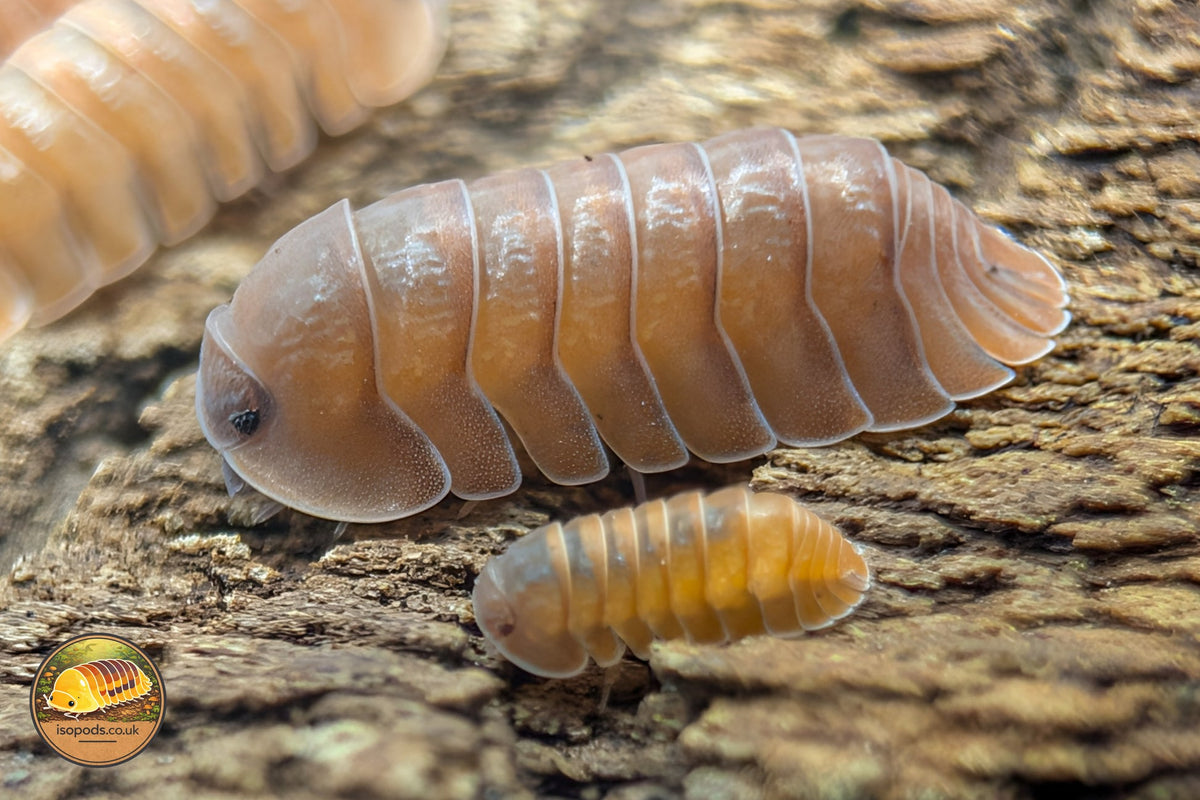
Caribodillo martinicensis 'Salmon' is a striking Caribbean species known in the hobby for its warm peach-to-salmon tones and its Martinique locality. Many keepers will recognise it under the older hobby name Cubaris sp. "Salmon", but this listing reflects its current placement as Caribodillo martinicensis. The colour can range from pale peach and salmon-pink through to stronger orange-pink and deeper salmon-orange tones, with natural variation between individuals and age groups.
The main draw here is not just colour. This is a medium-large tropical isopod with a collector feel and more readable enclosure behaviour than some very buried, shelter-heavy tropical options, provided the setup gives it leaf litter, rotting wood, humid cover, and fresh air rather than a sealed wet box.
What stands out
-
Old hobby identity: formerly widely known as Cubaris sp. "Salmon". -
Locality interest: positioned around Martinique in the French West Indies. -
Colour: pale peach, salmon-pink, orange-pink, and deeper salmon-orange tones can all show within the same line. -
General look: a medium-large Caribbean species with a strong collector appeal. -
Visibility style: often easier to follow around cover, litter, and sheltered feeding areas than very hidden tropical species, but not a constant open-roaming display isopod.
Colour and collector appeal
This is the kind of isopod buyers usually choose for tone rather than contrast. Instead of sharp patterning, the appeal is the warmer overall palette: soft peachy animals, salmon-pink individuals, and some showing richer orange-salmon depth as they mature. That variation is part of what makes this line visually interesting in a settled colony.
The Martinique link also matters for buyers who prefer locality-backed hobby lines over vague trade names. If part of the appeal for you is keeping the species now recognised as Caribodillo martinicensis rather than the older Cubaris label, this listing makes that clearer up front.
How they tend to use the enclosure
Best expectations are practical ones. Once settled, this species may be noticed around bark edges, under leaf litter, near sheltered food, and around the damp refuge rather than disappearing deep below the surface all the time. That still does not mean nonstop visibility. Caribodillo are better judged by steady use of several covered areas than by whether they march openly across bare substrate.
If the colony is spread between litter, wood, and more than one sheltered patch, that is usually a better sign than frequent open-floor activity. If everything is compressed into one wet corner, the rest of the tub may be too dry, too bare, or too stale.
Before you order
Prepare this species as a tropical enclosure with depth, cover, and choice. A generous layer of leaf litter should cover much of the surface, with rot wood included as part of the long-term food base as well as shelter. Keep one humid refuge reliably damp, ideally with moss or similar cover, but leave a less-wet side that still has bark, litter, or hides so the colony is not forced to choose between "wet" and "exposed".
For a medium-large Caribbean species, enough cover matters. Use bark, cork, wood, and tucked-in damp patches so they can move and feed without crossing too much open ground. Fresh air is important as well: humid does not need to mean sealed. If you want a broader refresher before setting the tub up, the isopod habitat setup guide is the most useful next read.
Feeding priorities
Keep the enclosure itself doing most of the feeding work. Leaf litter, rotting wood, and mature substrate should be the foundation, with fresh foods offered lightly rather than treated as the main diet. Quiet feeding under cover is normal, so do not judge the colony only by whether it rushes exposed food.
Steady mineral access is also worth keeping available. A piece of limestone can provide ongoing calcium support, but it should sit alongside a proper detritus base, not replace it. If you want a broader feeding refresher, see what do isopods eat.
Who tends to enjoy this species most
This listing makes most sense for keepers who want a warmer-coloured tropical isopod with locality interest and calmer, cover-based behaviour they can read over time. It is a good fit if you enjoy checking bark edges, litter use, and sheltered feeding spots rather than expecting constant open movement.
It is less likely to satisfy buyers who want a bold surface-active species for bare display tubs, or anyone planning to keep tropical isopods in a uniformly wet enclosure with minimal cover.
Compare before you decide
If you want another colourful species with a different visual style, Cristarmadillidium muricatum Pineapple gives a brighter patterned comparison. If you prefer something round-bodied and visually unusual, Spherillo Orange Soda is another interesting alternative. For wider browsing beyond this line, see all isopods.
Ease of care
Preferred Humidity