🔥 Daily Isopod Auctions on WhatsApp! Grab species at auction prices, discover rare finds & join our growing community. Join Here
Spherillo "Orange Soda" Isopod
Low stock! Only 2 left
Regular price
£85.00 GBP
Sale price
£85.00 GBP
Regular price
Unit price
per
Tax included.
Shipping calculated at checkout.
Couldn't load pickup availability
- Fully secure checkout
- Trusted by thousands
- Rated and reviewed
Want next day delivery? Be quick!
You just missed it!
Question about this product?
We're happy to help.
Spherillo "Orange Soda" Isopods for Sale UK
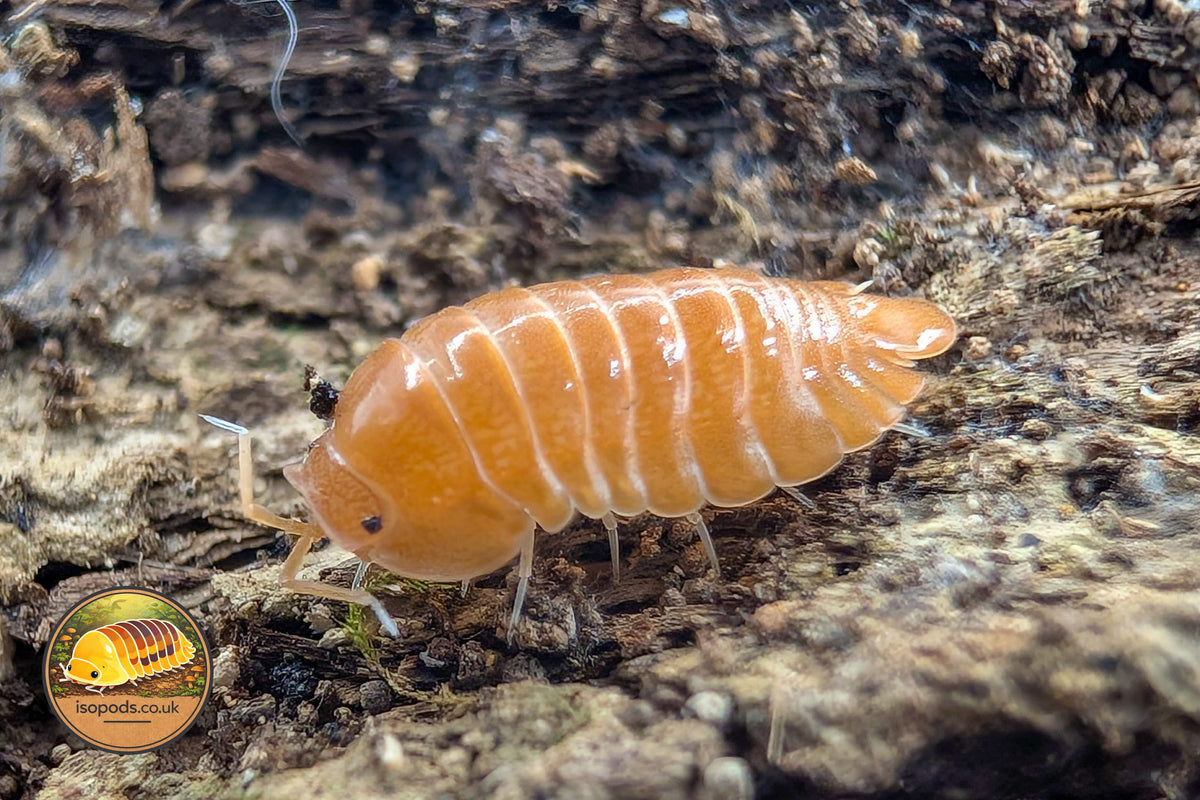
Spherillo "Orange Soda" stands out for colour and shape as much as behaviour. This morph is known for its bright orange to orange-soda look, its smooth rounded rolling body, and the enlarged rear end that gives it a distinctive whale-tail or manatee-like silhouette when viewed from above.
In the enclosure, it is often more readable than very hidden cave-style species, but it still should not be treated as an always-out display isopod. Expect the best sightings around bark edges, leaf litter, shallow hides, and covered feeding areas rather than on bare open substrate.
What makes Orange Soda different
-
Colour: Bright orange tones give this morph its main visual appeal. -
Shape: Smooth shell and rounded conglobating form, with a noticeably unusual rear profile. -
Behaviour: Often easier to spot than very secretive species, especially when the enclosure has plenty of cover. -
Observation style: Better for keepers who enjoy checking bark, litter edges, and sheltered feeding spots than for buyers expecting constant open roaming.
How they usually use the enclosure
Like other Spherillo, these are best approached as cover-using roller isopods. Rolling when disturbed is normal. A settled colony may appear under bark, beneath leaf litter, at hide edges, or moving through shaded floor areas when conditions feel safe.
If they vanish completely into one damp corner, that usually suggests the rest of the enclosure is too exposed, too dry, too stale, or simply not covered enough to use confidently. More litter, more shallow cover, and a better damp-to-drier layout usually tell you more than lifting hides repeatedly.
Before you order
Prepare an enclosure with a reliable damp refuge, a drier but still covered side, and plenty of surface cover before the colony arrives. A heavy layer of leaf litter should cover much of the floor, with bark or cork creating several shaded places to rest and move through.
The moist area should stay damp below the surface rather than wet everywhere. A patch of sphagnum moss can help keep that refuge stable. Add steady calcium support as well; limestone is a simple long-term option for roller isopods like this.
Good airflow matters. This morph will usually do better in a fresh enclosure with one damp refuge and usable drier ground than in a sealed, soggy tub. If you want a broader walkthrough on balancing moisture, cover, and ventilation, the isopod habitat setup guide is the best next read.
Feeding priorities
The main diet should come from the enclosure itself: leaf litter, decomposing plant matter, mature substrate, and rotting wood. Fresh foods are extras, not the base diet. If you want to strengthen the long-term food layer, adding rot wood alongside litter helps create more sheltered grazing areas.
If added foods spoil quickly or only attract attention in one wet patch, check airflow and litter depth before offering more. For a broader feeding overview, see what do isopods eat.
Who tends to enjoy this morph most
Orange Soda makes the most sense for keepers who want a colourful roller with more character than a plain brown floor species, and who enjoy noticing shape, posture, and enclosure use rather than judging everything by nonstop activity.
It may be less satisfying for buyers who want a species to stay out in the open all day, or for setups that are sparse, flat, and wet from end to end.
If you are comparing options
If you want an even more hidden contrast, Trichorhina tomentosa "Dwarf White" is far more below-cover and substrate-focused. If you want to browse other colourful humid-leaning species, the tropical isopods collection is a sensible next step. For longer-term colony stability after purchase, the isopod husbandry guide for healthy colonies is also worth bookmarking.
Ease of care
Preferred Temperature
Preferred Humidity
Popularity
Care Instructions
Care Instructions