🔥 Daily Isopod Auctions on WhatsApp! Grab species at auction prices, discover rare finds & join our growing community. Join Here
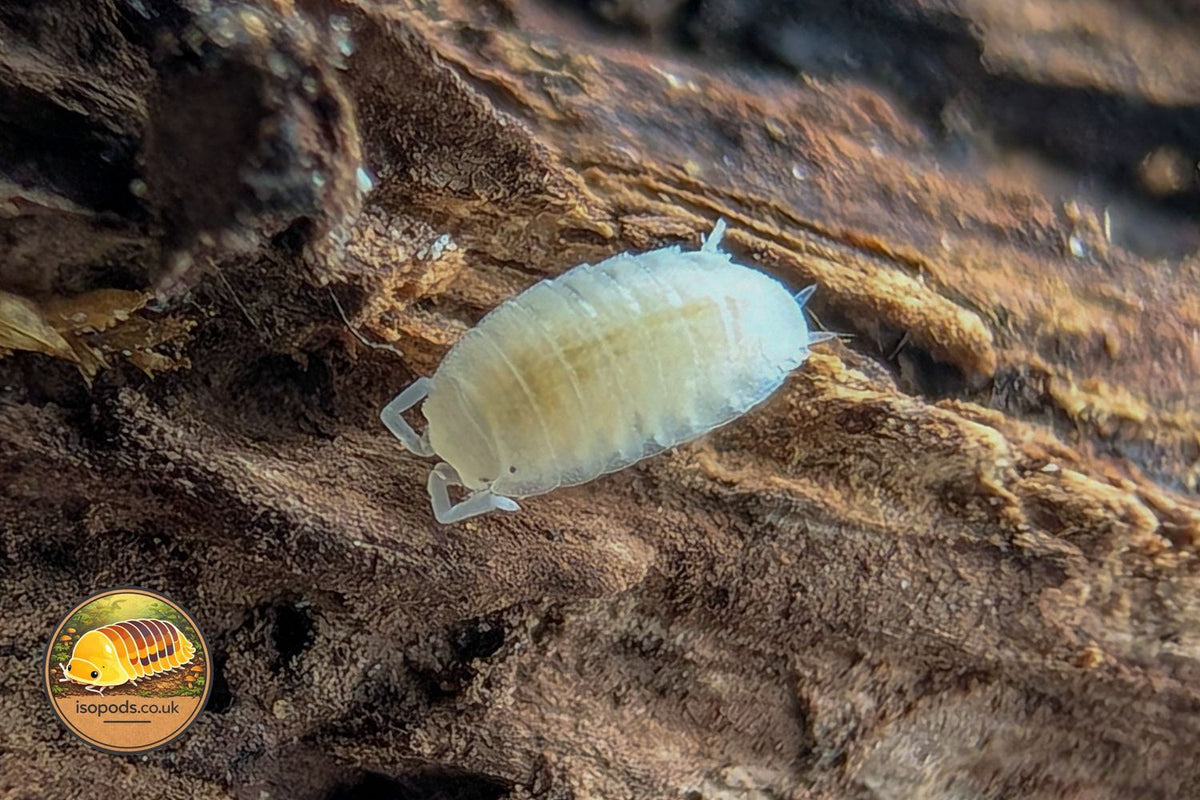
Trichorhina tomentosa "Dwarf White" Isopod
50 in stock
Regular price
£4.00 GBP
Sale price
£4.00 GBP
Regular price
Unit price
per
Tax included.
Shipping calculated at checkout.
Couldn't load pickup availability
- Fully secure checkout
- Trusted by thousands
- Rated and reviewed
Want next day delivery? Be quick!
You just missed it!
Question about this product?
We're happy to help.
Trichorhina tomentosa "Dwarf White" Isopods for Sale UK
Trichorhina tomentosa "Dwarf White" is a tiny white isopod best known for function rather than display. Instead of roaming openly, it usually works through damp substrate, lower leaf litter, and other covered areas, making it a popular choice for keepers who want discreet clean-up activity in humid bioactive setups.
The main appeal here is practical: in suitable humid conditions, Dwarf White colonies can establish well and help process fine organic waste, decaying matter, and small leftovers in the hidden lower layers of the enclosure. They are not bought for bold surface activity, so a healthy colony may still be seen only occasionally when food is added or the litter is lifted.
Why Dwarf White stands out
-
Tiny and discreet: much of the colony's activity happens under litter, in damp substrate, and around soft decaying material. -
Functional white clean-up crew: the pale colour is distinctive when individuals do appear, but this is still a work-focused species rather than a display-first choice. -
Useful in humid bioactive systems: often valued for steady breakdown of fine waste in the lower enclosure. -
Can multiply well in suitable conditions: best treated as a species that responds to stable humidity, food-rich lower layers, and low disturbance.
What to expect in the enclosure
Dwarf Whites are usually found where moisture, food, and cover meet: under leaf litter, in damp substrate, and around soft decomposing material. That means normal behaviour is easy to misread if you expect open-floor movement. Low visibility is not unusual on its own.
A settled colony is better judged by signs such as gradual breakdown of litter, quiet use of several covered spots, and a clean earthy smell from the enclosure. If the whole colony seems trapped in one wet patch, the rest of the setup may be too dry, too exposed, or too stale rather than the species simply wanting everything wetter.
Before you order
Prepare a humid setup with a moist lower layer already in place. Dwarf White does best when it arrives to an enclosure with a proper food base rather than a bare tub waiting for food scraps. A layer of leaf litter, some rot wood, and a damp area buffered with sphagnum moss will give the colony better cover and steadier humidity from the start.
Calcium should also be available consistently, for example through limestone or another suitable source. This species can benefit from occasional protein support, but the enclosure should still run on detritus first: litter, wood, aged substrate, and fine decaying matter should do most of the long-term feeding work.
Setup that suits them
The safest approach is a humid enclosure with damp substrate below the surface, plenty of litter cover, and enough airflow to stop the lower layers turning sour. The aim is not a soaked tub. It is a stable moist enclosure where the colony can stay hidden, feed, and spread through more than one covered area.
This species supports bioactive function, but it does not replace good enclosure management. If leftovers are excessive, the tub is poorly ventilated, or the whole base stays wet and stale, Dwarf Whites will not fix those problems on their own. If you want a broader guide to balancing moisture, cover, and ventilation, see the isopod habitat setup guide.
Feeding notes
Most of the diet should come from detritus already in the enclosure: leaf litter, decaying wood, and mature organic material. Fresh foods are best kept small, especially with a small hidden colony, because exposed portions can mould before they are cleared. If you are unsure how to balance detritus, supplements, and protein, the page on what do isopods eat is a useful next read.
Who usually gets the most from this species
Dwarf White makes the most sense for keepers who want a tiny functional colony working through the lower layers of a humid setup. It is often a better fit for bioactive and cleanup-focused enclosures than for buyers who want large-bodied isopods that are easy to watch on the surface.
If your priority is visible litter activity and a colony that gives clearer open feeding feedback, Porcellionides pruinosus Tropical Grey may be the more satisfying comparison. If you are building a mixed cleanup system, tropical springtails are also worth considering alongside isopods rather than as a replacement for them.
Compare or browse next
Choose Dwarf White if you want hidden, fine-scale cleanup work in a humid enclosure and you are happy to judge success by substrate condition rather than by constant sightings. If you want to compare other options first, browse bioactive clean-up crew isopods or explore all isopods.
Ease of care
Preferred Temperature
Preferred Humidity
Popularity
Care Instructions
Care Instructions