🔥 Daily Isopod Auctions on WhatsApp! Grab species at auction prices, discover rare finds & join our growing community. Join Here
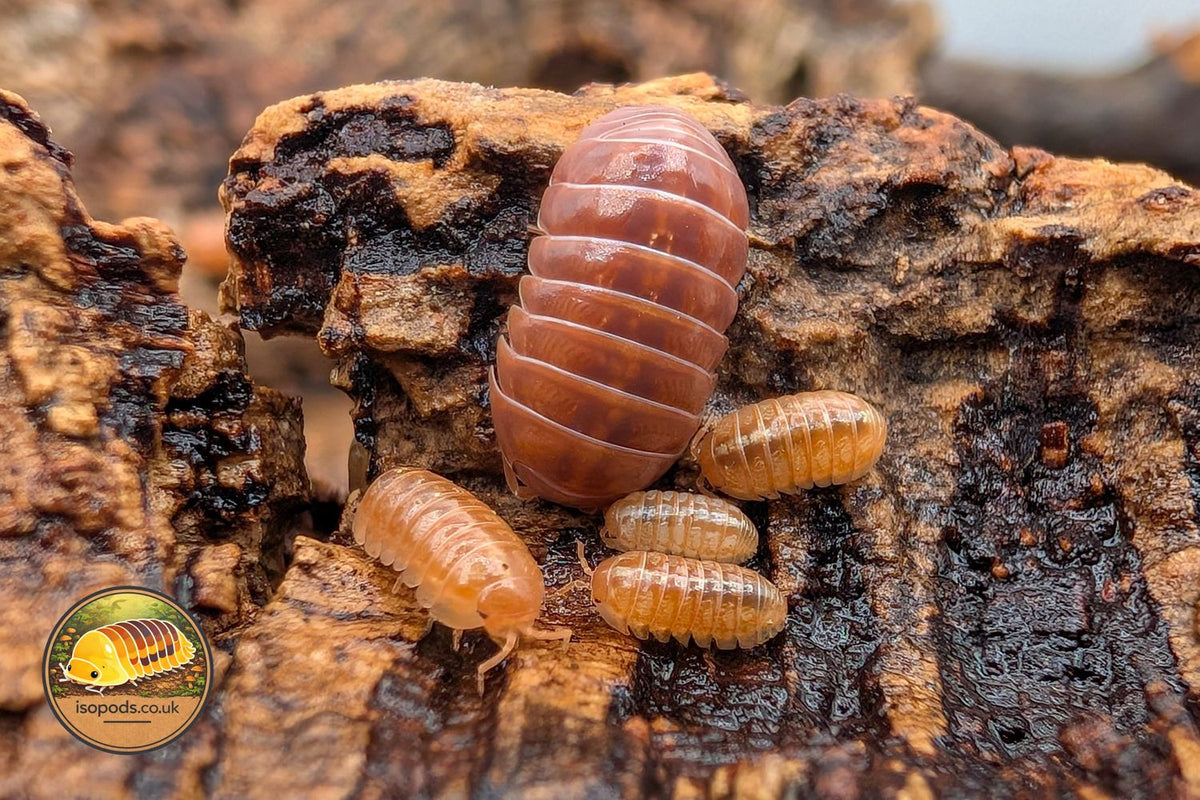
Armadillidium vulgare Red Isopod
20 in stock
Regular price
£7.00 GBP
Sale price
£7.00 GBP
Regular price
Unit price
per
Tax included.
Shipping calculated at checkout.
Couldn't load pickup availability
- Fully secure checkout
- Trusted by thousands
- Rated and reviewed
Want next day delivery? Be quick!
You just missed it!
Question about this product?
We're happy to help.
Armadillidium vulgare Red Isopods for Sale UK
Armadillidium vulgare Red offers the familiar rolling pill woodlouse shape in a warmer red colour form that stands out well against leaf litter, bark, and darker substrate. It is a good fit for buyers who want an Armadillidium with readable day-to-day behaviour and a more noticeable look than many plain grey forms, without expecting constant open display.
Like other A. vulgare types, this is a ground-level, cover-using species rather than a tropical hideaway isopod. Once settled, it is often seen around litter, hide edges, and feeding spots, then tucking back under bark or rolling up when disturbed. That makes it appealing for keepers who enjoy observing natural movement, shelter use, and classic conglobation behaviour in an airy setup.
What stands out about this morph
-
Colour: warm red tones give this vulgare morph a clearer visual presence than more muted forms. -
Body shape: the classic rounded Armadillidium look, with the ability to roll into a ball as a normal defence response. -
Visibility style: often easier to notice than hidden tropical genera, but still not an all-day open-roaming species. -
Setup style: best with fresh air, a damp refuge, a drier usable side, leaf litter, and several flat hides.
How they usually behave in the enclosure
Armadillidium vulgare is widespread across Europe and the Mediterranean region, and in captivity it usually behaves like a temperate roller that makes practical use of floor cover, litter, and hide edges. Expect them under bark, beneath leaves, around sheltered food areas, and moving between the damp and drier sides rather than sitting out on bare substrate.
When the enclosure is working well, you should see use of more than one area. Some may stay under cover while others appear around feeding spots or along shaded routes. If the whole colony compresses into one wet corner, the rest of the tub may be too dry, too open, or too stale. If they ignore the moist side, that side may be too soggy or poorly ventilated.
Before you order
Have the enclosure ready first. This species does best when it has a proper moisture gradient rather than an evenly damp tub. Build in a damp refuge on one side, keep a drier but still covered side on the other, and use plenty of leaf litter so they can feed and move without crossing wide bare patches.
Flat pieces of cork bark work especially well for Armadillidium because they create shaded undersides and edges to rest against. Keep calcium available at all times with something like limestone, and avoid the common mistake of keeping the whole tub wet in an effort to make them more active.
If you are still planning the enclosure, the isopod habitat setup guide is the best next read before ordering.
Feeding priorities
The main food base should come from the enclosure itself: leaf litter, decomposing plant matter, and mature substrate. Fresh foods can be offered in small amounts, but they should stay secondary to the long-term detritus base. A colony that only responds when rich food appears often needs more litter and a better established enclosure rather than more frequent treats.
Steady mineral access matters with Armadillidium. Calcium should be treated as normal ongoing support, not as an occasional extra.
Who tends to enjoy this species most
This morph makes sense for buyers who want a classic pill woodlouse look with a warmer red presentation and behaviour that is usually easier to follow than many tropical collector species. It suits keepers who like seeing animals use bark, litter, hide edges, and the damp-to-drier gradient instead of expecting nonstop movement on open ground.
It may be a weaker match for anyone planning a sparse tub, a wet-everywhere setup, or a purchase based purely on wanting constant visibility at all hours.
Compare before you choose
If you want to stay within the same genus, browse the full Armadillidium isopods range. If you prefer a larger, darker patterned roller rather than a warm single-colour morph, Armadillidium gestroi Milky Way offers a useful contrast. If you want broader genus-level care context before deciding, the Armadillidium care guide explains how airflow, cover, moisture choice, and calcium support shape this group in practice.
Ease of care
Preferred Temperature
Preferred Humidity
Popularity
Care Instructions
Care Instructions