🔥 Daily Isopod Auctions on WhatsApp! Grab species at auction prices, discover rare finds & join our growing community. Join Here
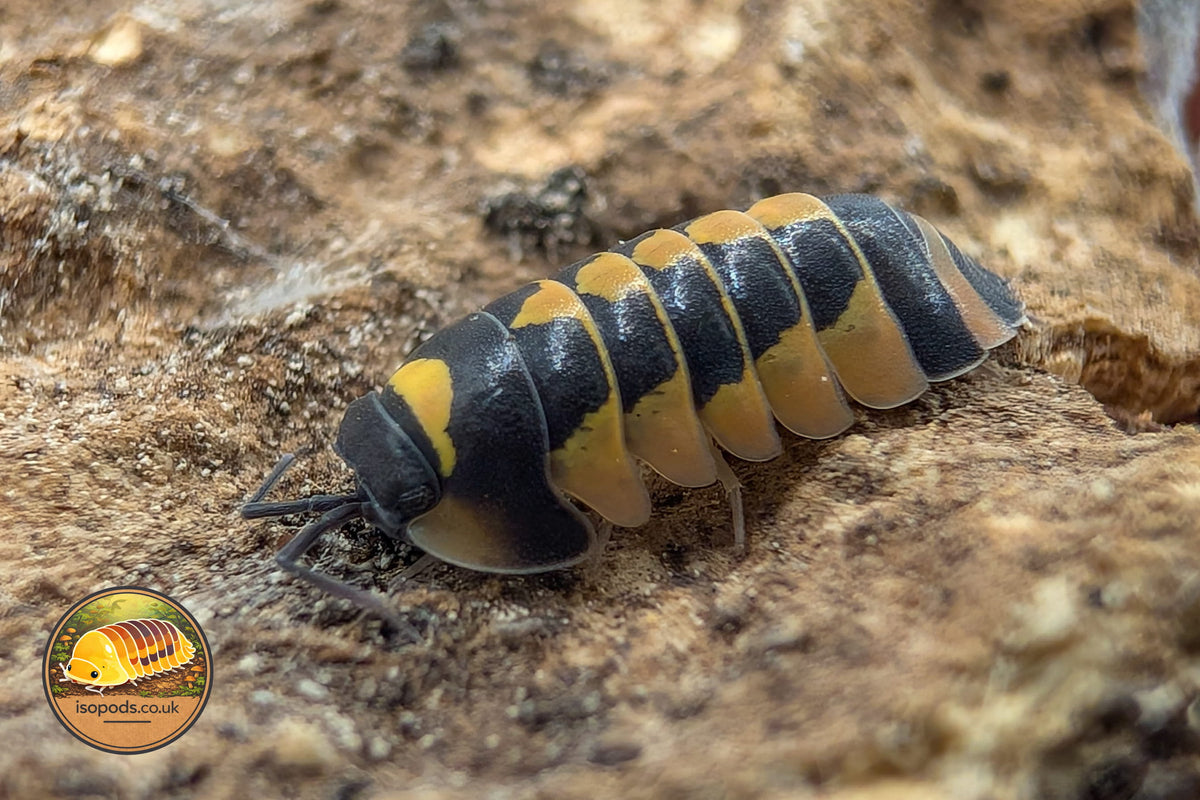
Ardentiella Yellow Hornet Isopod
Low stock! Only 1 left
Regular price
£95.00 GBP
Sale price
£95.00 GBP
Regular price
Unit price
per
Tax included.
Shipping calculated at checkout.
Couldn't load pickup availability
- Fully secure checkout
- Trusted by thousands
- Rated and reviewed
Want next day delivery? Be quick!
You just missed it!
Question about this product?
We're happy to help.
Ardentiella Yellow Hornet Isopods
Ardentiella Yellow Hornet stands out for its sharp yellow-and-dark hornet-style contrast. The bright yellow patterning against darker base tones gives this Ardentiella line a bolder, more defined look than softer or more blended colour forms, so it makes sense for keepers who want a tropical species with stronger visual punch as well as interesting enclosure behaviour.
In captivity, this is often a more display-oriented Ardentiella when the setup gives it usable bark, cork, branches, and sheltered raised routes. That does not mean constant open-floor activity, but a settled colony may be noticed climbing cork bark, working along branch edges, using decaying wood, and grazing on reachable lichen-bearing surfaces more readily than many lower-cover tropical isopods.
What makes Yellow Hornet different
-
Look: bold yellow markings over dark tones, with a high-contrast hornet-like appearance. -
Behaviour style: active, bark-using, and often more readable on cork, branches, and raised cover than on bare substrate. -
Setup fit: best treated as a humid tropical species that still needs strong ventilation and plenty of usable surfaces. -
Visibility: can be more interesting to watch than very hidden tropical types, but should not be bought with expectations of constant exposure. -
Keeper appeal: a better match for buyers who enjoy colour, surface use, and enclosure behaviour together.
How they tend to use the enclosure
Yellow Hornet usually makes the most sense in an enclosure that is not flat. This Ardentiella type is better read around bark faces, cork edges, branches, lichen-bearing sticks, and sheltered raised routes than by how often it crosses open floor. When the colony feels secure, you may see individuals resting against humid bark, moving along angled cork, or feeding where raised cover meets leaf litter and wood below.
If they are only ever compressed into one damp pocket, the enclosure may be too bare, too stale, or too dry outside that one refuge. Better signs include animals using more than one piece of cover, moving between bark and lower littered areas, and showing interest in sheltered surfaces rather than vanishing into a single emergency corner.
Setup before ordering
Prepare this species for a humid but breathable tropical setup. A plain wet tub with one hide is usually a poor fit. Yellow Hornet tends to do better with angled cork bark, branch-like climbing surfaces, a proper spread of leaf litter, and sheltered feeding areas built around rot wood. The lower layer should stay useful as a food base, while the upper cover gives them places to climb, rest, and graze without sitting fully exposed.
A reliable damp refuge matters, but the whole enclosure should not be swampy. Fresh air is important here: humid conditions with stale air can reduce bark use and leave the colony harder to read. If you want a broader guide to balancing moisture, cover, and ventilation, see the isopod habitat setup guide.
Reachable grazing surfaces can also add a lot to this species. Lichen sticks work best when placed against bark, cork, or branches the colony already uses, not left as exposed decoration. Consistent mineral access is also worth providing, and limestone can be a practical calcium source in a long-term tropical setup.
Feeding priorities
The main diet should still come from the enclosure itself: leaf litter, decaying wood, mature detritus, and microbial films. Fresh foods are only support. With Ardentiella, it is often more useful to think in terms of quiet grazing across bark, wood, litter, and lichen-bearing surfaces than dramatic feeding in the open.
If added foods get a response but the enclosure has very little long-term food base, improve that first. For a broader overview of what should make up the diet, read what do isopods eat.
Who will enjoy this species most
Yellow Hornet suits keepers who want a brighter, more defined Ardentiella with active use of bark and raised cover. It is a good fit if you enjoy tropical enclosures that feel alive around cork, branches, wood, and sheltered surfaces rather than judging everything by open-floor visibility.
It is less suited to buyers who want a very simple setup, minimal ventilation planning, or a species chosen mainly for constant open display. This line is best approached as visually striking and behaviourally interesting, but still dependent on cover, humidity, and fresh air being balanced properly.
Compare before you choose
If you want a close same-theme comparison, Ardentiella Pink Hornet is the most natural next look. For wider browsing, the Ardentiella isopods collection shows other bark-and-surface-focused options, while the tropical isopods page helps if you are still deciding whether a humid, ventilated tropical setup is the right direction for your next colony.
Ease of care
Preferred Temperature
Preferred Humidity
Popularity
Care Instructions
Care Instructions