🔥 Daily Isopod Auctions on WhatsApp! Grab species at auction prices, discover rare finds & join our growing community. Join Here
Troglodillo Sphinx Isopod
Out of stock
Regular price
£150.00 GBP
Sale price
£150.00 GBP
Regular price
Unit price
per
Tax included.
Shipping calculated at checkout.
Couldn't load pickup availability
- Fully secure checkout
- Trusted by thousands
- Rated and reviewed
Want next day delivery? Be quick!
You just missed it!
Sorry, it's out of stock.
But we can let you know when it's back in.
Question about this product?
We're happy to help.
Sold out
Troglodillo Sphinx Isopods for Sale UK
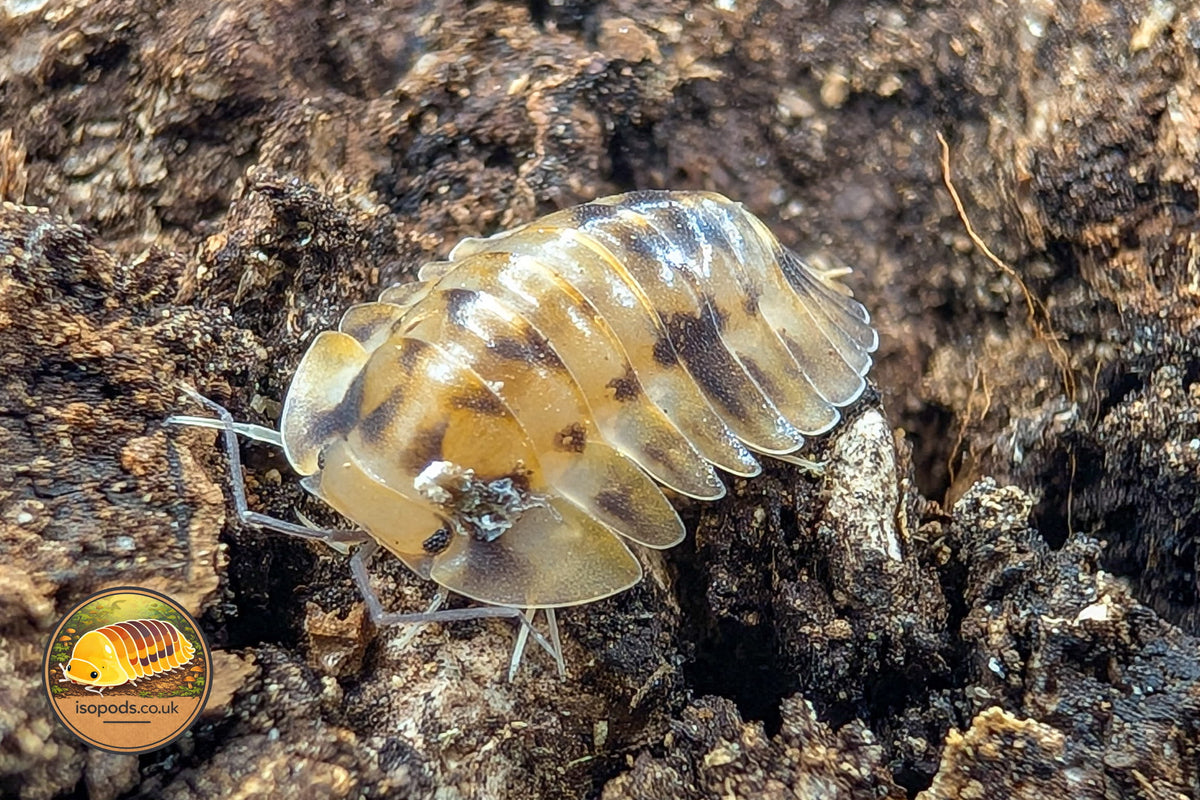
Troglodillo Sphinx stands out for its unusually flat, broad, limpet-like profile. The appeal here is less about bright colour and more about shape: this is a sculptural-looking Troglodillo with a low, pressed silhouette that gives it a distinctly cave-specialist feel in the enclosure.
That visual hook comes with the usual Troglodillo reality. This is not a constant-display isopod. A settled colony is often found tucked under bark, deep in leaf litter, or along tight humid cover rather than walking openly across bare substrate. It suits keepers who enjoy unusual form, subtle behaviour, and a more carefully prepared tropical setup.
What makes Sphinx stand out
-
Shape: Extremely flat and broad-looking, with a low-profile outline that sets it apart from rounder or more raised-bodied isopods. -
Collector appeal: Best appreciated as a sculptural, cave-like Troglodillo rather than a colour-led display animal. -
Behaviour: Usually slow, cautious, and shelter-focused, especially after disturbance. -
Visibility: More likely to be found under cover, in bark gaps, or along shaded edges than out in the open. -
Setup style: Needs humid hiding places with airflow, not a sealed wet tub.
How they usually use the enclosure
Sphinx makes the most sense when the enclosure gives it dark, tight places to settle. Expect bark edges, cork gaps, leaf litter layers, and the line where firm cover meets damp substrate to do most of the work. If you mainly see them when lifting hides or checking under cover, that can be completely normal for this type.
A healthy setup usually lets the colony spread between several sheltered places instead of crowding into one emergency refuge. If they are all packed into one wet corner, the rest of the tub may be too open, too dry, or too stale to use comfortably.
Before you order
Prepare this species as a humid but breathable Troglodillo setup. Use plenty of leaf litter, firm cover such as cork bark, and a dependable damp refuge that stays moist below the surface without turning the whole enclosure soggy. Dark hides and tight covered gaps matter more here than open floor space.
A detritus-rich base also helps. rot wood and mature organic substrate give the colony sheltered grazing areas, while steady calcium access from limestone supports long-term maintenance. Keep airflow present from the start, and avoid repeated checking once the colony is in place.
Care style that fits this species
Treat Sphinx as a specialist-leaning Troglodillo that wants damp crevices with fresh air. The goal is not a wet box. The goal is a stable enclosure with humid hiding places, covered routes, and enough dry-ish covered ground that the colony still has choice.
If you are unsure how to balance moisture, cover, and ventilation, the Troglodilo isopods care guide is the most relevant next read for this genus style.
Who tends to enjoy this species most
Sphinx is a strong fit for keepers who buy with shape and behaviour in mind. If you like unusual cave-style forms, patient observation, and species that reward a well-built enclosure, this one has a distinct identity.
If you want frequent open movement or an isopod that reads well at a quick glance, other choices may feel more satisfying. Sphinx is better approached as a hidden, specialist-looking collector animal than as a busy surface rover.
Compare before you decide
If you want another Troglodillo comparison with a different visual mood, Troglodillo Purple Haze is a useful next look. For broader browsing, the Troglodillo isopods collection helps you compare other crevice-using options, and what do isopods eat is a practical follow-up if you want to review detritus-first feeding before ordering.
Ease of care
Preferred Temperature
Preferred Humidity
Popularity
Care Instructions
Care Instructions