🔥 Daily Isopod Auctions on WhatsApp! Grab species at auction prices, discover rare finds & join our growing community. Join Here
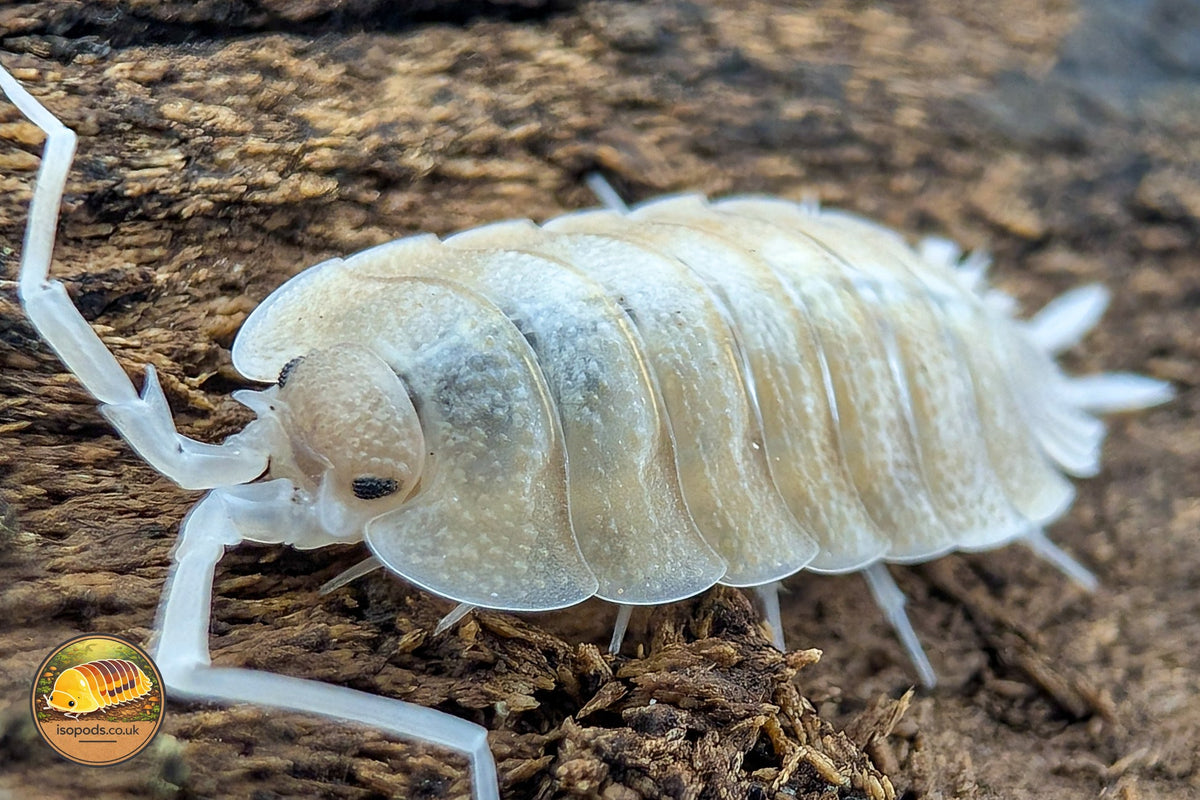
Porcellio bolivari Perico Isopod
Low stock! Only 2 left
Regular price
£60.00 GBP
Sale price
£60.00 GBP
Regular price
Unit price
per
Tax included.
Shipping calculated at checkout.
Couldn't load pickup availability
- Fully secure checkout
- Trusted by thousands
- Rated and reviewed
Want next day delivery? Be quick!
You just missed it!
Question about this product?
We're happy to help.
Porcellio bolivari Perico Isopods for Sale UK
Porcellio bolivari Perico stands out as a large, flattened Spanish Porcellio with a bold patterned look and the stronger surface presence many keepers want from a giant species. Rather than behaving like a quiet tropical isopod that disappears under the substrate, this type is better known for fast movement, broad enclosure use, and a more readable feeding response once settled.
The appeal here is not just colour. It is the combination of size, shape, and behaviour: a big-bodied Porcellio that looks impressive in the enclosure and can be easier to observe around bark, hides, feeding spots, and open routes between the drier side and the moist refuge. For buyers who like Spanish giant-style isopods with visible movement and collector appeal, Perico is an easy one to understand quickly.
What makes Perico stand out
-
Body shape: large and notably flattened, giving it that broad Spanish giant look. -
Pattern: the Perico form is chosen for its striking appearance rather than a plain utilitarian colony look. -
Behaviour: usually more surface-readable than hidden tropical genera, with fast movement and a clearer response to food. -
Enclosure style: suits a ventilated setup with room to move, bark or stone-like cover, and a proper dry-to-moist gradient.
Behaviour in the enclosure
Porcellio bolivari is associated with southeastern Spain, and that Spanish cliff and cave-edge context fits the way this species is best kept in captivity: airy, sheltered, and never swampy. In practice, Perico is more likely to be noticed travelling between hides, cork edges, leaf litter, and feeding areas than behaving like a permanently hidden humid-tub species.
That does not mean leaving the enclosure sparse. They still use cover. A colony often reads best when there are bark slabs, stone-like hides, leaf litter, and sheltered edges across both the drier and slightly damper parts of the tub. If they only crowd into one wet corner, the enclosure is often too damp overall, too bare outside the refuge, or too stale.
How to set up for them before ordering
This is a species to prepare for with floor space, airflow, and usable dry ground rather than a flat wet box. Keep one side reliably moist for hydration and moulting, but let the rest of the enclosure stay drier on the surface with cover still available. That gives them somewhere to move, feed, and choose their position instead of forcing the whole colony into one patch.
A generous layer of leaf litter should cover much of the enclosure, with pieces of cork bark or similar firm cover creating shaded undersides and hide edges. Rot wood is useful as part of the long-term food base, and steady mineral support from limestone is worth keeping available. If you are still refining your airflow and moisture balance, the isopod habitat setup guide is the best preparation read.
Feeding and long-term care
Like other Porcellio, this species should be treated as a detritivore first. The enclosure should do most of the feeding work through leaf litter, decaying plant material, mature substrate, and wood. Fresh foods and protein can be useful extras, and this type may show a confident feeding response, but that should support the enclosure food base rather than replace it.
If rich foods regularly sit untouched or spoil quickly, the issue is often not hunger but setup balance. Feed small amounts, keep the litter base deep, and avoid placing lots of rich food into damp stagnant corners.
Who tends to enjoy this species most
Perico is a strong fit for keepers who want a larger Porcellio with bolder movement, a striking patterned look, and a setup they can actually watch. It is likely to suit buyers who enjoy Spanish giant types, prefer visible enclosure behaviour over hidden tropical behaviour, and are happy to provide ventilation, cover, and space instead of keeping everything uniformly damp.
It is less suited to buyers planning a very humid sealed tub, a sparse enclosure with one wet corner, or a setup style borrowed from shelter-heavy tropical species. If your preference is for quieter isopods that stay mostly under bark and litter in a humid enclosure, other groups may fit better.
Compare before you choose
If you want to browse more species with similar husbandry logic, start with the Porcellio isopods collection. If you want a useful same-genus contrast, Porcellio Expansus Prades is another large Spanish-style Porcellio worth comparing. For a more straightforward, less giant-style Porcellio option, Porcellio laevis Crystal White gives a different look and feel within the genus.
Ease of care
Preferred Temperature
Preferred Humidity
Popularity
Care Instructions
Care Instructions