🔥 Daily Isopod Auctions on WhatsApp! Grab species at auction prices, discover rare finds & join our growing community. Join Here
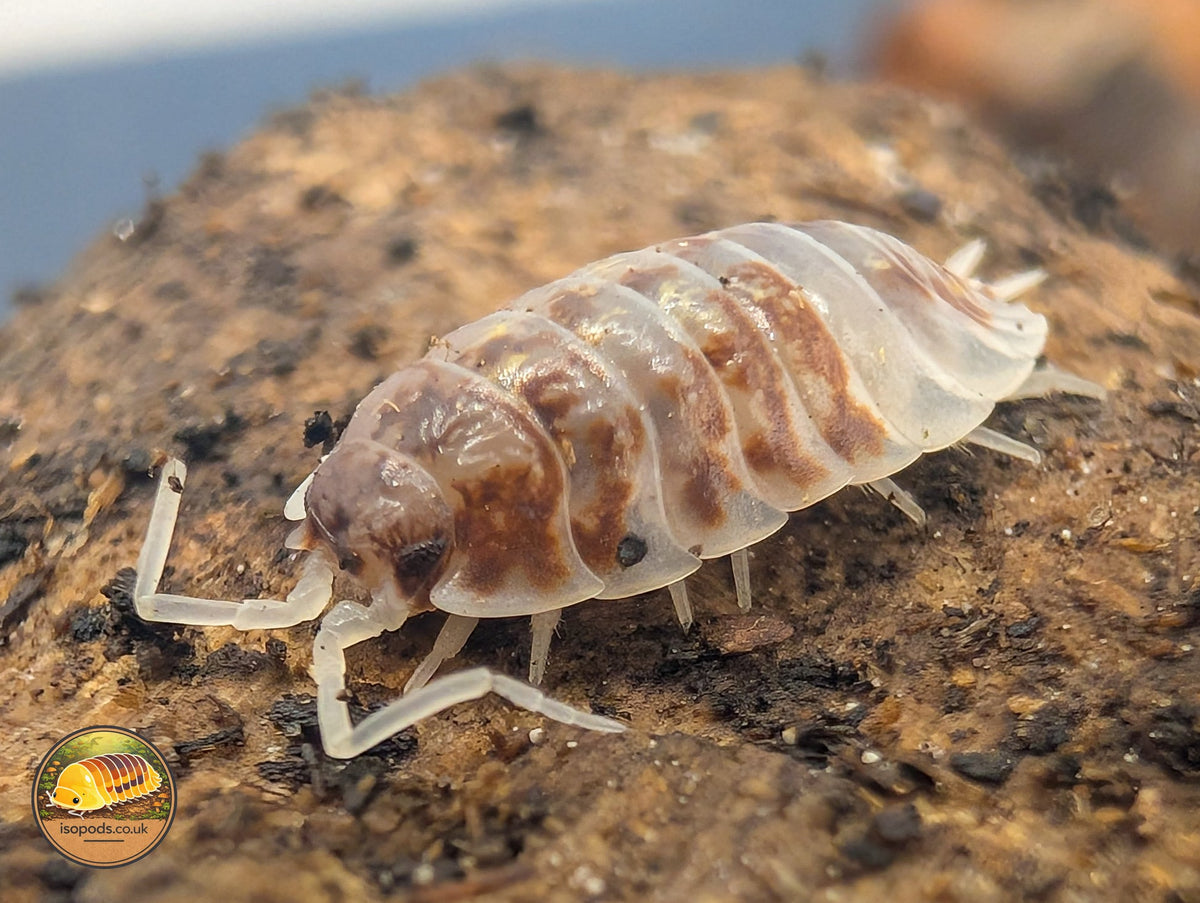
Oniscus asellus "Orange Mardi Gras Orage" Isopod
Low stock! Only 2 left
Regular price
£100.00 GBP
Sale price
£100.00 GBP
Regular price
Unit price
per
Tax included.
Shipping calculated at checkout.
Couldn't load pickup availability
- Fully secure checkout
- Trusted by thousands
- Rated and reviewed
Want next day delivery? Be quick!
You just missed it!
Question about this product?
We're happy to help.
Oniscus asellus "Orange Mardi Gras Orage" Isopods for Sale UK
Oniscus asellus "Orange Mardi Gras Orage" stands out because it takes a familiar British woodland woodlouse and replaces the usual grey-brown look with much brighter orange Mardi Gras-style patterning. The appeal here is not just colour. This form keeps the classic flat, slightly shiny Oniscus shape and quick movement that many UK keepers already recognise, but with a far more eye-catching finish.
In the enclosure, this is best treated as a damp leaf-litter and cover user rather than a constantly exposed display animal. Expect it around bark edges, under leaf litter, and near rotting wood, with fast retreats if disturbed. Unlike Armadillidium, it does not roll into a ball, so its behaviour is more about darting under cover than curling up in the open.
What makes this form different
-
Visual hook: bright orange patterning on the familiar body shape of Oniscus asellus. -
Woodland context: a recognisable UK woodlouse type, but much more striking than the normal grey-brown look. -
Movement: quick and alert, usually slipping back under litter or bark when checked. -
Visibility style: more likely to be noticed around covered surface areas than buried deep all the time, but not a species to judge by constant open roaming.
How they use the enclosure
This form usually looks best in a setup with plenty of cover across both the damp and drier areas. You are most likely to find them under leaf litter, beneath bark, against wood, or moving along shaded edges rather than sitting out on bare substrate. If the enclosure feels secure, they may use more of the surface, but repeated disturbance or an overly open tub will often make them vanish back under cover quickly.
If the whole group stays compressed into one damp patch, that often means the rest of the enclosure is too dry, too bare, or too stale to use properly. A colony spread across several covered spots is a better sign than trying to judge them by open-floor activity alone.
Before you order
Prepare a setup with a clear damp refuge, a drier but still usable side, and good cover throughout. Bark or cork bark, leaf litter, and rot wood all help because they give these Oniscus places to hide and graze at the same time. The enclosure should stay moist where needed, but not wet and stagnant from end to end.
A pocket of sphagnum moss can help keep one refuge reliably damp, while steady access to limestone gives ongoing mineral support. Fresh air matters as much as moisture here. This is a British woodland species type, not a sealed tropical wet-tub isopod.
Feeding and long-term support
The main food base should come from the enclosure itself: leaf litter, decomposing plant matter, rotting wood, and mature substrate surfaces. Fresh foods can be offered in small amounts, but they should stay secondary to the detritus base. If you want a broader feeding overview, see what do isopods eat.
As a practical rule, keep the litter layer generous, leave wood in place to age and soften, and avoid turning feeding into a constant cycle of rich extras. Quiet grazing under cover is normal.
Who tends to enjoy this isopod most
This form suits keepers who like familiar UK species with a stronger visual twist, and who enjoy watching natural movement around bark, leaves, and shaded floor space. It is a good fit for buyers who want something more colourful than standard Oniscus asellus without moving into very hidden tropical care styles.
It may be less satisfying if you want a species that stays out in the open for long periods, or if you prefer roller behaviour like Armadillidium ruffoi. This Oniscus is more about quick surface use, covered feeding, and fast retreats than constant display posing.
Compare before you decide
If you want a closer comparison within the same species, Oniscus asellus Orange is the most natural next look. If you are still planning the enclosure itself, the isopod habitat setup guide is the best next step for balancing cover, moisture, and airflow.
Ease of care
Preferred Temperature
Preferred Humidity
Popularity
Care Instructions
Care Instructions