🔥 Daily Isopod Auctions on WhatsApp! Grab species at auction prices, discover rare finds & join our growing community. Join Here
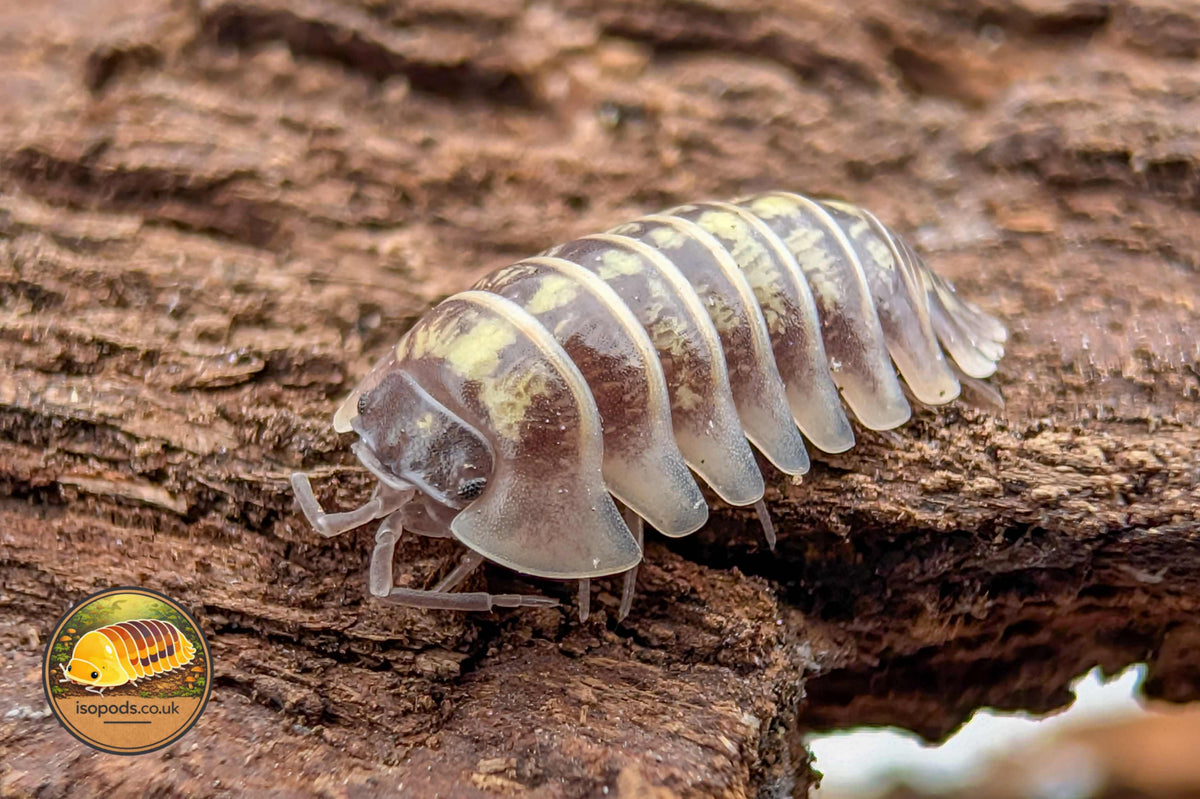
Armadillidium ruffoi Isopod
12 in stock
Regular price
£15.00 GBP
Sale price
£15.00 GBP
Regular price
Unit price
per
Tax included.
Shipping calculated at checkout.
Couldn't load pickup availability
- Fully secure checkout
- Trusted by thousands
- Rated and reviewed
Want next day delivery? Be quick!
You just missed it!
Question about this product?
We're happy to help.
Armadillidium ruffoi Isopods for Sale UK
Armadillidium ruffoi stands out for a quieter kind of collector appeal: a faded grey base colour, irregular whitish spots or broken pale rows, and a more understated look than the brighter Armadillidium colour morphs. With the added interest of a Northern Italian, Verona-associated background and cave-linked hobby appeal, this is a species that tends to attract keepers who enjoy subtle pattern, locality interest, and classic roller behaviour rather than instant visual impact.
In the enclosure, this is best approached as a slower-establishing Armadillidium that makes good use of cover. Expect more time under bark, stone-like hides, and leaf litter than constant open roaming, especially while the colony settles. If you want a bold, fast-feeling display colony, there are louder choices in the genus. If you prefer a more restrained species with collector character, A. ruffoi is a much stronger fit.
What makes Armadillidium ruffoi distinctive
-
Look: faded grey body colour with irregular whitish spots or pale broken rows rather than high-contrast banding. -
Texture: smooth to lightly textured shell with the classic Armadillidium roller shape. -
Collector interest: valued more for locality and subtle pattern than for loud colour. -
Behaviour: usually more rewarding around cover, hide edges, and leaf litter than on bare open substrate. -
Pace: better treated as a species to establish steadily, not one to buy for rapid colony expansion.
Enclosure style that suits this species
Armadillidium ruffoi does best when the enclosure gives it choice. A reliable damp refuge on one side, a drier but still usable side, and plenty of cover across both areas will usually work better than keeping the whole tub evenly wet. A thick layer of leaf litter, bark or cork hides, and shaded edges help the colony spread out and use more than one part of the enclosure.
This is also a species where airflow matters. A stale, wet tub can suppress normal movement just as easily as an over-dry setup. The damp side should stay moist below the surface, but the enclosure should still smell fresh and earthy rather than sour. For cover, bark pieces such as cork bark are useful because they create shaded undersides and tight edges where rollers often rest.
As with many Armadillidium, steady mineral support is worth providing all the time rather than occasionally. Limestone is a simple way to keep calcium available in the enclosure.
Behaviour and visibility
This is not the kind of Armadillidium to judge by constant surface activity. Once settled, you may notice individuals around litter edges, beneath bark, or moving between the damp refuge and drier cover, with the familiar rolling response if disturbed. That can make them easier to read than many hidden tropical genera, but they still should not be expected to sit out in the open for long periods.
If the colony spends all its time packed into one damp corner, the problem is usually not that the species is "shy" by nature. More often, the rest of the enclosure is too bare, too dry, or too stale to use comfortably. More litter, more covered areas, and a better damp-to-drier balance usually help more than simply adding water.
Feeding priorities
Like other Armadillidium, A. ruffoi should be treated as a detritivore first. The enclosure should carry most of the diet through leaf litter, decomposing plant matter, mature substrate, and sheltered grazing surfaces. Rot wood is especially useful because it adds both long-term food value and another covered place to sit against.
Fresh foods can be offered as support, but they should not replace the enclosure food base. If the colony only appears interested when fresh food is added, it often means the litter and wood base is too thin rather than the species needing constant extras.
Who usually appreciates this species most
A. ruffoi tends to suit keepers who enjoy quieter species with collector interest, and who do not mind a colony that may take time to settle and build. It makes more sense for someone who likes locality-led Armadillidium and subtle patterning than for a buyer chasing the brightest morph or the fastest-growing project.
It is likely to be less satisfying if your main goal is a highly visible, quick-feeling colony with bold contrast at every glance. This species is better appreciated through patient observation, stable setup, and realistic expectations around breeding pace and enclosure use.
Before you order
- Prepare a damp refuge without soaking the whole enclosure.
- Make sure the drier side still has cover rather than bare exposed floor.
- Add leaf litter generously so the colony can hide and graze at the same time.
- Provide bark, cork, or flat stone-like hides for shaded resting spots.
- Keep calcium available from the start.
- Plan for a steadier, more patient colony rather than a fast breeder.
Compare before you choose
If you are deciding between subtler collector Armadillidium and brighter pattern-led forms, browsing the Armadillidium isopods collection is the best next step. For a direct same-genus comparison, Armadillidium Lefkada is another species worth viewing alongside A. ruffoi.
If you want more detail on moisture balance, feeding, and common setup mistakes for this genus, the Armadillidium care guide is the most relevant follow-on read.
Ease of care
Preferred Temperature
Preferred Humidity
Popularity
Care Instructions
Care Instructions