🔥 Daily Isopod Auctions on WhatsApp! Grab species at auction prices, discover rare finds & join our growing community. Join Here
Armadillidium Lefkada Isopod
Low stock! Only 10 left
Regular price
£50.00 GBP
Sale price
£50.00 GBP
Regular price
Unit price
per
Tax included.
Shipping calculated at checkout.
Couldn't load pickup availability
- Fully secure checkout
- Trusted by thousands
- Rated and reviewed
Want next day delivery? Be quick!
You just missed it!
Question about this product?
We're happy to help.
Armadillidium Lefkada Isopods
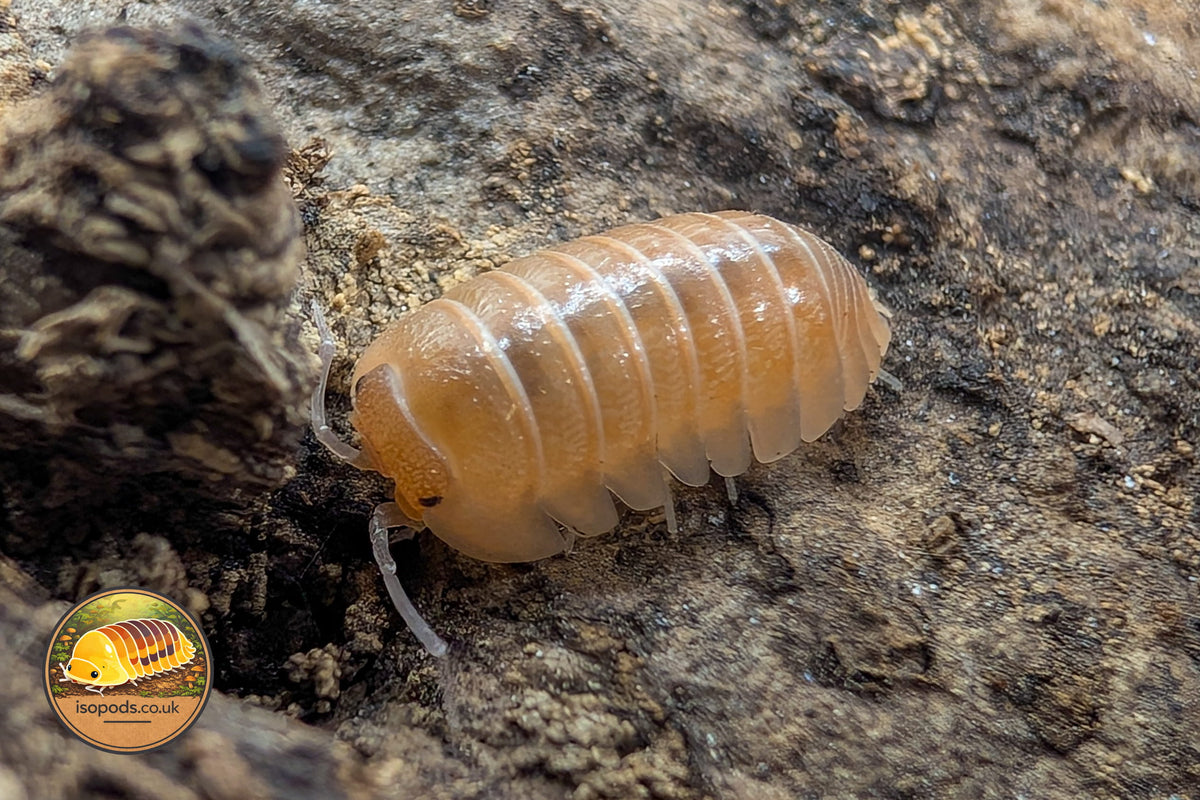
Armadillidium Lefkada stands out for its Greek locality appeal, large adult size, and warm peach-to-apricot colour. It also has a notably broad, shield-like front profile that gives it a very different presence from many smaller or more familiar Armadillidium. If you want a locality-led roller isopod with a strong visual identity rather than just another standard grey colony, this is the feature that sets it apart fastest.
In the enclosure, Lefkada should still be approached as an Armadillidium: a ground-using roller that benefits from leaf litter, flat bark or cork hides, fresh air, steady calcium access, and a clear damp refuge with a usable drier side. It can be more interesting to watch around hide edges, litter, and sheltered floor space than on bare open substrate, so it suits keepers who enjoy seeing how a colony settles and spreads rather than expecting constant open roaming.
What makes Lefkada different
-
Locality character: best presented here around Lefkada / Greece rather than as a generic Armadillidium. -
Colour: warm peach to apricot body tone gives it a softer, more unusual look than many cooler-toned rollers. -
Shape: the broad front profile adds to its distinctive, shield-like appearance. -
Size impression: notable large adult look, which adds to its collector appeal. -
Secondary review point: pied expression may appear in some stock, but that should be treated as a bonus detail rather than the whole point of the page.
How they tend to use the enclosure
Once settled, these are usually best found under bark, within leaf litter, or around the edges of hides rather than sitting out on exposed ground all day. Like other Armadillidium, they can roll up when disturbed, and they often make good use of the floor area when the enclosure gives them enough cover to move between damp and drier zones without feeling exposed.
If most of the colony stays packed into one wet corner, that usually means the rest of the tub is too dry, too bare, or too open to use comfortably. If they avoid the damp side altogether, check whether that area has become stale or muddy. A good Lefkada setup should let them choose between a damp refuge and airier covered ground, not force them into one last usable spot.
Setup style that suits them
Lefkada is a better fit for an airy Armadillidium enclosure than a wet all-over tub. Use plenty of leaf litter across the surface, add flat pieces of cork bark or similar hides, and keep one side reliably damp while the other stays drier on top but still covered and usable. That drier side should not be empty; it should still have litter and shelter so the colony can move and rest there.
As with many Armadillidium, steady mineral support matters. Keeping limestone available is a sensible part of long-term setup, especially alongside a mature detritus base. If you want a fuller breakdown of airflow, cover, and moisture balance, the isopod habitat setup guide is the best next read.
Feeding notes
The main diet should come from the enclosure itself: leaf litter, aged organic matter, and decaying wood. Rot wood is useful here because it adds both food value and shaded grazing areas. Fresh foods can be offered sparingly, but they should stay as extras rather than replacing the detritus base.
If added foods get all the attention while litter and wood are limited, the setup is usually too food-light overall. A steadier enclosure base tends to give calmer, more reliable feeding behaviour than frequent rich feeding alone.
Who usually enjoys this species most
This is likely to appeal most to keepers who enjoy locality-led Armadillidium, larger-bodied rollers, and more unusual warm-toned colour forms. It also makes sense for buyers who already know they prefer an airy setup with a proper moisture gradient over tropical-style uniform dampness.
It may be less satisfying if your main goal is constant open visibility or a sparse, low-cover tub. Lefkada is more convincing when given enough litter, hides, and usable floor space to behave like a settled roller isopod rather than being pushed into the open.
Compare before you decide
If you want to browse more rollers with a similar care framework, start with the Armadillidium isopods collection. If you are comparing large, characterful Armadillidium types, Armadillidium ruffoi is a useful next species to look at. For broader genus-level expectations around airflow, calcium, and moisture gradients, the Armadillidium care guide will help you prepare properly before ordering.
Ease of care
Preferred Temperature
Preferred Humidity
Popularity
Care Instructions
Care Instructions