🔥 Daily Isopod Auctions on WhatsApp! Grab species at auction prices, discover rare finds & join our growing community. Join Here
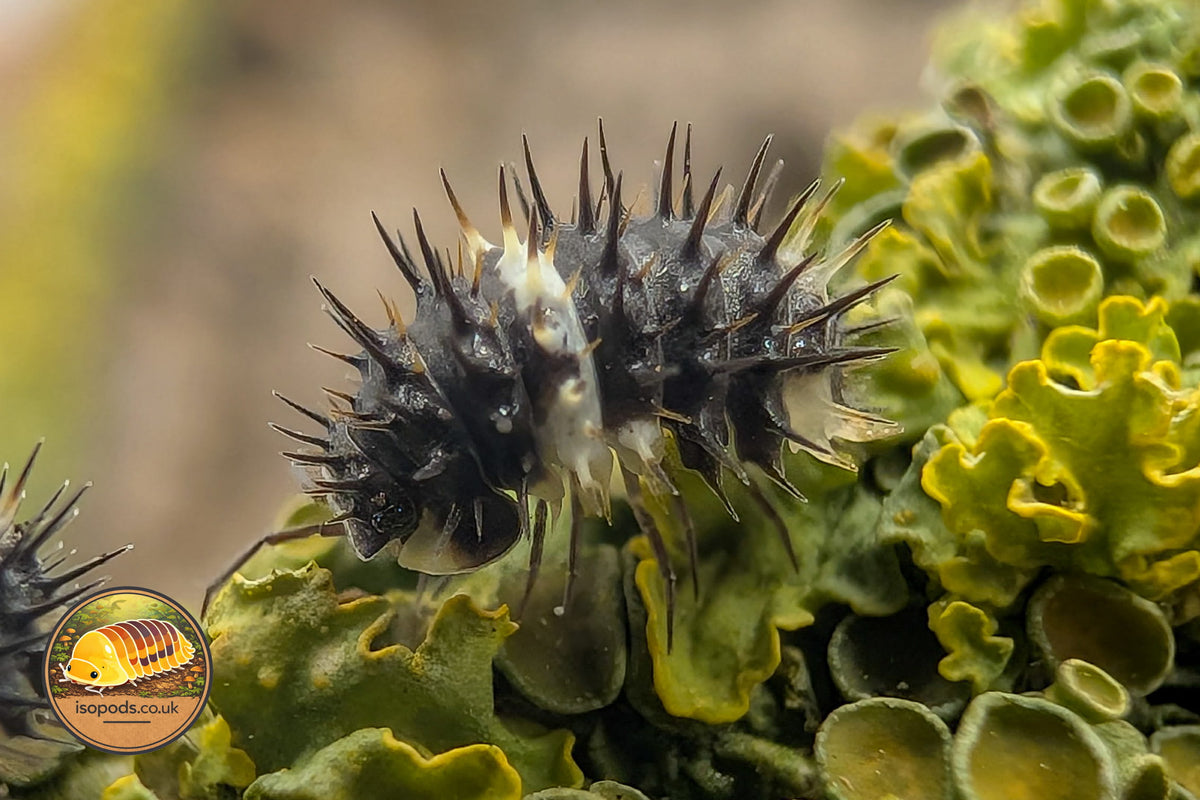
Laureola Panda Spiky Isopod
Out of stock
Regular price
£110.00 GBP
Sale price
£110.00 GBP
Regular price
Unit price
per
Tax included.
Shipping calculated at checkout.
Couldn't load pickup availability
- Fully secure checkout
- Trusted by thousands
- Rated and reviewed
Want next day delivery? Be quick!
You just missed it!
Sorry, it's out of stock.
But we can let you know when it's back in.
Question about this product?
We're happy to help.
Sold out
Laureola Panda Spiky Isopods
Laureola Panda Spiky stands out for its sharper panda-style contrast: pale and dark markings laid over the spiky Laureola texture that gives this type its distinctive look. The result is a compact tropical isopod with a stronger visual identity than plainer spiky forms, especially for keepers drawn to patterned collector species rather than plain detritus workers.
In the enclosure, this is usually a bark-and-cover Laureola rather than a deep burrower. Expect the colony to make better use of bark faces, cork edges, leaf litter, mossy damp areas, and sheltered surfaces than bare open substrate. If that behaviour is part of the appeal for you, Panda Spiky is one of the more characterful ways to explore the genus.
What gives Panda Spiky its appeal
-
Pattern: panda-style pale and dark contrast gives it a more defined look than many plain spiky forms. -
Texture: the spiny dorsal look adds extra visual detail even when the colony is tucked around cover. -
Shape: compact tropical Laureola form rather than a large open-roaming type. -
Behaviour: usually more interesting around bark, cork, litter, and damp shelter than on open floor. -
Setup demand: best treated as a humid, well-ventilated Laureola that dislikes stale, swampy conditions.
How they usually use the enclosure
Laureola Panda Spiky is often easier to appreciate by watching where it settles than by waiting for constant open activity. A comfortable colony may be found along bark edges, under angled cork, in layered leaf litter, and around damp sheltered patches rather than crossing exposed areas for long periods.
That does not mean the colony should vanish into one emergency refuge. In a balanced setup, they can use several covered spots across the tub. If all animals are packed into one wet corner or avoid most bark and litter, the rest of the enclosure may be too dry, too exposed, or too stale to use properly.
Before ordering: setup that suits this Laureola
Prepare a humid but breathable enclosure with mature substrate, generous cover, and a clear damp refuge. This species is a poor fit for a flat tub with one hide. Give it bark or cork it can sit against and move under, a thick surface layer of litter, and sheltered routes between the moist refuge and a drier but still covered side.
cork bark is especially useful here because it creates shaded undersides and edges where Laureola often settle. A patch of sphagnum moss can help keep one humid refuge stable, but avoid turning the whole enclosure wet. Fresh air matters just as much as humidity for this genus.
If you are unsure how large the enclosure should be before the colony arrives, this enclosure sizing guide is the most practical next read.
Feeding priorities
The main diet should still come from the enclosure itself. Keep leaf litter available in depth, and add rot wood or other decomposing material so the colony has long-term grazing under cover. Fresh foods can be offered sparingly, but they should not replace the detritus base.
This type is usually better read through gradual leaf wear, quiet feeding near cover, and steady use of bark and litter than through dramatic rushes to exposed food. For a broader overview of staple diet versus extras, see what do isopods eat.
Who tends to enjoy this species most
This Laureola is a better match for keepers who like patterned tropical isopods, covered bark-rich enclosures, and quieter observation. It suits buyers who enjoy seeing animals use cork edges, litter, and humid shelter in a naturalistic layout rather than expecting a colony to stay out in the open all day.
If you mainly want bold surface activity on open substrate, Panda Spiky may feel too reserved. Its value is more in the combination of contrast, texture, and sheltered behaviour than in constant display.
Common mistakes to avoid
-
Keeping it too wet and closed: tropical does not mean sealed and airless. -
Using too little cover: one bark piece in a bare tub gives the colony very few usable places. -
Letting the damp side turn swampy: sour, stale conditions often reduce normal bark and litter use. -
Relying on fresh foods: if the enclosure food base is weak, behaviour becomes harder to judge. -
Checking too often after arrival: newly settled Laureola may stay tucked away until the enclosure feels predictable.
Compare before you decide
If you like the spiky Laureola look but want a different colour direction, compare Laureola Magma Spiky for a warmer contrast or Laureola Ivory Spiky for a lighter overall look. You can also browse the wider Laureola isopods range if you are still deciding which Laureola style suits your enclosure best.
If your main question is whether a humid, ventilated tropical setup matches what you already keep, the broader tropical isopods guide is a useful next step.
Ease of care
Preferred Temperature
Preferred Humidity
Popularity
Care Instructions
Care Instructions