🔥 Daily Isopod Auctions on WhatsApp! Grab species at auction prices, discover rare finds & join our growing community. Join Here
Laureola Magma Spiky Isopod
Low stock! Only 2 left
Regular price
£125.00 GBP
Sale price
£125.00 GBP
Regular price
Unit price
per
Tax included.
Shipping calculated at checkout.
Couldn't load pickup availability
- Fully secure checkout
- Trusted by thousands
- Rated and reviewed
Want next day delivery? Be quick!
You just missed it!
Question about this product?
We're happy to help.
Laureola Magma Spiky Isopods
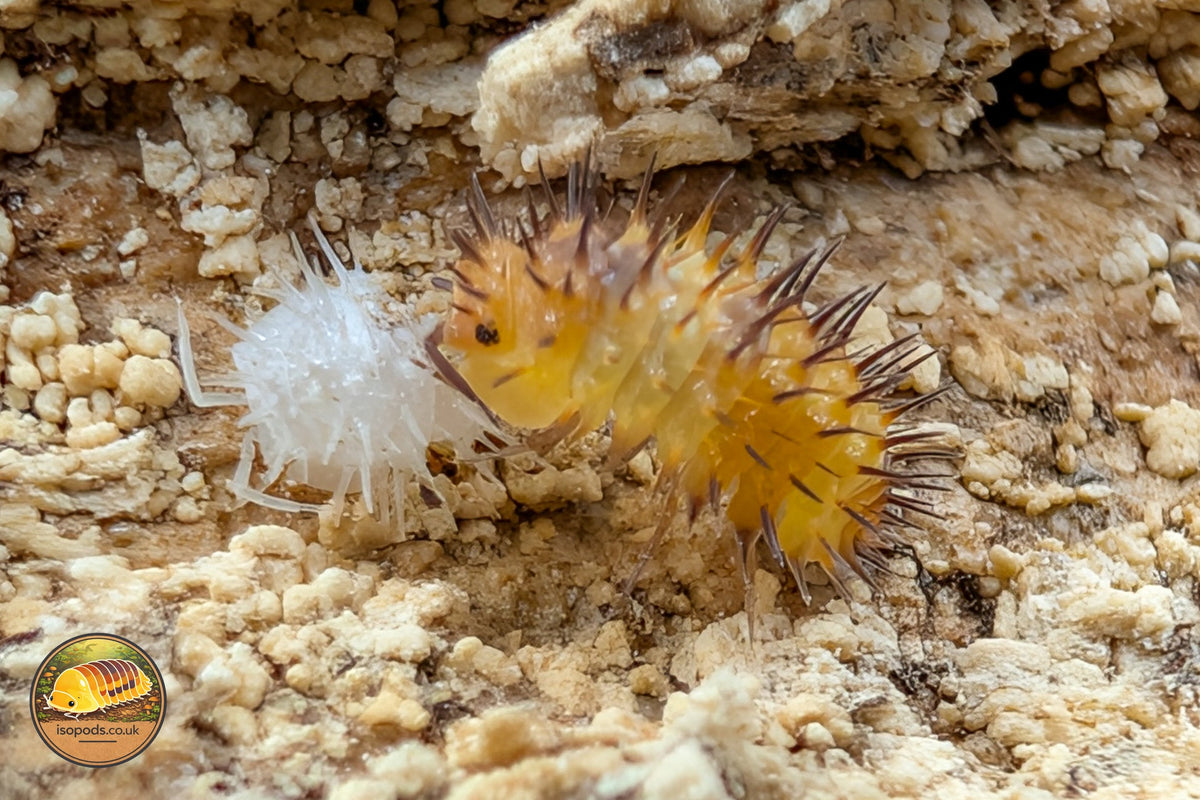
Laureola Magma Spiky is a striking Laureola type with warm magma-like tones and a distinctly spiky, sculpted look. The appeal here is not a smooth glossy finish, but a textured volcanic silhouette that stands out best when the colony is settled among bark, leaf litter, and shaded raised cover.
In practice, this is usually a display isopod for keepers who enjoy watching where the animals choose to sit rather than expecting constant movement across bare substrate. They are more likely to be noticed around cork edges, bark faces, moss-covered wood, and sheltered damp areas than out on open floor, so the setup matters as much as the colour.
What makes Magma Spiky stand out
-
Look: fiery orange-red, lava-like colour tones paired with a spiky Laureola outline -
Best viewing style: usually easier to appreciate around bark, cork, and layered shelter than on open substrate -
Enclosure use: often linked to bark faces, wood, leaf litter, mossy cover, and raised or angled surfaces -
Care bias: humid tropical conditions with fresh air, not a sealed wet tub -
Keeper expectation: better for patient observation than for buyers wanting frequent open-floor activity
Display value and behaviour
Magma Spiky makes the most sense in an enclosure that lets its shape and colour work with the layout. Vertical or angled cork bark, bark slabs, and sheltered wood surfaces tend to suit this genus better than a flat box with one hide. Once settled, individuals may be found along bark edges, under cover, through litter, or on sheltered raised surfaces where humidity stays high but the air does not become stale.
That does not mean constant visibility. A healthy colony may still spend much of its time tucked into cover, especially after disturbance. More useful signs are whether they use several sheltered spots, whether bark and litter show regular use, and whether the colony is spread through more than one safe area.
How to set the enclosure up before ordering
Prepare this species as a humid Laureola enclosure with layered shelter rather than as a deep-burrowing setup. Use a mature substrate that holds lower moisture, then build the upper layer with leaf litter, bark, wood, and a few raised surfaces. A moss-covered stick, branch, or similar piece of sheltered wood can create extra covered routes and resting places above the floor, which fits this bark-using style better than leaving the tub flat and open.
Keep one clear damp refuge that stays moist below the surface, and let the rest of the enclosure grade into a drier but still covered side. A little sphagnum moss can help keep that moist refuge stable without soaking the whole tub. The goal is humid cover with airflow: fresh-smelling, leaf-littered, and bark-rich, not wet everywhere and airless.
If the whole colony ends up packed into one wet corner, the rest of the enclosure may be too exposed, too dry, or too stale to use comfortably. If you want a fuller overview of moisture, cover, and ventilation for this genus, the Laureola care guide is the best next read.
Feeding notes
Like other Laureola, this species should be fed through the enclosure first. Leaf litter should cover much of the surface, with decomposing wood and mature substrate supporting steady grazing under cover. Adding some rot wood is useful both as food value and as another sheltered area to sit against or feed around.
Fresh foods can be offered in small amounts, but they should not replace the detritus base. If you are building the enclosure from scratch, it helps to understand that litter and wood do most of the long-term work; the broader guide to what do isopods eat explains that feeding pattern in more detail.
Who will enjoy this species most
This Laureola is a strong fit for keepers who want a more sculpted, collector-style display animal and are happy to build around bark, cover, humidity, and airflow. It is a weaker fit for anyone looking for a sparse setup species, a simple first tropical colony, or an isopod that should be out on open ground all the time.
If you are deciding between similar options
For more same-genus browsing, see the Laureola isopods collection. If you want another spiky Laureola to compare directly, Laureola White Skull is a sensible next look. If you are comparing outside the genus, Troglodillo Porcelain offers a different specialist style built more around tight crevices and hard cover than bark-face Laureola behaviour.
Ease of care
Preferred Temperature
Preferred Humidity
Popularity
Care Instructions
Care Instructions