🔥 Daily Isopod Auctions on WhatsApp! Grab species at auction prices, discover rare finds & join our growing community. Join Here
Laureola White Skull Isopod
Low stock! Only 2 left
Regular price
£115.00 GBP
Sale price
£115.00 GBP
Regular price
Unit price
per
Tax included.
Shipping calculated at checkout.
Couldn't load pickup availability
- Fully secure checkout
- Trusted by thousands
- Rated and reviewed
Want next day delivery? Be quick!
You just missed it!
Question about this product?
We're happy to help.
Laureola White Skull Isopods for Sale UK
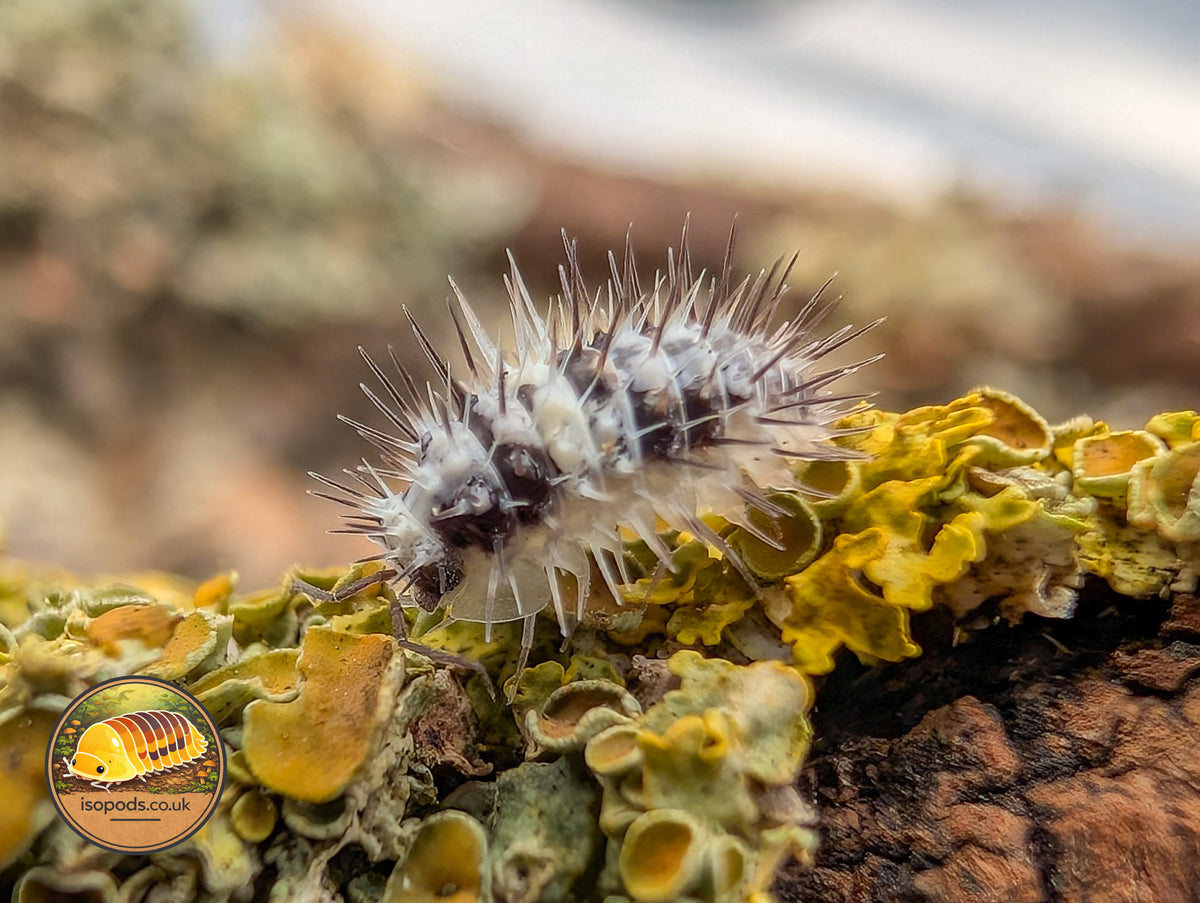
Laureola White Skull stands out for its dark body colour, pale skull-like markings, and sharply textured spiky look. It has the kind of black-and-white contrast that reads well in a planted or bark-rich enclosure, especially when the colony is using cork faces, raised cover, and shaded edges rather than sitting on bare substrate.
This is a better fit for keepers who want a visually distinctive Laureola with strong collector appeal and interesting enclosure use, not a simple deep-burrowing tropical species. White Skull is usually best appreciated by watching where it settles: bark faces, vertical surfaces, mossy damp zones, leaf litter, and sheltered routes around wood and cover.
What makes White Skull different
-
Visual hook: pale skull-style markings against a darker body give this morph its strongest identity. -
Texture: the spiky shell and bolder outline add to its display value when seen up close. -
Enclosure use: often more interesting around bark, cork, raised cover, and sheltered surfaces than on open floor. -
Keeper appeal: better for collectors and patient display-focused keepers than for buyers wanting constant open activity. -
Working approach: best treated as a humid, well-ventilated Laureola that needs cover and a mature feeding layer.
How they tend to use the enclosure
White Skull should not be approached like a Cubaris that mainly disappears into deep substrate. This Laureola type is more likely to make use of bark faces, cork edges, mossy cover, angled surfaces, leaf litter, and sheltered raised routes when the enclosure feels humid but fresh. You may still find them tucked into cover for long periods, especially after disturbance, but that is not unusual.
Visibility is usually best judged by where they appear, not by how often they cross open ground. A settled colony may be spotted along bark edges, beneath cork, around damp sheltered surfaces, or moving between cover and leaf litter. If they are all compressed into one wet pocket, the rest of the tub may be too exposed, too dry, or too stale to use comfortably.
Setup before ordering
Prepare a bark-rich enclosure rather than a flat wet tub. White Skull usually makes better use of setups with cork bark, layered leaf litter, some raised or angled cover, and a clear damp refuge that stays moist without soaking the whole enclosure.
A patch of sphagnum moss can help hold one humid shelter zone, but it works best as part of a defined refuge rather than spread across everything. Add enough litter and wood that the colony can feed and move under cover, and keep airflow strong enough to stop the enclosure becoming stale or sour.
This species is often linked in hobby context with Vietnam, and it suits a tropical setup that stays humid, covered, and breathable. Tight shelter matters. So does a developed feeding layer beneath the visual layout.
Feeding priorities
Leaf litter should remain the main food base, with grazing support from mature substrate and some rot wood. Fresh foods are extras, not the foundation. For Laureola that spend time around bark and sheltered surfaces, feeding is often more successful near cover than in the middle of exposed ground.
Reliable calcium access is also sensible long term, and limestone is an easy way to keep that available without turning feeding spots messy. If you want a broader refresher before setting up the tub, what do isopods eat explains how litter, wood, and supplements fit together.
Who usually enjoys this species most
White Skull is a strong choice for keepers who enjoy high-contrast, unusual isopods and do not mind more subtle observation. It makes more sense for someone building a humid tropical enclosure with bark, leaf litter, damp shelter, and airflow already in place than for someone wanting a sparse, easy, always-visible colony.
If your preference is constant open roaming on bare floor, this may feel quieter than expected. If you enjoy checking bark edges, shaded cork faces, and covered feeding areas for a more distinctive Laureola, it is much more likely to feel rewarding.
Compare before you choose
If you want to stay within the same genus but compare another bold Laureola look, Laureola Durian Isopods is a useful next option. For broader browsing, the Laureola isopods collection helps place White Skull alongside related choices, and the Laureola care guide is worth reading if you are still deciding whether this bark-and-cover style suits your setup.
Ease of care
Preferred Temperature
Preferred Humidity
Popularity
Care Instructions
Care Instructions