🔥 Daily Isopod Auctions on WhatsApp! Grab species at auction prices, discover rare finds & join our growing community. Join Here
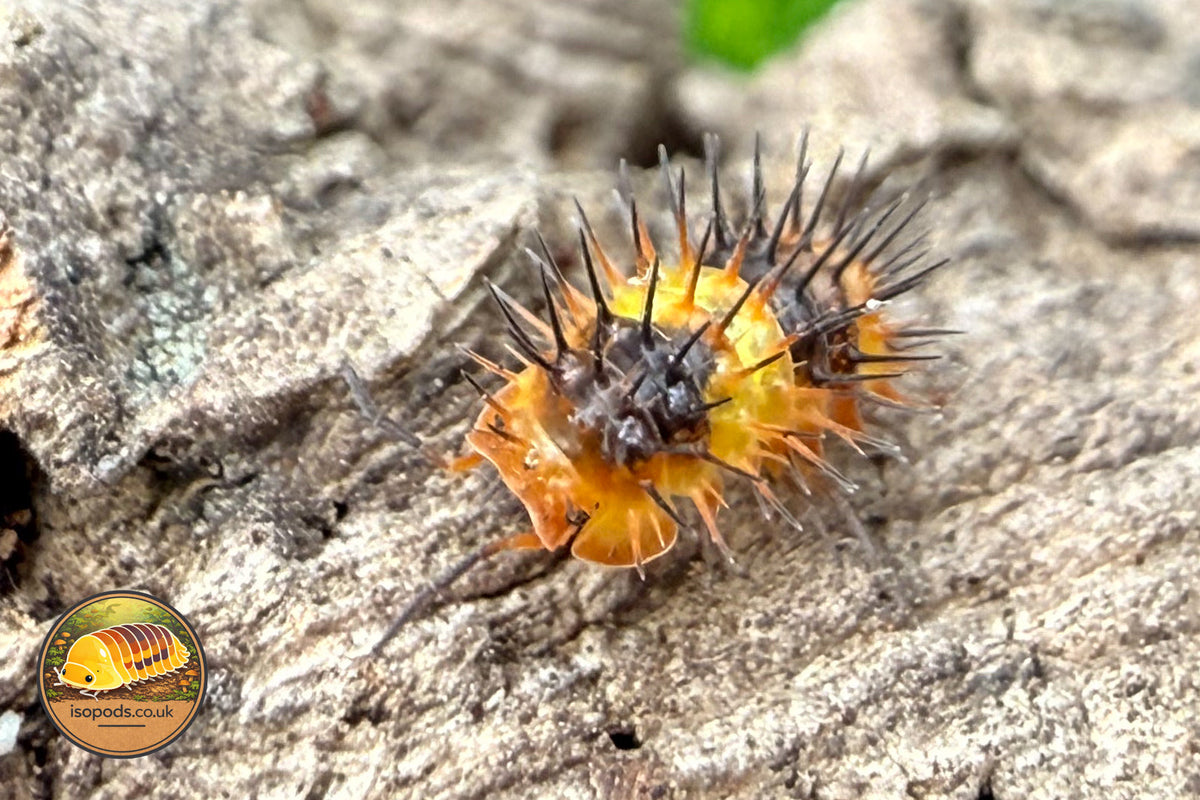
Laureola Durian Isopod
Out of stock
Regular price
£95.00 GBP
Sale price
£95.00 GBP
Regular price
Unit price
per
Tax included.
Shipping calculated at checkout.
Couldn't load pickup availability
- Fully secure checkout
- Trusted by thousands
- Rated and reviewed
Want next day delivery? Be quick!
You just missed it!
Sorry, it's out of stock.
But we can let you know when it's back in.
Question about this product?
We're happy to help.
Sold out
Laureola Durian Isopods for Sale UK
Laureola Durian stands out for its dramatic spiky texture: a small, highly detailed tropical isopod with a durian-like shell that looks very different from smoother Cubaris or Armadillidium types. This is the kind of species people choose for texture, shape, and close-up interest rather than constant open roaming.
In the enclosure, expect a Laureola-style pattern of bark use, leaf litter use, and movement through humid covered areas. They are often easier to spot around cork edges, mossy shelter, and shaded surfaces than out on bare substrate, so they suit keepers who enjoy patient observation and a more natural, cover-rich setup.
What makes Durian different?
-
Visual appeal: Distinctive durian-like spines and a strongly textured shell give this species a very different look from smoother tropical isopods. -
Size impression: Small-bodied, but with plenty of visible detail when viewed closely. -
Enclosure use: More likely to use bark, leaf litter, damp cover, and sheltered edges than sit out on open floor. -
Growth pace: Better approached as a steadier, slower-establishing colony than common fast-moving species. -
Keeper appeal: A strong choice for collectors who want unusual texture and behaviour around cover rather than bold feeding in the open.
How they usually behave
This species is best treated as a humid, well-ventilated Laureola. When settled, they may spend time tucked along bark faces, under cork, in leaf litter, and around damp sheltered patches rather than crossing exposed ground. Low open visibility is not automatically a problem if the colony is using several covered areas and the enclosure smells fresh rather than sour.
If all the animals stay packed into one wet corner or avoid most of the bark and litter, the enclosure may be too exposed, too stale, or too unevenly damp. A better setup gives them more than one sheltered place to use, with covered routes between the moist refuge and the drier side.
Prepare the enclosure before ordering
Laureola Durian does best in a humid enclosure that still has clean air exchange. Cover most of the surface with leaf litter, then add pieces of cork bark so they have shaded undersides, bark edges, and sheltered surfaces to rest against. A patch of sphagnum moss can help keep one refuge damp without turning the whole tub wet.
Add decomposing wood as part of the enclosure itself, not just as an occasional extra. Rot wood gives them both grazing value and another covered area to sit against. The drier side should still contain litter and cover, because a bare dry corner is often unusable for hidden tropical species.
The main thing to avoid is a sealed, swampy tub. Humidity matters, but stale wet air does not help Laureola. If the enclosure feels muddy, heavily condensed, or sour-smelling, improve airflow and restore a usable drier covered area rather than soaking everything more.
Feeding priorities
The food base should come mostly from leaf litter, rotting wood, mature substrate, and the films that build up on natural surfaces. Fresh foods can be offered in small amounts, but they should stay secondary. If the colony only seems interested when rich foods appear, the enclosure food base is usually too thin.
Consistent mineral access is also worth providing. Limestone can be left available as a steady calcium source while the litter and wood carry most of the long-term feeding.
Who tends to enjoy this species most
Laureola Durian is likely to appeal most to keepers who want a textured, unusual tropical isopod and do not mind lower open-floor visibility. It fits better with patient collectors who enjoy checking bark edges, leaf litter, and sheltered damp areas than with buyers who want frequent bold surface activity.
If your ideal colony is always out in the open, feeds dramatically in the middle of the tub, or tolerates sparse setups, this may be a less satisfying choice.
Compare before you decide
If you want to browse more of the same genus, start with Laureola isopods. If you like the spiky Laureola look but want another comparison point, Laureola Ivory Spiky is a useful next species to look at. For broader care context around humidity and airflow, the Laureola care guide is the best next read before ordering.
Ease of care
Preferred Temperature
Preferred Humidity
Popularity
Care Instructions
Care Instructions