🔥 Daily Isopod Auctions on WhatsApp! Grab species at auction prices, discover rare finds & join our growing community. Join Here
Laureola Dryad Isopod
Out of stock
Regular price
£200.00 GBP
Sale price
£200.00 GBP
Regular price
Unit price
per
Tax included.
Shipping calculated at checkout.
Couldn't load pickup availability
- Fully secure checkout
- Trusted by thousands
- Rated and reviewed
Want next day delivery? Be quick!
You just missed it!
Sorry, it's out of stock.
But we can let you know when it's back in.
Question about this product?
We're happy to help.
Sold out
Laureola Dryad Isopods for Sale UK
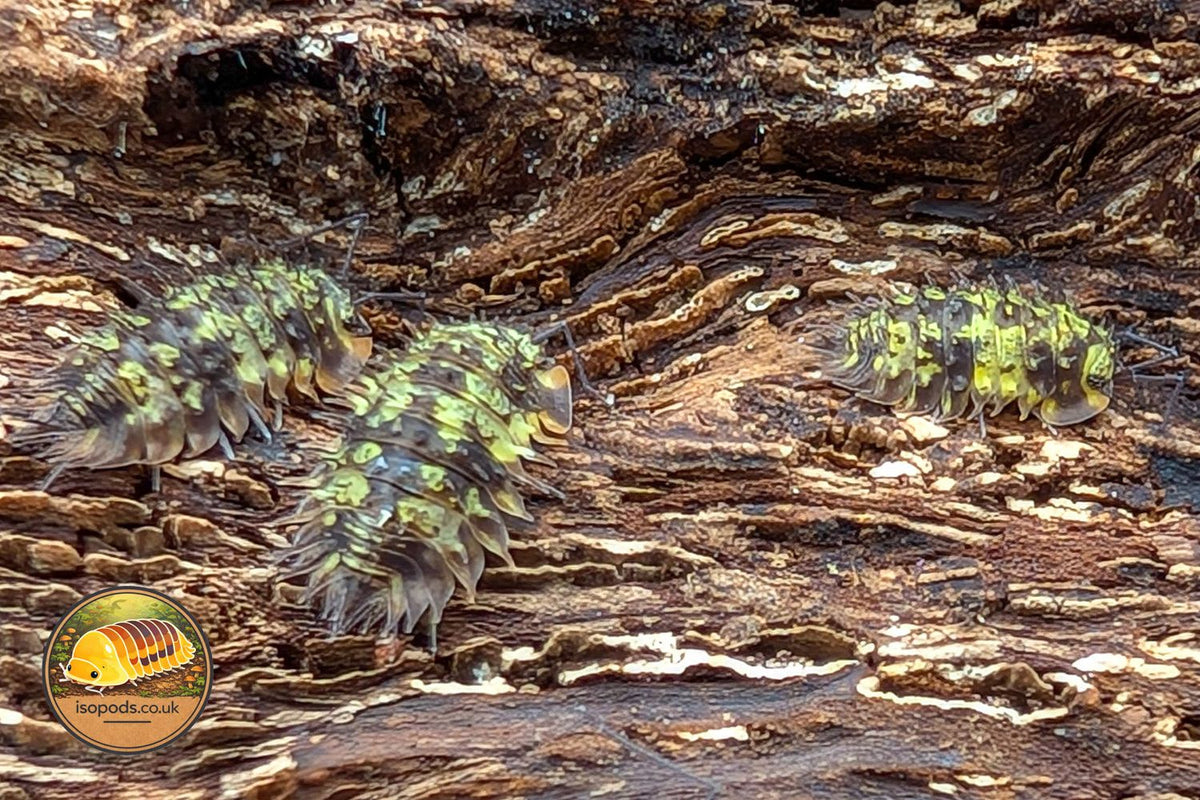
Laureola Dryad is a spiky Laureola with a darker woodland look, closer to bark, dry leaves, and forest-floor tones than the brighter morph styles many buyers compare first. The appeal here is shape and character: a textured, dryad-like look paired with the bark-using, cover-loving behaviour Laureola keepers tend to enjoy most.
This is best approached as a specialist tropical species for keepers who can provide humid lower layers, plenty of cover, and fresher air above them. Rather than expecting constant open-floor activity, expect a colony that makes better use of bark faces, cork edges, leaf litter, mossy damp areas, and sheltered feeding spots once settled.
Why collectors choose Dryad
-
Visual style: more natural forest-floor colouring than bright high-contrast morphs -
Body form: spiky, textured Laureola character -
Enclosure use: often more interesting around bark, wood, litter, and covered damp surfaces than on bare substrate -
Keeper appeal: suited to buyers who enjoy morphology and subtle behaviour rather than constant display
What normal behaviour looks like
Laureola Dryad may be easier to spot around bark, cork, leaf litter, and shaded cover than in the middle of the enclosure. A settled colony can use bark faces, wood edges, moss pockets, and the area between the moist refuge and the drier covered side. Lower open visibility is not automatically a problem.
More useful signs are whether they use more than one sheltered area, feed under cover, and keep working through litter and wood over time. If the whole colony stays packed into one wet corner, stops using bark, or avoids most of the enclosure, the setup may be too exposed, too stale, or too unevenly damp.
Preparing the enclosure first
Dryad should be kept in a layered enclosure, not a flat wet tub. Start with a substrate that can hold lower moisture without turning muddy, then add generous leaf litter, pieces of cork bark, and some rot wood so the colony has long-term grazing and sheltered places to sit against.
A damp refuge should stay moist below the surface, but the whole tub should not be soaked. Keep a drier side as well, still covered with litter or bark, so the colony has choice. Laureola usually do better with humidity plus airflow than with sealed, stagnant moisture. If the tub smells sour, stays heavily condensed, or feels wet everywhere, conditions are likely too stale.
Low disturbance also matters. Newly arrived colonies may hide heavily at first, and repeated lifting of hides can make them seem more withdrawn than they really are. If you want a broader overview of moisture, cover, and airflow, the isopod care guide is the best next read.
Food base and ongoing support
The main diet should come from the enclosure itself: leaf litter, decomposing wood, mature detritus, and grazing surfaces around bark and sheltered cover. Fresh foods are extras, not the foundation. If the only visible feeding happens when treats are added, the enclosure food base is usually too thin.
Calcium should be easy to reach on an ongoing basis, and limestone is a simple way to keep that available. For a broader feeding overview, see what do isopods eat.
Who will enjoy this species most
Laureola Dryad is a better fit for keepers who like bark-rich tropical setups, textured species, and slower, more observational enclosure behaviour. It makes more sense for someone building a leaf-littered, wood-rich enclosure with airflow than for someone wanting a sparse tub and instant surface activity.
If your priority is constant visibility in open areas, this may not be the most satisfying Laureola to start with. Dryad is stronger as a morphology-led and behaviour-led choice than as a high-exposure display animal.
Compare before you decide
If you want to browse similar genus options, start with Laureola isopods. If you want a close same-genus comparison, Laureola Durian is a useful next product to look at. If your main focus is long-term colony stability and low-disturbance management, the isopod colony care guide is the most relevant follow-on read.
Ease of care
Preferred Temperature
Preferred Humidity
Popularity
Care Instructions
Care Instructions