We only dispatch when temperatures are at least 1°C at both the sending location and the delivery location.
1°C minimum
Cold weather notice

Cold weather notice
1°C minimum
We’ll confirm the next posting date when conditions allow.
Couldn't load pickup availability
Delivery options and costs are shown at checkout. Live dispatch depends on suitable weather. Read our shipping information.
But we can let you know when it's back in.
We're happy to help.
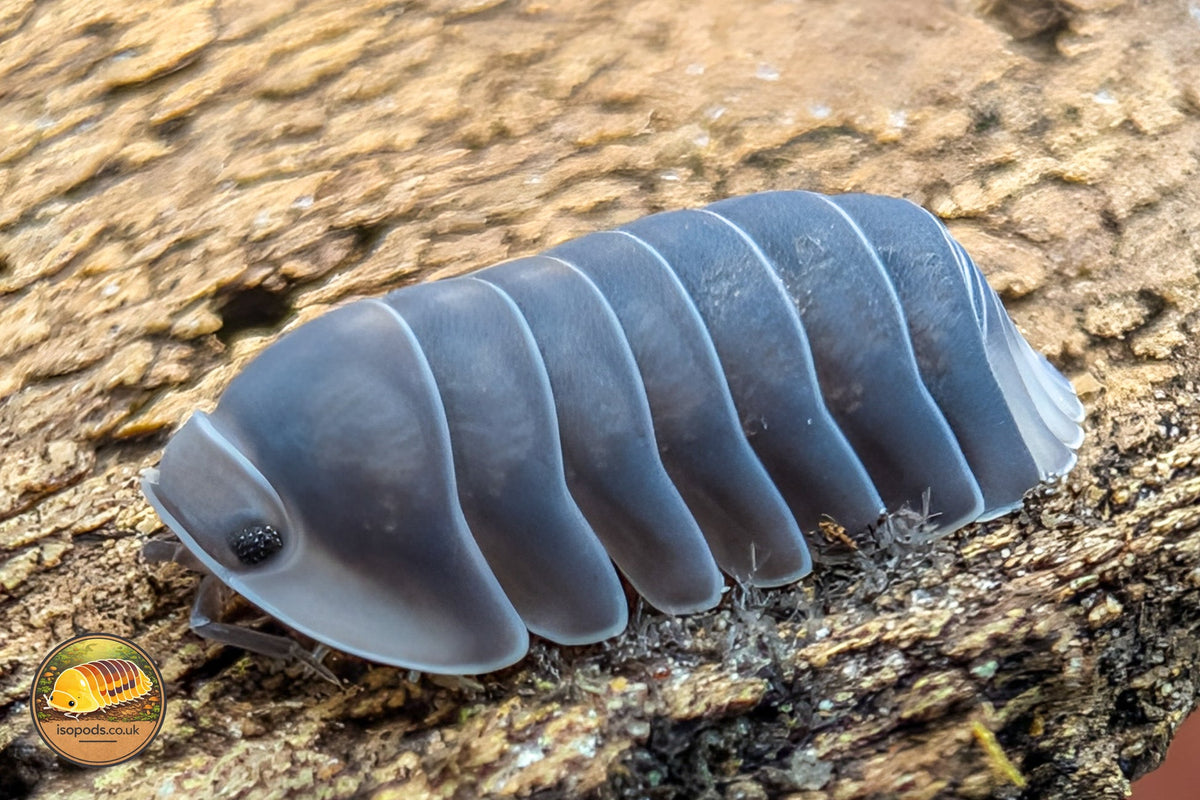
Cubaris Stormtrooper stands out for its sharp pale-and-dark contrast, giving it a clean graphic look that shows especially well against dark substrate, bark, and leaf litter. When individuals do appear, the contrast is often the main appeal: this is a collector-style Cubaris that can give memorable sightings rather than constant open activity.
That distinction matters before you buy. Stormtrooper is better approached as a hidden to semi-hidden tropical Cubaris that does best with deep substrate, heavy cover, a reliable damp refuge, and low disturbance. If you want a colony to watch roaming openly every day, this may feel too quiet. If you enjoy strong visual payoff when they emerge from bark edges and litter, it makes much more sense.
Stormtrooper are often found under bark, within leaf litter, or around lower damp cover. Limited open-floor activity is normal for many Cubaris, so the better measure is not how often they cross bare ground, but whether they use several sheltered areas and keep feeding quietly under cover.
They can show very well when settled, especially when pale markings catch against darker enclosure materials, but that should be treated as a rewarding moment rather than a guarantee of constant visibility. If the whole colony stays packed into one wet corner, the enclosure may be too dry elsewhere, too exposed, or too stale.
This species is usually safest in a humid enclosure with a dependable damp refuge and a drier side that still has cover. Deep substrate helps hold lower moisture, while a generous layer of leaf litter gives both food and cover. A thin decorative scattering is rarely enough for Cubaris.
Add bark or cork bark so they have shaded undersides, narrow gaps, and sheltered places to sit without crossing open bare substrate. A moist pocket of sphagnum moss can help keep one refuge reliable, but the enclosure should not become swampy from end to end.
Air exchange still matters. Stormtrooper usually do better in humid but fresh conditions than in a sealed wet tub. If the substrate turns muddy, the tub smells sour, or condensation stays heavy across too much of the enclosure, the problem is often stale moisture rather than lack of humidity. If you want a clearer picture of how to balance moisture, cover, and airflow, the isopod habitat setup guide is the most useful next read.
Like other Cubaris, Stormtrooper are best treated as detritus-first feeders. The enclosure should always contain leaf litter and ideally some rot wood so they can graze over time under cover. Fresh foods are extras, not the foundation.
Do not judge the colony only by a rush to added food. Feeding is often subtle and happens under bark, within litter, or near damp sheltered spots. Small supplemental feeds can be offered carefully, but overfeeding in a humid setup can foul the enclosure quickly. Consistent calcium access is also worth providing.
Stormtrooper is a strong fit for keepers who enjoy collector-style Cubaris with a distinctive look, patient observation, and tropical setups built around bark, litter, and stable humid cover.
It is less likely to suit buyers who want constant movement in the open, very fast feedback from a new colony, or a sparse enclosure with minimal cover. Reducing cover to force visibility usually backfires with Cubaris.
Prepare the enclosure first rather than adjusting it after arrival. The most useful basics are depth in the substrate, plenty of litter, several bark-covered areas, one clearly damp refuge, and a drier but still sheltered side. Once introduced, they are usually easier to read when left undisturbed than when hides are lifted repeatedly.
If you are deciding between similar hidden tropical species, browse the wider Cubaris isopods range. If you want another patterned comparison within the same genus, Cubaris Platin Dalmatian is a useful next option to view. For buyers still weighing collector appeal against practical care, the Cubaris care guide helps explain what normal enclosure behaviour actually looks like once a colony settles.