🔥 Daily Isopod Auctions on WhatsApp! Grab species at auction prices, discover rare finds & join our growing community. Join Here


Cubaris Platin Dalmatian Isopod
Low stock! Only 10 left
Regular price
£75.00 GBP
Sale price
£75.00 GBP
Regular price
Unit price
per
Tax included.
Shipping calculated at checkout.
Couldn't load pickup availability
- Fully secure checkout
- Trusted by thousands
- Rated and reviewed
Want next day delivery? Be quick!
You just missed it!
Question about this product?
We're happy to help.
Cubaris Platin Dalmatian Isopods for Sale UK
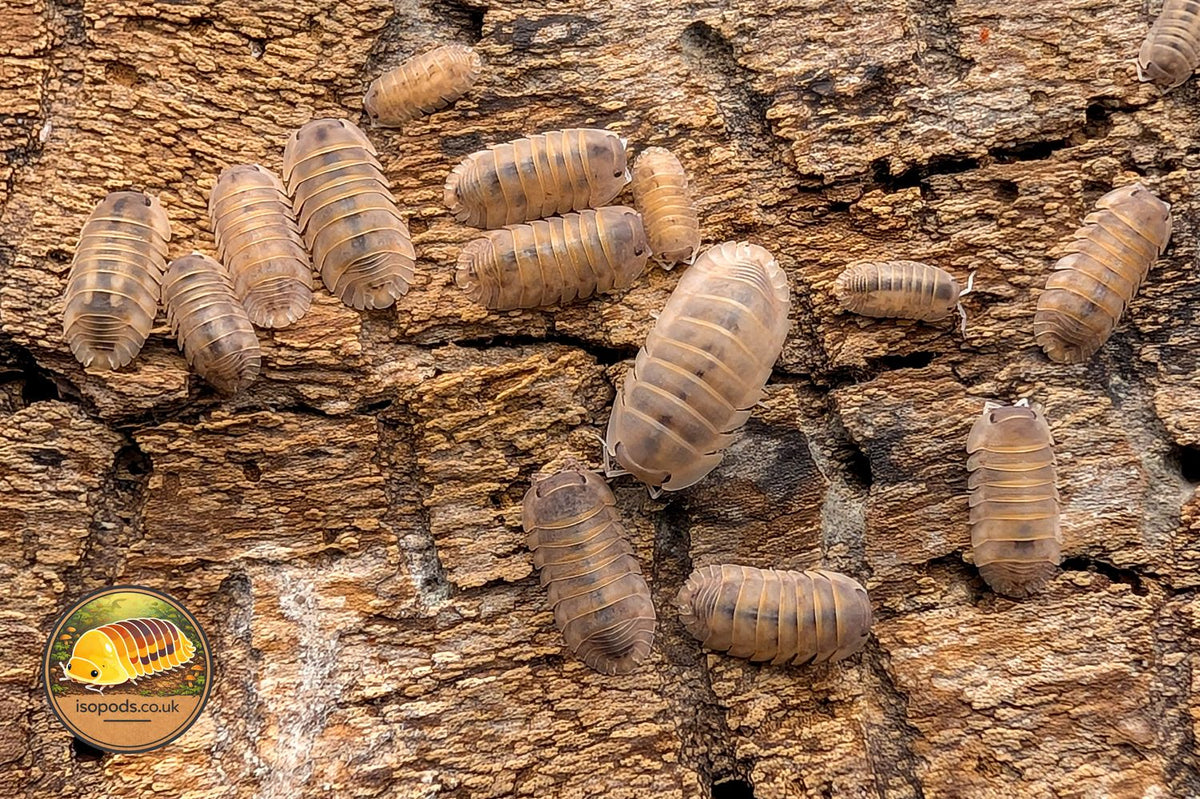
Cubaris Platin Dalmatian stands out for its clean pale platinum to silver-white base colour, broken up by irregular dark speckles that give it a refined dalmatian-style pattern. The appeal here is contrast and detail rather than neon colour or heavy striping, so this morph suits keepers who enjoy a more understated but distinctive look.
In the enclosure, this should still be approached as a Cubaris type rather than a high-visibility display isopod. Expect most sightings around bark, leaf litter, rot wood, and other covered damp areas, especially while the colony is settling. If you want a pale patterned Cubaris with a calmer, collector-style feel, this is the main reason to choose it.
What gives this morph its appeal
The main visual draw is the pale body tone paired with uneven dark spotting. That creates a spotted finish with strong contrast, but without looking overly bright or artificial. Compared with bolder striped or high-saturation morphs, Platin Dalmatian feels cleaner and more restrained, which can make the patterning look especially sharp when individuals are seen against dark bark or leaf litter.
How they usually behave
-
Visibility: Usually modest, with most activity under cover rather than out on bare substrate. -
Typical hiding places: Under bark, within leaf litter, around rot wood, and in protected damp pockets. -
Temperament: Quiet and shelter-oriented rather than fast and openly roaming. -
Best way to judge them: By steady use of covered areas, gradual litter wear, and calm feeding under cover rather than constant surface movement.
Low open visibility is not unusual for Cubaris. A settled colony may still spend much of its time hidden, and that alone does not mean anything is wrong. More concerning signs are a whole colony packed into one wet corner, a sour smell from the enclosure, or most of the tub being ignored because it is too dry, too bare, or too stale.
Before ordering this Cubaris
Prepare an enclosure with a reliable damp refuge, a drier but still covered side, and plenty of hiding places. A layer of leaf litter should cover much of the surface so the colony can feed and stay hidden at the same time. Add pieces of cork bark and rot wood to create shaded undersides, bark edges, and sheltered feeding spots.
The damp side should stay humid without turning the whole tub wet. A patch of sphagnum moss can help keep that refuge stable, but the enclosure should still have airflow so it stays fresh rather than stagnant. If you want a broader guide to setting up the enclosure before the colony arrives, the isopod habitat setup guide is the best next read.
Feeding and long-term support
This morph should be fed like other Cubaris: detritus first. Leaf litter and rotting wood should do most of the work, with mature substrate supporting quiet grazing below cover. Fresh foods can be offered in small amounts, but they are extras rather than the foundation of the diet.
Consistent calcium access is also worth keeping available, and limestone is a practical option for long-term mineral support. If you want to review the broader feeding logic for isopods, see what do isopods eat.
Who tends to enjoy this type most
This is a better fit for keepers who enjoy subtle behaviour, sheltered tropical setups, and morphs chosen for pattern and tone rather than constant movement. If part of the appeal for you is lifting bark and finding a pale, spotted Cubaris tucked into a well-set enclosure, Platin Dalmatian makes sense.
It may be less satisfying if you want frequent open-floor activity or a species that reads clearly from across the room every day.
What to compare next
If you want to stay within the same genus and compare other collector-style options, browse the Cubaris isopods collection. If you are deciding between this morph and other humid, shelter-loving species more broadly, the tropical isopods collection is a useful next step.
For a more direct product comparison, Cubaris White Shark may appeal if you are drawn to pale Cubaris tones but want to compare a different look within the genus.
Ease of care
Preferred Humidity