🔥 Daily Isopod Auctions on WhatsApp! Grab species at auction prices, discover rare finds & join our growing community. Join Here
Cubaris rosea Isopod
20 in stock
Regular price
£55.00 GBP
Sale price
£55.00 GBP
Regular price
Unit price
per
Tax included.
Shipping calculated at checkout.
Couldn't load pickup availability
- Fully secure checkout
- Trusted by thousands
- Rated and reviewed
Want next day delivery? Be quick!
You just missed it!
Question about this product?
We're happy to help.
Cubaris rosea Isopods for Sale UK
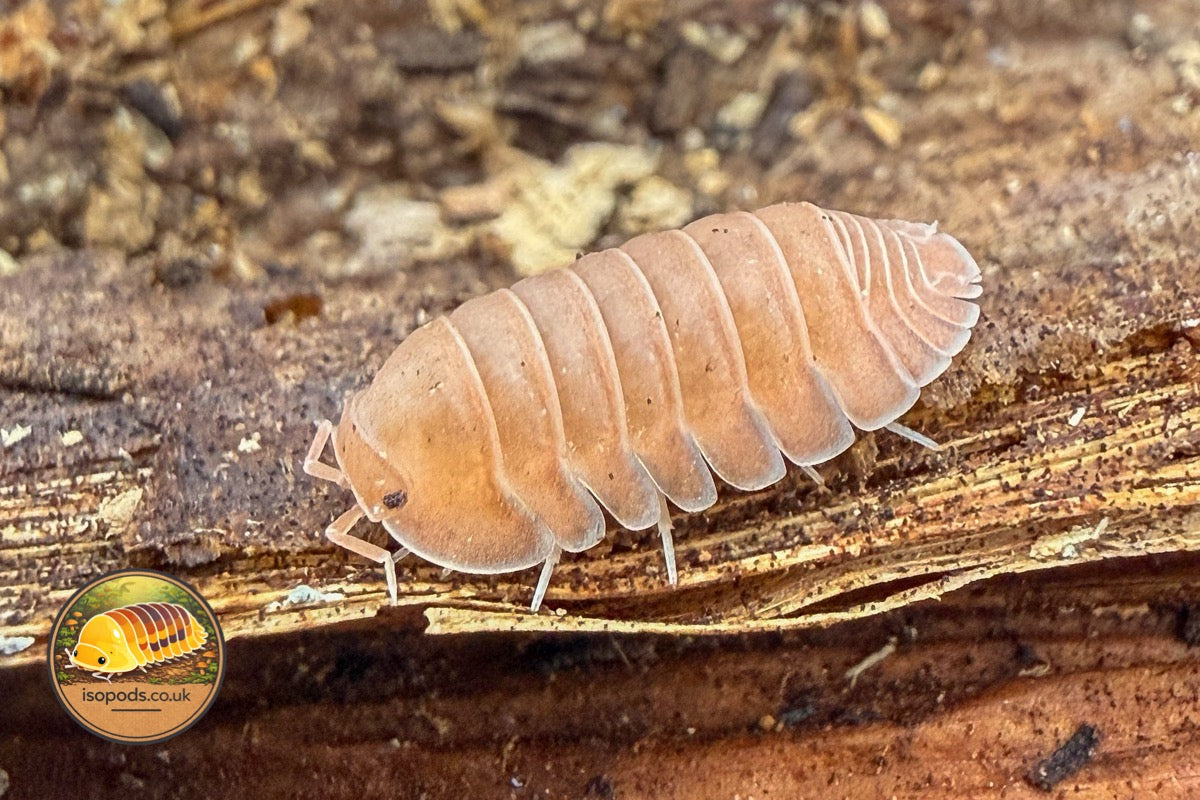
Cubaris rosea stands out for its soft, understated colour rather than bold patterning. The appeal here is in gentle rose-pink, pale pink, and soft orange-pink tones that give the colony a refined pastel look when viewed under bark, through leaf litter, or around sheltered feeding spots.
In keeper terms, this is best treated as a quieter Cubaris. Expect more time under cover than out on open substrate, and plan the enclosure around deep substrate, bark hides, decaying wood, a reliable damp refuge, and minimal disturbance. If you want a species chosen for subtle beauty and patient observation rather than constant surface roaming, Rosea makes more sense than louder, higher-contrast options.
What makes Rosea appealing
The charm of this species is its softer finish. Instead of strong contrast or graphic markings, Cubaris rosea tends to suit keepers who enjoy natural pastel colour and a calmer overall look. That makes it especially appealing in a well-covered tropical setup where the colony can settle properly and show its tones in a more natural way.
What to expect in the enclosure
-
Visibility: Usually better judged under bark, in leaf litter, and around sheltered damp areas than on bare open ground. -
Behaviour: Slow, shelter-oriented, and often more comfortable in tight hides and lower cover. -
Normal use of space: Often found around bark undersides, rotten wood, shaded gaps, and humid substrate pockets. -
Settling style: A newly established colony may stay hidden for long periods before its enclosure use becomes easier to read.
Low open visibility is not automatically a problem with Cubaris rosea. More useful signs are gradual wear on litter, quiet feeding under cover, and individuals turning up in more than one sheltered area. If the whole colony compresses into one wet corner, one moss pocket, or one hide, the rest of the tub may be too dry, too exposed, or too stale.
Before ordering, prepare the enclosure for cover first
This species usually does better in a mature-looking setup rather than a sparse tub. Start with a generous layer of leaf litter, deeper substrate, bark or cork cover, and some rot wood so the colony has both long-term grazing and hidden resting spots.
A piece of cork bark helps create shaded undersides and tight hiding spaces, while a small damp area supported with sphagnum moss can keep one humid refuge stable without turning the whole enclosure wet. If you are still balancing moisture, cover, and airflow, the isopod habitat setup guide is the most useful next read before the colony arrives.
Feeding and long-term support
Like other Cubaris, Rosea should be kept as a detritus-first species. The enclosure itself should provide most of the diet through leaf litter, mature substrate, decomposing wood, and the microbial growth that develops on natural materials. Fresh foods can be offered as extras, but they should not replace the litter and wood base.
Reliable mineral access is also worth keeping available. Limestone is a practical option for steady calcium support, especially in a humid setup where you want that resource available all the time rather than added occasionally.
Who will enjoy this species most
Cubaris rosea tends to suit keepers who like softer-coloured tropical isopods and do not mind a more hidden colony style. It is a stronger match for someone happy checking bark edges, litter use, and gradual enclosure settling than for someone wanting frequent open-floor movement.
If your main goal is bold activity in plain view, this species may feel too reserved. Its appeal is quieter and more collector-led: delicate colour, hidden movement, and a setup that rewards patience.
Compare before you choose
If you want to browse similar sheltered tropical species, start with our Cubaris isopods collection. If you are comparing within the same broader genus, Cubaris Stormtrooper offers a useful contrast in look and collector appeal. For wider browsing beyond this genus, you can also explore tropical isopods.
Ease of care
Preferred Temperature
Preferred Humidity
Popularity
Care Instructions
Care Instructions