🔥 Daily Isopod Auctions on WhatsApp! Grab species at auction prices, discover rare finds & join our growing community. Join Here
Cubaris Penguin Albino Isopod
Low stock! Only 10 left
Regular price
£15.00 GBP
Sale price
£15.00 GBP
Regular price
Unit price
per
Tax included.
Shipping calculated at checkout.
Couldn't load pickup availability
- Fully secure checkout
- Trusted by thousands
- Rated and reviewed
Want next day delivery? Be quick!
You just missed it!
Question about this product?
We're happy to help.
Cubaris Penguin Albino Isopods for Sale UK
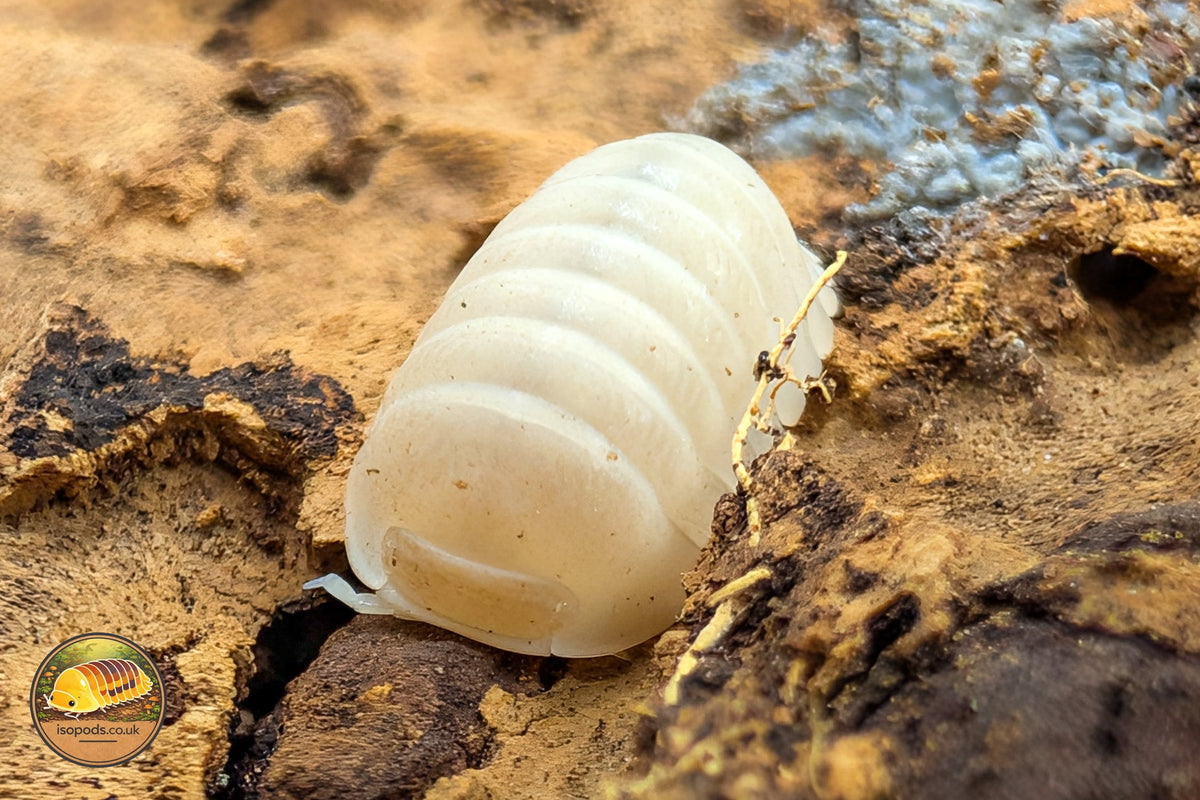
Cubaris Penguin Albino are best thought of as an albino Penguin-type Cubaris: a pale take on the Penguin or White Side look, with lighter body tones, pale contrast, and a softened white-side effect rather than strong black-and-white patterning. That visual difference is the main reason to choose them, especially if you like quieter collector Cubaris with a more washed, subdued finish.
In the enclosure, expect hidden rather than showy behaviour. This Southeast Asian Cubaris type is usually found under bark, within leaf litter, or around sheltered humid cover, and visibility often improves only gradually once the colony has settled. If you want a species to study around hides, litter, and bark edges instead of one that constantly crosses open ground, this is a more fitting choice.
What stands out about Penguin Albino
-
Visual style: a pale albino Penguin-type appearance with reduced contrast and a softer white-side effect. -
Behaviour: usually slow, cautious, and strongly tied to covered humid spaces. -
Visibility: often limited in the open, especially early on; more likely to be found under bark, litter, or other firm cover. -
Setup bias: better in a deep, humid, cover-rich enclosure than a sparse or exposed tub. -
Keeper appeal: more suited to patient observation than constant display.
How they usually use the enclosure
Penguin Albino can spend long periods tucked into cave-like shelter: under cork, against rotting wood, beneath leaf litter, or in damper lower layers. That hidden behaviour is normal for many Cubaris and should not be treated as a problem on its own. A settled colony may still stay mostly out of sight for much of the day.
The more useful thing to watch is whether the colony uses several sheltered areas over time. If every individual stays packed into one wet corner, the rest of the enclosure may be too dry, too bare, or too stale to use comfortably.
Before you order
Prepare an enclosure with deep substrate, a generous layer of leaf litter, and several bark or cork hides before the colony arrives. cork bark works especially well here because it creates shaded undersides and tight edges without making the enclosure feel cramped.
Keep one side reliably damp, but do not run the whole tub wet. A moss pocket made with sphagnum moss can help hold a humid refuge, while the rest of the enclosure should stay covered and usable rather than soaked. Adding rot wood is also worth it for both grazing and shelter, especially with hidden Cubaris that feed quietly under cover.
If you are still planning the balance between humidity, cover, and airflow, the isopod habitat setup guide is a good next read.
Feeding and routine care
This species should be treated as detritus-first. Leaf litter, rotting wood, and mature substrate should carry most of the diet, with fresh foods used only as support. Feeding may happen quietly under cover, so a weak visible response to added food does not always mean the colony is struggling.
Small portions are safer than heavy feeding in a humid Cubaris setup. If food moulds before it is used, the portion may be too large, the enclosure may be too wet, or the food base may be too thin. Consistent calcium access is also worth keeping available, and limestone is a practical option if you want to build that into the enclosure.
Who tends to enjoy this type most
This is a better fit for keepers who enjoy subtle enclosure behaviour, sheltered tropical setups, and the visual appeal of pale collector Cubaris. It suits buyers who are happy to provide deep cover, keep a reliable humid refuge, and let the colony settle without constant checking.
It is less likely to satisfy buyers who want frequent open sightings, quick visible feedback, or a species that regularly roams across exposed substrate.
Compare before you choose
If you want the same general theme with stronger classic contrast, compare with Cubaris Penguin. If you are still browsing similar shelter-loving options, the Cubaris isopods collection is the best place to compare related types. For broader genus-level care expectations, see the Cubaris care guide.
Ease of care
Preferred Temperature
Preferred Humidity
Popularity
Care Instructions
Care Instructions